
Burnout develops when prolonged stress drains energy, focus, and motivation. Common signs include constant fatigue, irritability, reduced performance, and a sense of detachment from work or daily life. Physical symptoms such as headaches, sleep disruption, and frequent illness may also appear. Recovery requires a safe, structured approach that restores rest, boundaries, and support without creating further strain. Recognising early warning signs helps you act promptly and reduce the risk of longer-term harm.
Key takeaways
- Burnout often shows as constant fatigue, irritability, and reduced work performance.
- Physical signs can include headaches, poor sleep, appetite changes, and frequent minor illness.
- Emotional withdrawal, cynicism, and loss of motivation signal burnout, not simple stress.
- Recovery starts with reducing workload, setting boundaries, and taking regular breaks.
- Prioritise sleep, balanced meals, hydration, and gentle exercise to restore energy.
- Seek support from managers, trusted people, or a clinician when symptoms persist.
How burnout develops: common causes and early warning patterns
Burnout tends to develop when high demands persist without enough recovery time. Workload often plays a part, yet burnout can also arise from caring duties, financial strain, long-term illness, or ongoing conflict. A lack of control over tasks and schedules can intensify stress, especially when expectations remain unclear or change often. When effort feels unseen or values clash with workplace culture, motivation can drop and strain can build.
Early warning patterns usually appear as small shifts rather than sudden collapse. Sleep may become lighter or broken, even when fatigue feels constant. Concentration can slip, which makes routine tasks take longer and increases mistakes. Emotional signs often include irritability, reduced patience, or a sense of detachment from people and work. Physical cues can include headaches, stomach upset, muscle tension, or more frequent minor infections.
These patterns can feed each other. Poor sleep reduces coping capacity, which raises stress and can lead to longer hours or withdrawal from support. Guidance from the NHS highlights that ongoing stress can affect both mind and body, so early recognition and timely changes matter.
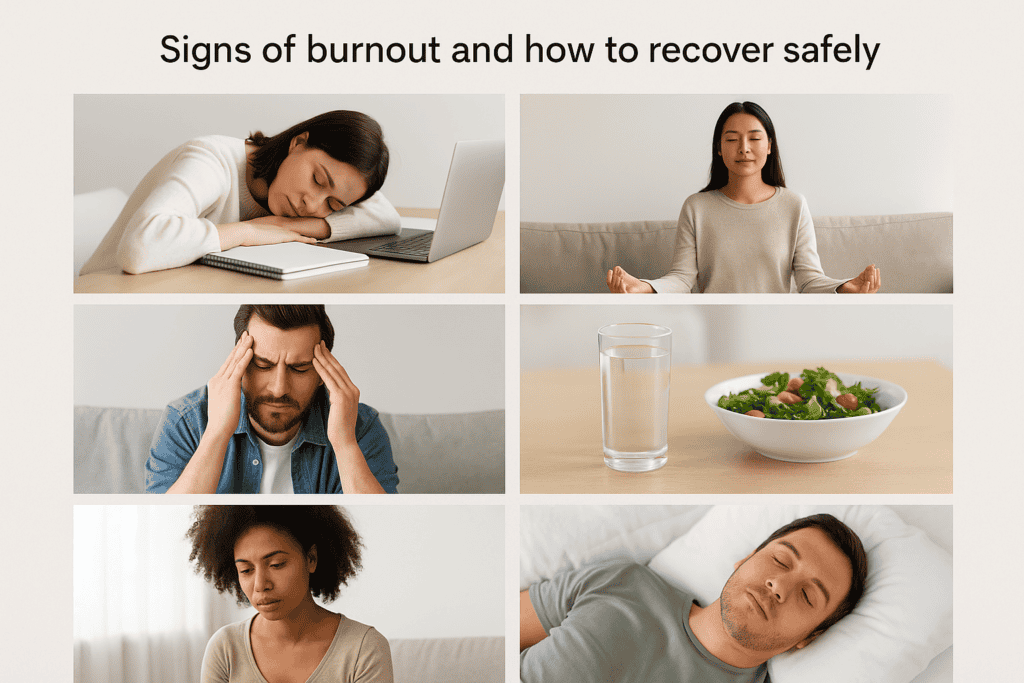
Signs of burnout and how to recover safely
Emotional and cognitive signs of burnout: mood, motivation, and concentration changes
Burnout often shows up through changes in mood and thinking before physical symptoms become obvious. Emotional signs can include persistent irritability, feeling tearful, or a sense of emotional numbness. Some people notice a reduced ability to feel pleasure, even during activities that usually feel rewarding. Anxiety may increase, while confidence can drop, particularly when tasks that once felt manageable start to feel overwhelming.
Cognitive changes often affect attention and decision-making. Concentration may become fragile, with frequent mind-wandering, slower reading, or difficulty following conversations. Memory can also suffer, especially working memory, which supports planning and holding information in mind. As a result, small choices can feel exhausting, and mistakes may become more common.
- Motivation shifts: reduced drive, procrastination, or a sense of dread before routine tasks.
- Lower tolerance: feeling easily overwhelmed by minor setbacks or normal requests.
- Negative thinking: increased self-criticism, cynicism, or a belief that effort will not change outcomes.
- Social withdrawal: avoiding colleagues, friends, or family due to low emotional capacity.
These signs can overlap with depression, anxiety disorders, and sleep problems, so a careful check matters. If symptoms persist for more than two weeks, affect daily functioning, or include thoughts of self-harm, seek urgent support. In the United Kingdom, NHS mental health guidance explains how to access help, while Samaritans offers 24-hour support for anyone in distress.
When you track mood, motivation, and concentration over time, patterns often become clearer. A brief daily note on energy, irritability, and focus can help you describe symptoms accurately to a manager, occupational health team, or clinician.
Physical and behavioural signs of burnout: sleep, energy, and coping habits
Burnout often affects the body as sustained stress disrupts sleep, appetite, and energy regulation. Many people notice difficulty falling asleep, waking early, or unrefreshing sleep, even after a full night in bed. Daytime fatigue may follow, alongside headaches, muscle tension, stomach upset, or more frequent minor infections. Changes in appetite can also appear, with some people skipping meals and others relying on high-sugar snacks for short bursts of energy.
Behavioural signs often develop alongside these physical changes. Procrastination, missed deadlines, and increased errors can occur when energy drops and tasks feel heavier than usual. Some people withdraw from colleagues, friends, or family, while others overwork to compensate, which reduces recovery time and worsens symptoms. Coping habits may shift towards quick relief, such as increased caffeine, nicotine, or alcohol use. If alcohol becomes a regular way to manage stress, guidance from the NHS can help clarify safer limits and support options.
These signs can also overlap with medical conditions, including thyroid problems, anaemia, depression, and sleep disorders. A GP can assess symptoms, rule out physical causes, and advise on safe next steps, especially when exhaustion persists or daily functioning declines.
How to recover safely: rest, workload changes, and evidence-based self-care
Safe recovery starts with rest that you protect, not rest that you “fit in”. Aim for consistent sleep and short breaks during the day, since the nervous system needs regular downshifts to reset stress responses. Next, adjust workload in practical ways. Speak with a manager, tutor, or client about priorities, deadlines, and capacity, then agree what will pause, stop, or move to someone else. Clear boundaries on hours and response times reduce the constant sense of urgency that keeps burnout going.
Evidence-based self-care supports recovery when it stays simple and repeatable. Gentle movement, daylight exposure, and regular meals help stabilise energy and mood. Brief relaxation skills, such as paced breathing, can lower physical arousal and improve sleep onset. If symptoms persist, seek professional support. A GP can rule out medical causes and discuss treatment options, while structured talking therapies may help you rebuild coping skills; see the NHS mental health guidance for routes to care.
When to seek professional support: red flags, workplace steps, and treatment options
Seek professional support when symptoms persist for two weeks or more, worsen despite rest, or start to affect safety, relationships, or work performance. Red flags include thoughts of self-harm, panic attacks, feeling unable to cope day to day, heavy use of alcohol or drugs to get through the week, or severe sleep loss. Sudden chest pain, fainting, or shortness of breath needs urgent medical assessment.
At work, raise concerns early and keep the discussion practical. Ask for a review of duties, deadlines, and decision-making control, then agree written adjustments and check-in dates. If available, use occupational health or an employee assistance programme. In the United Kingdom, guidance from Acas can support conversations about reasonable changes and absence planning.
Treatment options depend on needs and risk. A GP can rule out medical causes, assess anxiety or depression, and discuss sick notes, medication, or referral. Talking therapies, such as cognitive behavioural therapy (CBT), can help with unhelpful thinking patterns and coping skills; access often starts via NHS Talking Therapies. If you feel unsafe, contact 999 or attend A&E.
Frequently Asked Questions
What are the most common early signs of burnout in working adults?
Common early signs of burnout in working adults include persistent tiredness that rest does not relieve, reduced motivation, irritability, and difficulty concentrating. Many people notice lower work performance, increased mistakes, and a sense of detachment from colleagues or tasks. Physical signs can include headaches, sleep problems, and frequent minor illnesses.
How can burnout symptoms differ from stress, anxiety, or depression?
Burnout usually stems from prolonged work or caregiving strain and often causes emotional exhaustion, cynicism, and reduced performance. Stress tends to feel urgent and may ease when pressure lifts. Anxiety centres on persistent worry and physical tension across settings. Depression often includes low mood, loss of interest, and sleep or appetite changes that affect most areas of life.
Which workplace factors most often contribute to burnout, and how can they be addressed?
Common workplace drivers of burnout include excessive workload, low control, unclear roles, poor support, unfair treatment, and value conflict. Address them by setting realistic priorities, clarifying responsibilities, improving staffing and autonomy, agreeing boundaries on hours and contact, training managers in supportive practice, and using regular check-ins to identify and resolve issues early.
What safe, evidence-based steps can help someone recover from burnout without worsening symptoms?
Reduce demands quickly: pause non-essential tasks, set clear boundaries, and take regular breaks. Restore basics with consistent sleep, balanced meals, hydration, and gentle movement. Use stress-reduction skills such as paced breathing and mindfulness. Seek support from a GP or therapist, and request workplace adjustments. Return to duties gradually, tracking fatigue and mood.
When should someone seek professional medical or mental health support for suspected burnout?
Seek professional support if symptoms persist for more than two weeks, worsen, or affect work, sleep, or relationships. Get urgent help for panic attacks, thoughts of self-harm, severe hopelessness, substance misuse, or inability to function. Consult a GP or a registered mental health professional for assessment and a safe recovery plan.