
Black rice, sometimes called forbidden rice, is a wholegrain known for its deep colour and rich nutrient profile. It contains anthocyanins, which are natural plant pigments with antioxidant activity. This rice also provides fibre, iron, and plant-based protein, making it a practical choice for balanced meals. Many people choose black rice to support heart health, steady energy, and digestive comfort. Its nutty flavour and firm texture suit both savoury dishes and desserts.
Key takeaways
- Black rice contains anthocyanins, antioxidants that give the grain its deep colour.
- Its fibre content supports digestion and helps you feel full for longer.
- Black rice provides plant-based protein and key minerals such as iron and magnesium.
- Regular intake may support heart health by helping manage cholesterol levels.
- It has a lower glycaemic impact than many refined grains, aiding blood sugar control.
- Use it in salads, bowls, and desserts; rinse and cook until tender.
What Black Rice Is: Origin, Varieties, and Key Nutrients
Black rice is a wholegrain rice with a deep purple-black bran layer. People often call it “forbidden rice”, a name linked to imperial China, where some accounts suggest elites reserved it for special use. Growers now cultivate black rice across Asia, including China, Thailand, Indonesia, and India, and it has become widely available in specialist and mainstream food markets. Many cooks value its nutty flavour and striking colour, which can lift both savoury and sweet recipes without added colouring.
Several varieties exist, and each has a distinct cooking quality. Some types cook up soft and slightly sticky, which suits desserts and porridge-style dishes. Other types stay more separate and chewy, which works well in salads and grain bowls. Colour also varies from dark aubergine to near-black, and the cooked grain often turns a vivid purple as pigments move into the cooking water. Cooking time can differ between varieties, so packet guidance helps achieve the preferred texture.
From a nutrition perspective, black rice provides complex carbohydrate, plant protein, and dietary fibre. Fibre supports normal digestion and can help people feel fuller after meals. Black rice also supplies minerals such as iron, which contributes to normal oxygen transport in the body, and magnesium, which supports normal muscle function. The grain contains B vitamins in small amounts, which help normal energy-yielding metabolism. As with other wholegrains, the bran and germ account for much of this nutrient content.
A key nutrient feature is its high level of anthocyanins, the same group of antioxidants found in blueberries and blackberries. Anthocyanins sit mainly in the bran, so black rice keeps far more of these compounds than white rice, which has had the bran removed. For a clear overview of anthocyanins and how they act as antioxidants in foods, see the Encyclopaedia Britannica reference page. These pigments also explain the purple cooking water, which some people use in soups or sauces to retain colour.
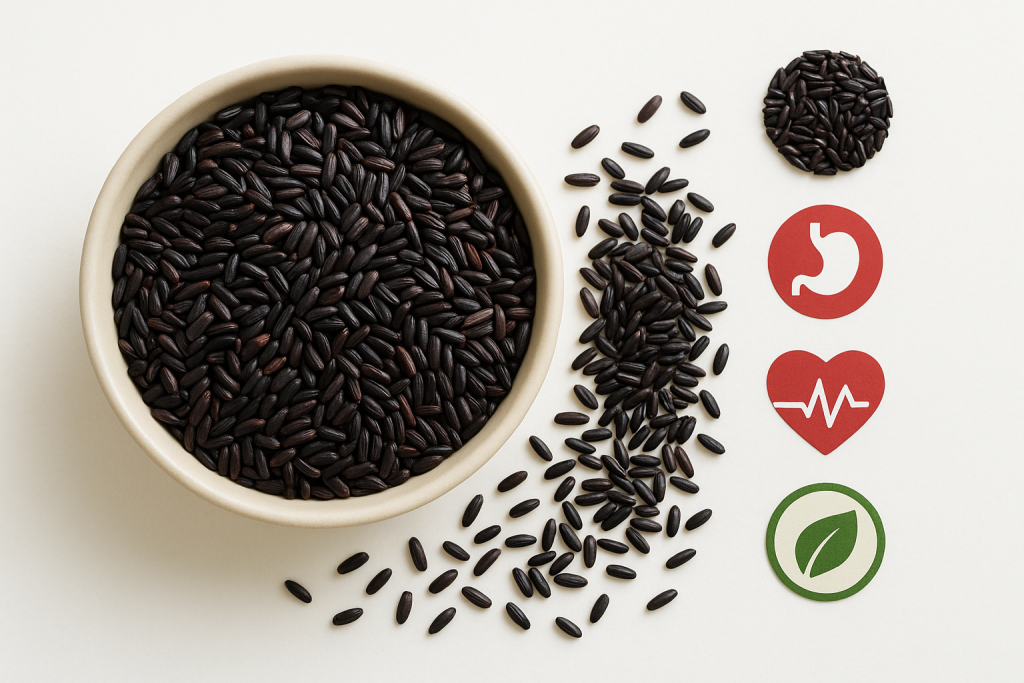
Black Rice and All Its Benefits
Antioxidants in Black Rice: Anthocyanins and Cellular Protection
Black rice stands out for its high level of anthocyanins, a group of plant pigments that give the bran its deep purple-black colour. Anthocyanins belong to a wider family called polyphenols (natural compounds in plants). These compounds act as antioxidants, meaning they help neutralise free radicals. Free radicals are unstable molecules that can damage cells when they build up, a process often described as oxidative stress.
Oxidative stress can affect many tissues, including blood vessels and the digestive tract. Diets rich in antioxidant-containing foods can support the body’s normal defences by reducing the burden of free radicals. Black rice contributes to this pattern because the bran layer retains much of its pigment and protective compounds. In contrast, heavily refined grains lose most of these components when processing removes the outer layers.
Anthocyanins also show anti-inflammatory activity in laboratory and human nutrition research, which matters because long-term, low-grade inflammation can influence health over time. Even so, no single food can prevent disease on its own. Black rice works best as part of a balanced diet that includes a range of colourful plant foods, adequate fibre, and appropriate sources of protein and healthy fats.
Cooking methods influence how much of these compounds remain. Gentle simmering and avoiding excessive rinsing can help retain colour in the cooking water, which often signals that pigments have moved from the grain into the liquid. Using the absorbed-water method, rather than draining the pot, can help keep more of those pigments in the final dish.
For a clear, evidence-based overview of antioxidants and free radicals, see the information provided by the NHS. This context helps explain why anthocyanin-rich foods, including black rice, attract interest for cellular protection.
Black Rice for Heart and Metabolic Health: Cholesterol, Blood Sugar, and Weight Support
Black rice can support heart and metabolic health because it supplies fibre, polyphenols, and slow-digesting carbohydrates. These features can help improve key markers linked with cardiovascular disease and type 2 diabetes risk.
For cholesterol management, wholegrains often help reduce low-density lipoprotein (LDL) cholesterol, sometimes called “bad” cholesterol. Fibre binds with bile acids in the gut, which can increase bile excretion and prompt the body to use circulating cholesterol to make more bile. Black rice also contains anthocyanins, which researchers continue to study for potential effects on blood vessel function and lipid metabolism. Evidence varies by study design and portion size, yet the pattern supports using black rice as part of a diet rich in wholegrains, pulses, vegetables, and unsaturated fats. Guidance from the NHS aligns with this approach for heart health.
Black rice may also aid blood sugar control. As a wholegrain, it tends to digest more slowly than refined white rice, which can reduce sharp rises in post-meal glucose. Fibre slows gastric emptying and carbohydrate absorption, while the bran layer contributes compounds that may influence insulin sensitivity. People who manage diabetes still need to consider portion size and total carbohydrate intake, since any rice can raise blood glucose.
Weight support links closely to satiety. Fibre and a chewy texture can increase fullness, which may reduce snacking and help with energy balance. Black rice also works well in meals that prioritise volume and nutrients, such as grain bowls with non-starchy vegetables and lean protein. For practical targets on fibre intake and balanced meals, advice from the British Dietetic Association offers a reliable reference point.
Digestive and Gut Health Benefits: Fibre, Satiety, and Gluten-Free Suitability
Black rice supports digestive comfort because it provides dietary fibre, a type of carbohydrate that the body does not fully digest. Fibre adds bulk to stool and helps keep bowel movements regular, which can reduce constipation for many people. Wholegrains also tend to support a healthier gut environment because gut bacteria ferment some fibres and produce short-chain fatty acids. These compounds help nourish the cells that line the colon and may support a balanced gut microbiome.
Satiety, the feeling of fullness after eating, links closely with fibre intake. Black rice contains both insoluble fibre (which adds bulk) and soluble fibre (which forms a gel-like texture in the gut). Together, these fibres can slow gastric emptying and help moderate appetite between meals. A higher-fibre meal can also reduce rapid swings in blood glucose, which often drive hunger soon after eating. For practical use, pairing black rice with protein and vegetables can create a filling meal without relying on large portions.
Gluten-free suitability matters for people with coeliac disease and those with non-coeliac gluten sensitivity. Plain black rice contains no gluten, the protein found in wheat, barley, and rye. People who follow a gluten-free diet can use black rice as a staple carbohydrate in place of couscous, bulgur, or wheat-based pasta. Cross-contamination can still occur during processing, so anyone who needs strict avoidance should check packaging for gluten-free certification and review allergen statements.
For evidence-based guidance on fibre intake and digestive health, consult the NHS guidance on starchy foods and carbohydrates and the British Dietetic Association information on fibre. These sources also explain how gradual increases in fibre, alongside adequate fluids, can improve tolerance and reduce bloating.
How to Cook and Use Black Rice: Preparation Tips, Recipes, and Portion Guidance
Rinse black rice under cold water until the water runs clearer. This step removes surface starch and helps the grains cook evenly. Many cooks soak black rice for 30 minutes to reduce cooking time and improve tenderness, although soaking remains optional. After soaking, drain well and rinse once more to prevent a gummy finish.
For stovetop cooking, use a tight-fitting lid and a gentle simmer. A practical starting ratio is 1 part dry black rice to 2 parts water. Bring the pan to the boil, reduce the heat, then cook for 30 to 40 minutes until the grains feel tender with a slight chew. Rest the rice off the heat for 10 minutes, then fluff with a fork. If the pan dries before the grains soften, add a small splash of hot water and continue cooking. Keep the lid on during resting to finish steaming.
Use black rice anywhere that benefits from a nutty flavour and firm texture. Serve it as a base for roasted vegetables and pulses, or mix it with brown rice to soften the bite. Black rice also suits soups and stews because it holds its shape, although it can darken the broth. For a simple dessert, simmer cooked black rice with milk or a fortified plant drink, cinnamon, and orange zest, then finish with berries. A pinch of salt can sharpen the flavour in both savoury and sweet dishes.
Portion size depends on appetite and energy needs, yet a helpful guide for most adults is 60 to 75 g dry rice per person as a main meal, or 30 to 40 g dry rice as a side. For food safety, cool leftovers quickly, refrigerate within two hours, and reheat until piping hot. The NHS provides clear guidance on starchy foods and balanced portions. Freeze cooled portions for up to one month for convenience.
Frequently Asked Questions
What is black rice, and how does it differ from white and brown rice?
Black rice is a wholegrain rice with a dark purple-black bran layer rich in anthocyanins (natural plant pigments). Unlike white rice, which has the bran and germ removed, black rice retains these layers. Compared with brown rice, it has a similar wholegrain structure but a darker colour, firmer texture, and slightly nuttier flavour.
Which nutrients and antioxidants does black rice contain?
Black rice provides fibre, complex carbohydrates and plant protein, plus minerals such as iron, magnesium, phosphorus, zinc and manganese. It also contains B vitamins, including thiamine and niacin. Its key antioxidants are anthocyanins (the dark pigments), along with phenolic acids and flavonoids, which help protect cells from oxidative stress.
What health benefits do anthocyanins in black rice offer?
Anthocyanins in black rice act as antioxidants that help protect cells from oxidative stress. They may support heart health by promoting healthy blood vessels and cholesterol balance. These pigments also show anti-inflammatory effects and may aid metabolic health, including blood sugar control. Regular intake can contribute to general wellbeing as part of a balanced diet.
Can black rice support heart health and healthy cholesterol levels?
Yes. Black rice can support heart health because it contains anthocyanins (protective plant pigments) and fibre. Fibre may help maintain healthy cholesterol levels by reducing LDL cholesterol absorption in the gut. Black rice also provides minerals such as magnesium, which supports normal blood pressure. Include it as part of a balanced diet.
Is black rice suitable for people managing blood sugar levels?
Black rice can suit people managing blood sugar levels because it contains fibre and anthocyanins, which may support steadier glucose response. Even so, black rice still provides carbohydrates, so portion size matters. Choose plain, minimally processed black rice and pair it with protein, healthy fats, and non-starchy vegetables. Seek personalised advice for diabetes.
How should black rice be cooked to preserve its flavour and nutrients?
Rinse black rice briefly, then soak for 30–60 minutes to shorten cooking and support texture. Cook with a tight lid using about 1 part rice to 2 parts water, then simmer gently until tender. Rest off the heat for 10 minutes before fluffing. Avoid excessive stirring and overcooking to retain flavour and nutrients.