Iron supports oxygen transport in the blood, which helps muscles and the brain produce energy efficiently. Low iron intake can reduce haemoglobin levels and contribute to tiredness, weakness, and poor concentration. Iron deficiency remains one of the most common nutrient deficiencies worldwide, affecting an estimated 1.6 billion people (WHO). This guide reviews iron-rich foods, explains how the body absorbs iron, and outlines practical choices to help reduce fatigue and support daily performance.
Key takeaways
- Iron supports haemoglobin production, helping oxygen reach muscles and brain for energy.
- Heme iron from red meat, liver, and sardines absorbs better than plant sources.
- Non-heme iron sources include lentils, chickpeas, tofu, spinach, and fortified cereals.
- Pair iron-rich meals with vitamin C foods to increase absorption significantly.
- Tea, coffee, and calcium-rich foods can reduce iron absorption when taken together.
- Persistent fatigue, pale skin, and breathlessness can signal iron deficiency and need testing.
Iron and energy metabolism: how deficiency contributes to fatigue
In the UK, 3% of men and 8% of women aged 16–64 have anaemia, with iron deficiency as the leading cause (UK National Diet and Nutrition Survey). Iron drives energy metabolism because the body uses it to make haemoglobin, the protein that carries oxygen to working muscles and the brain. When iron stores fall, oxygen delivery drops and cells rely more on less efficient pathways, which increases perceived effort and reduces stamina.
Clinical thresholds help explain why fatigue appears early. The World Health Organization defines anaemia in non-pregnant women as haemoglobin below 120 g/L and in men below 130 g/L. Even before haemoglobin falls, low ferritin (a marker of iron stores) can impair physical performance and concentration, because the body prioritises red blood cell production over other iron-dependent processes. This pattern often presents as tiredness, breathlessness on exertion, and reduced exercise tolerance.
Diet influences both iron intake and absorption. Heme iron from meat and fish absorbs more efficiently than non-haem iron from plants, while polyphenols in tea and coffee can reduce absorption when consumed with meals. A diet that also includes anti-inflammatory foods to include can support recovery and appetite, which helps sustain adequate energy intake during periods of fatigue.
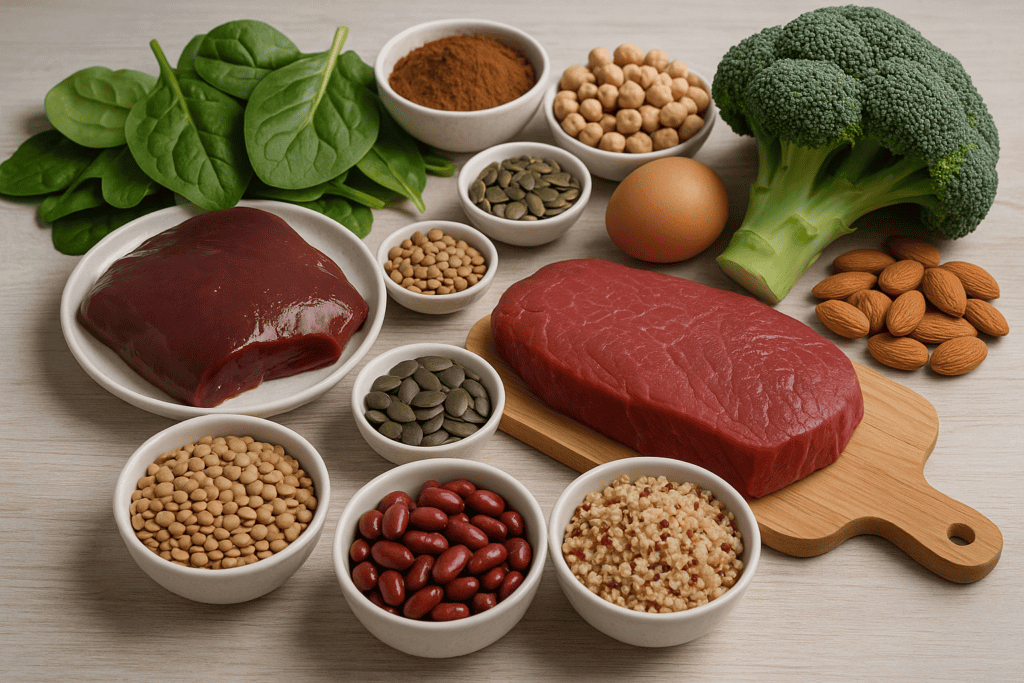
Iron-rich foods for energy and preventing fatigue
Daily iron requirements by age, sex, and life stage (including pregnancy)
A 28-year-old woman books a GP appointment after weeks of tiredness and breathlessness on the stairs. Blood tests show low ferritin, a marker of iron stores, and the clinician explains that her needs rose after heavier periods and a switch to mostly plant-based meals. That conversation often starts with a practical question: how much iron should a person aim for each day?
In the UK, the Reference Nutrient Intake (RNI) for iron is 8.7 mg per day for men aged 19 and over, and 14.8 mg per day for women aged 19–49 (higher to cover menstrual losses). After age 50, the RNI for women matches men at 8.7 mg per day. For children, needs change quickly with growth: 6.9 mg per day at ages 1–3, 6.1 mg at 4–6, and 8.7 mg at 7–10, rising to 11.3 mg at 11–18 for girls and 11.3 mg at 11–18 for boys (UK Government/SACN).
Pregnancy requires careful planning. The UK does not set a higher RNI in pregnancy, but iron requirements increase substantially as blood volume expands and the fetus builds iron stores; NICE advises screening for anaemia and treating confirmed deficiency (NICE). Matching intake to life stage helps reduce fatigue risk and guides when to seek testing rather than self-diagnosing.
Heme iron foods: highest-absorption animal sources and serving ideas
Heme iron from animal foods absorbs more efficiently than non-heme iron from plants. Typical absorption for heme iron sits around 15–35%, while non-heme iron often absorbs at 2–20% and varies more with meal composition (NIH Office of Dietary Supplements). For people managing fatigue linked to low iron stores, that difference can reduce the gap between intake and what the body can use.
Option A focuses on heme iron sources such as red meat, poultry, and seafood. Option B relies on non-heme iron sources such as legumes, wholegrains, and leafy greens. Heme iron absorption remains comparatively stable even when meals contain inhibitors such as phytates, while non-heme iron absorption drops more sharply in high-fibre, tea- or coffee-containing meals.
| Heme iron food (cooked) | Typical portion | Serving idea |
|---|---|---|
| Beef or lamb | 90–120 g | Stir-fry strips with peppers and broccoli; serve with potatoes or rice. |
| Chicken or turkey (dark meat) | 120–150 g | Roast thighs with lemon; pair with a tomato salad for vitamin C. |
| Sardines or mussels | 90–120 g | Fold into pasta with a tomato-based sauce; add parsley and a squeeze of citrus. |
Practical implications: aim for 2–4 heme-iron servings per week if suitable, and combine meals with vitamin C-rich foods (for example, 80 g peppers or one orange) to support total iron absorption. If fatigue persists or heavy periods, pregnancy, or gastrointestinal symptoms apply, request ferritin and full blood count testing via the NHS (NHS).
Non-heme iron foods: plant-based sources, fortified foods, and preparation tips
Plant-based eaters can meet the UK iron RNI on paper yet still feel drained because non-heme iron absorbs less consistently. The NIH Office of Dietary Supplements reports typical non-heme absorption of 2–20%, and tea or coffee with meals can cut absorption by about 50%. When low iron overlaps with chronic stress, fatigue can resemble the signs of burnout, and recovery may stall without nutrition support.
Choose higher-iron plant foods and fortified options, then pair them to improve uptake. Cooked lentils provide about 3.3 mg iron per cup, while cooked spinach provides about 6.4 mg per cup (USDA FoodData Central). Many breakfast cereals supply 4–8 mg per serving when fortified, covering roughly 20–40% of the UK adult female RNI (14.8 mg).
Build meals around a main iron source, then add vitamin C to increase absorption. Squeeze lemon over lentil soup, add peppers to bean chilli, or include an orange with fortified cereal. Keep tea, coffee, and calcium-rich foods 1–2 hours away from iron-rich meals, and use a cast-iron pan for acidic dishes such as tomato sauce.
After 2–4 weeks of consistent pairing, many people notice better stamina during routine tasks, while blood markers such as ferritin typically shift over 6–12 weeks.
Maximising iron absorption and safety: vitamin C pairing, inhibitors, and when to seek testing
Tea and coffee can reduce non-heme iron absorption by about 50% when taken with meals, which can materially slow repletion in people with low stores (NIH Office of Dietary Supplements). Pairing iron with vitamin C improves uptake because ascorbic acid converts iron into a more absorbable form; practical pairings include beans with peppers, or fortified cereal with berries. Calcium can also compete with iron absorption, so spacing high-calcium foods or supplements away from iron-rich meals can help when intake sits near the UK RNI.
- Do: include a vitamin C source at the same meal (for example, 80 g citrus fruit or ½ red pepper).
- Avoid: tea, coffee, or cocoa for 60 minutes either side of iron-rich meals.
- Separate: iron supplements from calcium supplements by 2 hours where possible.
Seek testing if fatigue persists beyond 4–6 weeks despite dietary changes, or if heavy menstrual bleeding, pregnancy, gastrointestinal symptoms, or frequent blood donation applies. Clinicians typically assess full blood count and ferritin; ferritin below 15 µg/L often indicates depleted iron stores (NHS).
Frequently Asked Questions
Which iron-rich foods support energy levels and help reduce fatigue?
Iron-rich foods that support energy include lean red meat (beef, lamb), liver, sardines and mussels, eggs, lentils and chickpeas, tofu, spinach and kale, pumpkin seeds, and iron-fortified cereals. Pair plant sources with vitamin C foods (peppers, citrus, berries) to raise absorption. Avoid tea or coffee with meals, as tannins can reduce uptake.
How does iron deficiency cause tiredness and low energy?
Iron deficiency reduces haemoglobin, the protein that carries oxygen in red blood cells. With less oxygen reaching muscles and the brain, the body produces less energy and fatigue increases. Low iron also impairs myoglobin in muscle and can disrupt thyroid function, which can lower stamina, concentration, and exercise tolerance.
What is the difference between haem and non-haem iron, and which foods contain each type?
Haem iron comes from animal foods and the body absorbs it more efficiently (about 15–35%). Non-haem iron comes from plant foods and fortified products, with lower absorption (about 2–20%). Haem iron sources include beef, lamb, liver, sardines and mussels. Non-haem sources include lentils, chickpeas, tofu, spinach, pumpkin seeds and fortified cereals.
How much iron do adult men and women need per day in the UK, and when does the requirement increase?
In the UK, adult men (19+ years) need 8.7 mg of iron per day. Adult women (19–49 years) need 14.8 mg per day, then 8.7 mg from age 50. Requirements increase during pregnancy to 27 mg per day. Breastfeeding does not increase the UK reference intake.
Which foods and drinks improve iron absorption, and which reduce it?
Vitamin C improves iron absorption: citrus, berries, kiwifruit, peppers, tomatoes, broccoli, and a small glass (150–200 ml) of orange juice with meals. Meat, fish, and poultry also boost non-haem iron absorption. Tea, coffee, and cocoa reduce absorption; avoid them 1–2 hours around iron-rich meals. High-calcium foods and supplements can also reduce absorption.
When should persistent fatigue prompt a blood test for iron deficiency or anaemia?
Arrange a blood test if fatigue persists for more than 2–4 weeks despite adequate sleep, or if it limits daily activities. Seek testing sooner with symptoms such as breathlessness, paleness, dizziness, headaches, brittle nails, or restless legs. Request urgent assessment for chest pain, fainting, black stools, heavy menstrual bleeding, pregnancy, or known gastrointestinal disease.