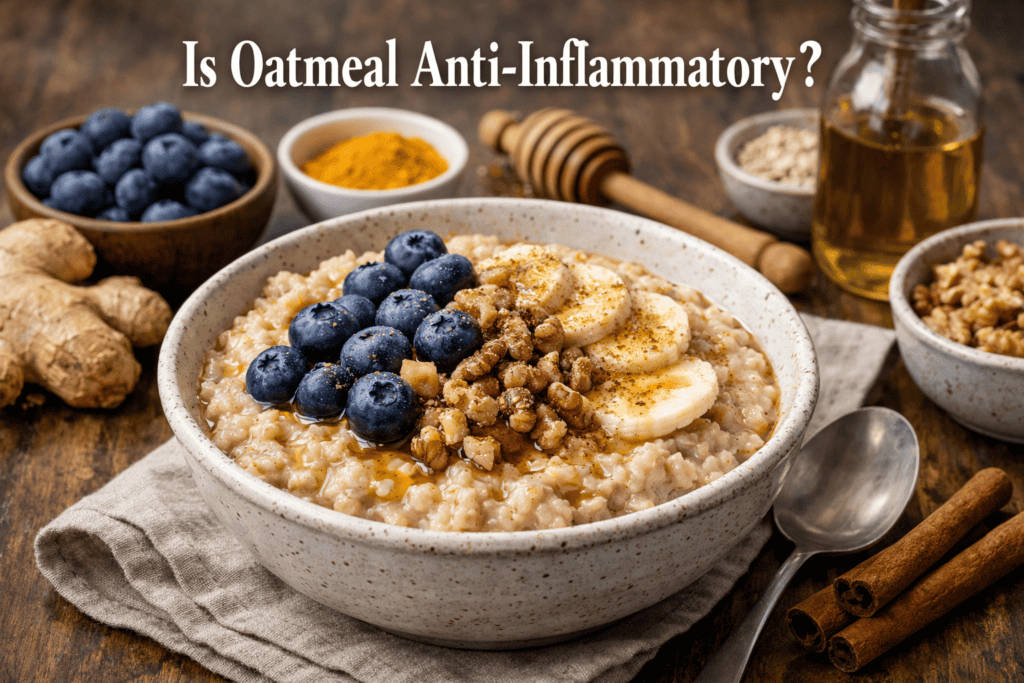
Many people ask, is oatmeal anti inflammatory, especially when planning a heart-healthy breakfast. Oats contain beta-glucan, a soluble fibre that can support gut health and may help manage inflammation when part of a balanced diet. Still, the answer depends on what you add and how you prepare it.
This guide explains how oats inflammation can relate, which anti inflammatory oatmeal toppings tend to help, and which common add-ins can reduce the benefit.
Key takeaways
- Oatmeal can support lower inflammation, mainly due to its beta-glucan fibre.
- Choose plain rolled or steel-cut oats to avoid added sugar and additives.
- Add berries, chia, flax, or walnuts to boost antioxidants and healthy fats.
- Stir in yoghurt or nut butter for protein, which helps steady blood sugar.
- Use cinnamon, ginger, or turmeric for flavour without extra sugar.
- Avoid sugary toppings, flavoured packets, and heavy creamers that raise calorie load.
Is oatmeal anti-inflammatory? What the evidence suggests
Oats contain about 10%–15% soluble fibre by weight, and a typical 40 g serving provides roughly 3–4 g of beta-glucan-rich fibre. Beta-glucan can help lower LDL cholesterol, which matters because chronic, low-grade inflammation often travels with poor cardiometabolic health. Oats also supply unique polyphenols called avenanthramides, which lab studies link to reduced inflammatory signalling in blood vessels. These compounds are one reason researchers often describe oats as a heart-supportive whole grain rather than a neutral starch. Oats also bring magnesium and small amounts of iron, which support normal energy and blood function.
Human evidence points in the same direction, but with limits. In a 2021 systematic review and meta-analysis, oat beta-glucan intake reduced LDL cholesterol by about 0.19 mmol/L, with many trials using around 3 g per day of beta-glucan (PubMed). Lower LDL does not prove an anti-inflammatory effect, but it supports a pathway that can reduce inflammatory burden over time. For inflammation markers such as C-reactive protein (CRP), results vary across studies, and benefits depend on the full bowl: minimally processed oats plus fibre- and polyphenol-rich toppings, not sugar-heavy add-ons. Portion size and regular intake also matter, since most trials run for several weeks, not a single breakfast.
How oats may affect inflammation: beta-glucan, fibre, and gut health
You make a bowl of porridge on a cold morning, then add blueberries, chia, and cinnamon. That simple breakfast can do more than keep you full. The way oats deliver fibre to the gut can shape inflammation signals across the body.
Oats contain beta-glucan, a soluble fibre that turns thick when mixed with liquid. In the gut, that viscosity slows digestion and can blunt sharp blood sugar rises after eating. Frequent glucose spikes can push the body towards chronic, low-grade inflammation, so steadier post-meal responses matter.
Oats also feed gut microbes. When bacteria ferment oat fibres, they produce short-chain fatty acids (SCFAs) such as butyrate. These compounds help maintain the gut lining and may reduce “leaky gut” signalling, which can drive immune activation. This is one reason “is oatmeal anti inflammatory” often comes down to gut health, not just one nutrient.
How you build the bowl changes the outcome. Choose anti inflammatory oatmeal toppings that add fibre and polyphenols, such as berries and chia, and keep sweetness modest. If you want a wider framework, use anti-inflammatory foods to include as a guide for mix-ins that support oats inflammation goals without turning breakfast into a dessert.
Build your anti-inflammatory oatmeal bowl: base choices and cooking methods
Plain oats cooked with water or milk give you a high-fibre base. A sweet, ultra-processed “instant” pot with flavoured sachets often brings added sugar and less control over toppings. Both can fit a healthy diet, but the base choice changes how easy it is to keep oats inflammation support on track.
Option A vs Option B: choose the base that keeps ingredients simple
| Choice | What you get | What to watch | Best use |
|---|---|---|---|
| Steel-cut oats | Chewy texture; minimal processing | Longer cook time | Batch-cook for 3–4 days |
| Rolled oats | Quick cooking; easy to flavour | Can turn mushy if overcooked | Weekday porridge or overnight oats |
| Flavoured instant oats | Fast and convenient | Often higher in added sugar and flavourings | Occasional back-up when time is tight |
Key differences that affect inflammation signals
Less processed oats usually digest more slowly, which can help avoid sharp blood sugar spikes. That matters because frequent spikes can worsen cardiometabolic strain. If you are asking is oatmeal anti inflammatory, the answer depends on the full bowl: fibre-rich oats plus minimally processed add-ins tends to work better than oats plus sugary toppings.
Practical cooking methods (and what they change)
- Stovetop porridge: lets you control thickness; stir in chia near the end to avoid clumps.
- Overnight oats: no heat; use plain yoghurt or milk, then add berries at serving to keep texture.
- Microwave: fast; use a large bowl and short bursts to prevent boil-over.
For the most consistent results, start with plain oats, add protein (Greek yoghurt, milk, or soy drink), then finish with anti inflammatory oatmeal toppings such as berries, chia seeds, and cinnamon. Limit sweeteners and ultra-processed crunch (candies, cookie crumbs, sugar-heavy granola) so the bowl stays nutrient-dense.
Best anti-inflammatory oatmeal toppings to add: berries, chia, cinnamon, nuts, and yoghurt
Many oatmeal bowls fail the anti-inflammatory test because toppings push sugar and saturated fat up, which can worsen post-meal blood glucose swings and crowd out fibre-rich foods. The solution is simple: keep the oat base plain, then add toppings that raise fibre, polyphenols, and unsaturated fats without turning the bowl into dessert.
Start with berries. Blueberries, raspberries, and strawberries add colour from plant compounds (polyphenols) and bring volume with relatively little sugar. Aim for a generous handful, fresh or frozen, and stir them in after cooking to keep texture and flavour.
Next, add chia seeds. Chia thickens porridge and adds fibre and omega-3 fats (ALA). Use 1–2 teaspoons, then let the bowl sit for 2–3 minutes so the chia can absorb liquid and reduce runniness.
Use cinnamon for flavour without added sugar. Mix in ¼–½ teaspoon, then taste before sweetening. If you want crunch and staying power, add a small portion of nuts, such as walnuts or almonds, which bring unsaturated fats and extra fibre.
Finish with plain yoghurt. Choose unsweetened natural or Greek yoghurt to add protein and a creamy texture. Limit honey, syrups, chocolate chips, and biscuit crumbs, since these can quickly add concentrated sugars and ultra-processed ingredients that work against oats inflammation support.
What to avoid or limit: added sugars, ultra-processed toppings, and high-sodium add-ins
In the UK, the NHS advises adults to keep “free sugars” to no more than 30 g per day. One flavoured porridge pot or a heavy hand with sweet toppings can take a large share of that limit. High-sugar add-ins can also drive sharper post-meal blood glucose rises, which may work against an anti-inflammatory eating pattern.
For the most benefit, treat oats as a plain base and keep toppings simple. Aim to keep added sugar close to 0 g at breakfast, and use fruit and spices for sweetness instead.
- Added sugars: honey, syrup, brown sugar, chocolate chips, sweetened dried fruit, and flavoured sachets. Check labels; “per 100 g” sugar numbers can look small until you eat a full portion.
- Ultra-processed toppings: biscuit crumbs, sugary granola, dessert sauces, and sweetened nut butters. These often add sugar and saturated fat without adding much fibre.
- High-sodium add-ins: salted nuts, salted nut butters, and processed breakfast “crunch” mixes. The NHS recommends no more than 6 g salt per day for adults, so small extras can add up.
If you want extra protein, choose plain yoghurt and unsalted nuts. If you want sweetness, use berries or a small amount of mashed banana rather than spooning in sugar.
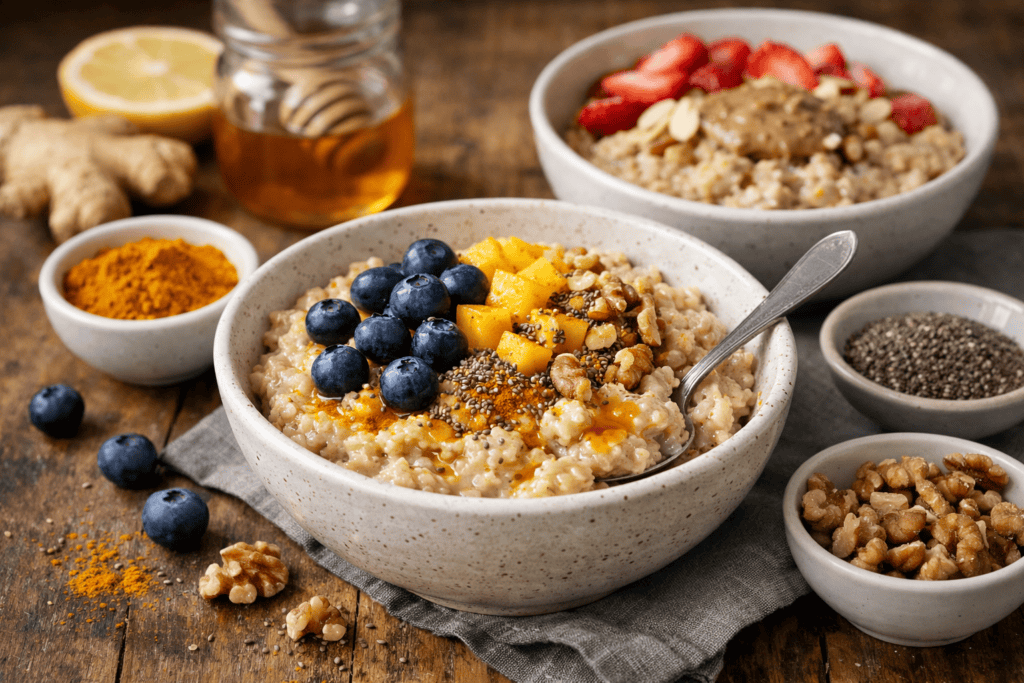
5 anti-inflammatory oatmeal recipes (quick, high-protein, and dairy-free options)
You finish a workout, feel hungry within an hour, and want a breakfast that keeps energy steady. A plain bowl of oats can help, but the toppings decide whether the meal stays anti-inflammatory or turns into a sugar-heavy dessert. Oats also bring beta-glucan, a soluble fibre that supports fullness and steadier blood glucose.
Use this simple rule: keep the base plain, then add fibre, polyphenols (plant compounds), and unsaturated fats. For higher protein without dairy, use soy milk, pea protein, or tofu. Limit sweeteners and ultra-processed toppings, which can push “free sugars” up quickly. The NHS advises adults to keep free sugars to no more than 30 g per day. If you use dried fruit, keep portions small because it concentrates sugar.
5 quick anti-inflammatory oatmeal recipes
- Berry-chia bowl (high fibre): Cook 40–60 g oats in unsweetened soy milk. Stir in 1 tbsp chia seeds and top with a handful of mixed berries plus cinnamon.
- Apple-cinnamon walnut (comforting, low added sugar): Simmer oats with grated apple and cinnamon. Top with chopped walnuts and a spoon of unsweetened yoghurt or soy yoghurt.
- Chocolate-banana protein oats (dairy-free): Cook oats in soy milk. Mix in 1 tbsp unsweetened cocoa and a scoop of unflavoured pea protein. Top with sliced banana and pumpkin seeds.
- Carrot-cake oats (spice-forward): Add grated carrot, cinnamon, and ginger while cooking. Finish with raisins (small handful) and chopped almonds for crunch.
- Savoury miso-sesame oats (no sweeteners): Cook oats in water. Stir in 1 tsp miso, top with spinach, sesame seeds, and a soft-boiled egg or cubed tofu.
To keep “anti inflammatory oatmeal toppings” on track, measure sweet add-ins. Choose fruit, spices, and seeds first, then use honey, syrups, or granola as optional extras rather than defaults. Aim for one sweet element, not three, and balance it with nuts or seeds.
Frequently Asked Questions
Is oatmeal anti-inflammatory, and what makes oats supportive for inflammation management?
Yes. Oatmeal can be anti inflammatory because oats contain beta-glucan fibre and polyphenols such as avenanthramides, which may help calm inflammatory signalling and support gut bacteria. Oats also provide magnesium and steady-release carbohydrates, which can reduce blood sugar spikes that may worsen inflammation. Choose plain oats and limit added sugar.
Which oatmeal toppings are most anti-inflammatory, and how do berries, chia seeds, and cinnamon compare?
Anti inflammatory oatmeal toppings include berries, chia seeds, and cinnamon. Berries supply polyphenols (plant compounds) that help reduce oxidative stress linked to oats inflammation. Chia seeds add fibre and omega-3 ALA fats, which can support a lower inflammatory response. Cinnamon provides antioxidant compounds, but use small amounts due to coumarin in some types.
What oatmeal add-ins should you limit or avoid if you want the most anti-inflammatory benefit?
Limit add-ins that raise sugar, saturated fat, or sodium. Avoid flavoured instant packets, sweetened dried fruit, sugary cereals, and large amounts of honey, syrup, or brown sugar. Limit butter, cream, and full-fat flavoured yoghurt. Skip candy pieces and chocolate chips. Watch salty toppings, such as salted nuts, bacon, and processed meats.
How can you build an anti-inflammatory oatmeal bowl with the right balance of fibre, protein, and healthy fats?
Use rolled or steel-cut oats for soluble fibre. Stir in Greek yoghurt, milk, or soy milk for protein, then add chia or ground flax plus walnuts for healthy fats. Top with berries and cinnamon for polyphenols. Avoid sugary syrups and large dried-fruit portions, which can spike added sugar and calories.
What are five simple anti-inflammatory oatmeal recipes you can rotate through the week?
Rotate these anti inflammatory oatmeal toppings to support oats inflammation goals:
- Blueberry-walnut: oats, blueberries, walnuts, cinnamon.
- Apple-pecan: oats, diced apple, pecans, cinnamon.
- Cherry-almond: oats, cherries, almonds, vanilla.
- Pumpkin-spice: oats, pumpkin purée, cinnamon, pumpkin seeds.
- Banana-flax: oats, banana, ground flaxseed, cinnamon.