
Spices can transform everyday cooking by adding aroma, colour, and depth of flavour. Used well, they balance sweetness, heat, and savoury notes while helping simple ingredients taste more complete. This guide highlights some of the best spices for home kitchens, explaining what each one brings to a dish and where it works best. With a few well-chosen options, meals can taste richer without relying on extra salt or fat.
Key takeaways
- Use cumin to add warm, earthy depth to chilli, lentils, and roasted vegetables.
- Choose smoked paprika for a gentle smoky flavour in stews, potatoes, and marinades.
- Add turmeric for colour and mild bitterness in curries, rice dishes, and soups.
- Season with cinnamon to balance savoury tagines and enrich baking and porridge.
- Use coriander for citrus notes in spice rubs, curries, and tomato-based sauces.
- Finish with black pepper to sharpen flavour, especially in creamy sauces and eggs.
How spices shape flavour: aroma, heat, sweetness, and bitterness
Spices change flavour through four main effects: aroma, heat, sweetness, and bitterness. Aroma drives much of what people call taste, because volatile compounds rise into the nose as food warms. Toasting whole spices in a dry pan can intensify these aromas, while adding ground spices too early can dull them through prolonged heat.
Heat comes from compounds such as capsaicin in chilli and piperine in black pepper. Fat carries these compounds, so oil-based dishes can feel hotter and more persistent. Sweetness in spices does not always mean sugar. Warm spices such as cinnamon and nutmeg can suggest sweetness by reinforcing caramel and vanilla notes, which helps balance acidity in tomato-based sauces.
Bitterness adds structure when used with care. Turmeric, fenugreek, and some peppery spices can taste bitter at high doses, yet small amounts can make rich foods seem less heavy. Salt and acid also moderate bitterness, so a squeeze of lemon or a splash of vinegar can improve balance. For a clear explanation of aroma and taste perception, see Encyclopaedia Britannica.
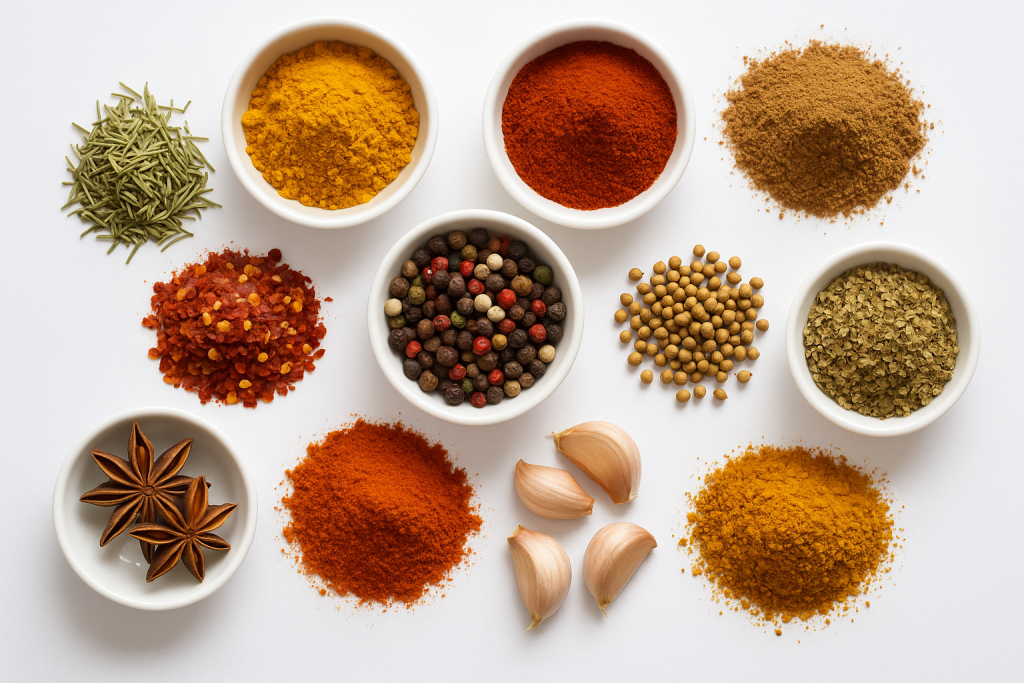
Best Spices to Add Great Flavour to Your Food
Essential warm spices for savoury and sweet dishes: cumin, coriander, cinnamon, and cloves
Cumin, coriander, cinnamon, and cloves bring warmth and depth to both savoury and sweet cooking. Cumin offers an earthy, slightly smoky note that suits lentils, chickpeas, lamb, and roasted vegetables. Toast whole cumin seeds briefly, then grind them to sharpen aroma and reduce any raw edge. Coriander seed tastes citrusy and gently sweet, so it balances rich dishes and lifts tomato-based sauces, curries, and marinades. Ground coriander works well in short-cooked foods, while whole seeds suit slow braises. A light toast also helps coriander release its fragrance without turning bitter.
Cinnamon adds sweet spice without extra sugar. A small piece of cinnamon stick can round out stews, tagines, and rice dishes, while ground cinnamon supports baking, porridge, and fruit. Cloves taste intensely aromatic and slightly numbing, so use them with restraint. Whole cloves suit mulled drinks, stocks, and pickles, while a pinch of ground clove can deepen gingerbread and spice cakes. Keep spices in airtight containers away from heat and sunlight to slow flavour loss. For safe storage and freshness guidance, follow advice from the Food Standards Agency.
Spices that add heat and depth: chilli, paprika, cayenne, and black pepper
Chilli brings a direct, lingering heat from capsaicin, which builds as it spreads through a dish. Use fresh chillies for bright, green notes, or dried flakes and powders for a rounder warmth. Add chilli early to infuse sauces and stews, then adjust near the end to avoid overshooting the heat.
Paprika adds colour and depth with less burn, although hot paprika can still bite. Sweet paprika suits roasted vegetables, eggs, and creamy sauces, while smoked paprika gives a savoury, wood-fired character that works well with beans, chicken, and potatoes. Keep paprika away from very high heat, as it can turn bitter if it scorches.
Cayenne offers clean, concentrated heat with minimal aroma, so it sharpens flavour without changing the dish’s character. A small pinch can lift soups, marinades, and spice rubs. Black pepper contributes a warm, woody bite from piperine, plus fragrant oils that fade with time. Grind pepper just before serving for the clearest aroma, and pair it with fat, such as olive oil or butter, to carry its flavour.
Fragrant spices for brightness and lift: cardamom, fennel, and star anise
Cardamom, fennel, and star anise add a clean, fragrant lift that can stop a dish tasting heavy. Each spice carries sweet, aromatic notes, yet each behaves differently with heat, fat, and acidity. Used with restraint, these spices brighten savoury cooking as well as desserts.
Cardamom tastes floral and slightly citrusy, with a gentle eucalyptus note. Whole green pods suit rice, poached fruit, and creamy puddings, while ground cardamom works well in baking. Crush the pods to expose the seeds, then add them near the start of cooking for infused aroma. For a fresher finish, stir in a small pinch of ground cardamom off the heat. Black cardamom has a smoky character, so it fits slow-cooked meat and lentils rather than sweet dishes.
Fennel seed brings a sweet aniseed flavour that pairs naturally with pork, oily fish, tomato sauces, and roasted vegetables. Light toasting in a dry pan softens bitterness and releases fragrance. After toasting, crush the seeds to spread flavour evenly without making a dish taste perfumed. A small amount also balances acidic sauces, since the sweetness rounds sharp edges.
Star anise offers a bold liquorice note, so a single star often suffices. Add it whole to broths, braises, and fruit compotes, then remove it before serving. Long simmering can turn the flavour medicinal, so keep cooking times moderate and taste as the dish reduces. Star anise also supports savoury depth in stocks and marinades, especially when paired with ginger and citrus peel.
- Use whole spices for gentle infusion; use ground spices for quick impact.
- Start with small quantities, then adjust after tasting.
- Remove whole star anise before serving to avoid bitterness.
Earthy and smoky spices for richness: turmeric, smoked paprika, and mustard seed
Turmeric brings a deep, earthy base and a warm golden colour. Its flavour can taste slightly bitter if used heavily, so pair it with fat, such as oil or yoghurt, to round the edges. Add turmeric early in soups, rice, or lentil dishes so it can mellow as it cooks.
Smoked paprika adds richness through its wood-smoke aroma, which suits beans, roasted vegetables, eggs, and stews. Stir it in off the heat or near the end of cooking to keep the smoky notes clear, as high heat can turn it harsh. Choose sweet smoked paprika for depth without extra heat.
Mustard seed offers a nutty, savoury bite that becomes fragrant when heated. Toast whole seeds briefly in oil until they start to pop, then build sauces, pickles, or braises around the infused fat. Ground mustard works well in dressings, yet it sharpens quickly, so add it in small amounts and taste as you go.
How to buy, store, and use spices for maximum flavour
Choose spices with strong aroma and clear colour, and buy in small quantities so they stay fresh. Whole spices usually keep flavour longer than ground, since grinding exposes more surface area to air. Check best-before dates, yet trust your nose: stale spices smell dusty or faint.
Store spices in airtight containers away from heat, light, and steam. A cupboard near the hob often shortens shelf life, so use a cooler, darker space. Avoid shaking jars directly over a pan, because rising moisture can cause clumping and speed flavour loss.
Use spices with intention. Bloom ground spices briefly in oil to release fat-soluble aromas, then add liquids before they scorch. Add delicate spices near the end for a brighter finish, while tougher seeds can simmer longer. For food safety guidance on storage and handling, consult the Food Standards Agency.
Frequently Asked Questions
Which spices add the most flavour to everyday savoury dishes?
For everyday savoury dishes, use cumin for earthy warmth, smoked paprika for depth, black pepper for sharp heat, garlic powder for savoury richness, and dried oregano or thyme for herbal balance. Add chilli flakes for controlled spice, and ground coriander for a fresh, citrus note. Toast whole spices briefly to intensify aroma.
How do whole spices compare with ground spices for taste and freshness?
Whole spices keep flavour and aroma for longer because the oils stay sealed until use. Grinding releases those oils, so ground spices taste strong at first but lose freshness faster. For the best taste, toast whole spices briefly, then grind as needed. Use ground spices for speed and consistent seasoning.
What is the best way to toast spices to enhance aroma without burning them?
Toast whole spices in a dry, heavy-based pan over low to medium heat. Stir or shake the pan constantly and heat for 30–90 seconds, until the spices smell fragrant and deepen slightly in colour. Tip them out at once to stop cooking, then grind just before use.
Which spices pair well with vegetables, poultry, fish, and red meat?
Vegetables suit cumin, paprika, turmeric, and thyme. Poultry pairs well with sage, rosemary, garlic powder, and smoked paprika. Fish works best with dill, parsley, coriander seed, and mild chilli flakes. Red meat matches black pepper, cumin, coriander, mustard powder, and rosemary. Use sparingly at first, then adjust to taste.
How should spices be stored to keep their flavour for longer?
Store spices in airtight containers in a cool, dark cupboard, away from heat, steam, and direct sunlight. Keep jars closed between uses and avoid shaking spices over hot pans, as moisture reduces flavour. Buy smaller amounts and label containers with purchase dates. Replace ground spices sooner than whole spices.