
Cornicabra is a distinctive Spanish olive variety known for its deep purple hue as it ripens and its characterful oil. Growers value it for resilience in dry conditions and for producing oils with notable bitterness and peppery warmth. The name refers to its horn-like shape, which helps to identify the fruit on the tree. This introduction explains what makes Cornicabra unique, from flavour profile to common uses in cooking.
Key takeaways
- Cornicabra olives show a distinctive purple hue as they ripen.
- The variety takes its name from a horn-like, curved olive shape.
- Cornicabra oil often tastes robust, with bitterness and peppery pungency.
- High natural polyphenols support strong stability and good shelf life.
- Producers commonly grow Cornicabra in central Spain, especially Castilla-La Mancha.
- The oil suits hearty dishes, including stews, roasted vegetables, and grilled meats.
Cornicabra Olive Profile: Origin, Name and Key Identifiers
The Cornicabra olive originates in central Spain, with strong ties to Castilla-La Mancha and nearby provinces where growers have cultivated the variety for centuries. The name “Cornicabra” refers to a goat’s horn, which describes the fruit’s curved, tapered shape. This distinctive form helps separate Cornicabra from rounder Spanish cultivars, even before harvest.
As the fruit ripens, the skin shifts from green to deep violet, which has led many producers to describe it as a “purple olive”. Size tends to sit in the medium range, while the stone often appears elongated and firm. Cornicabra trees usually show good tolerance to dry conditions, a trait that suits the hot, continental climate of its main growing areas.
Official Spanish sources recognise Cornicabra as a key variety for both table olives and oil production, with notable presence in protected designations such as DOP Aceite Montes de Toledo. When identifying Cornicabra in oils, buyers often see the variety named on labels from Spanish producers, especially those focused on regional authenticity and traditional cultivation.
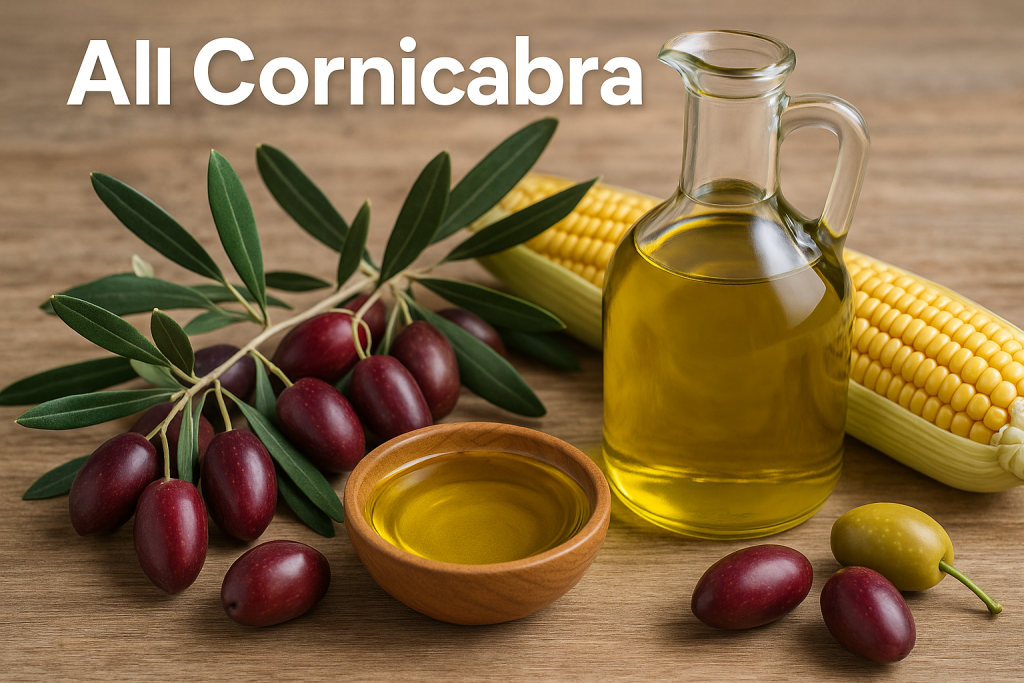
All About Cornicabra
Growing Regions and Cultivation: Climate, Soils and Harvest Timing
Cornicabra thrives in continental Mediterranean conditions, where hot, dry summers and cold winters support steady fruit development. Growers achieve reliable results across central Spain, especially on inland plateaux with wide day–night temperature swings. That contrast slows ripening and helps preserve aroma compounds in the oil. Spring frosts can reduce flowering, so many orchards favour sheltered slopes or sites with good air drainage.
Soils shape both vigour and oil style. Cornicabra performs well on calcareous (lime-rich) and clay-loam soils, which retain moisture yet still allow roots to breathe. Deep, well-structured ground supports drought resilience, while shallow or compacted soils can limit canopy growth and reduce yield stability. Good drainage matters, since waterlogging encourages root stress and can increase disease pressure. Where rainfall remains low, growers often use deficit irrigation, which means applying limited water at key stages to balance yield and quality.
- Preferred climate: hot summers, cold winters, low to moderate rainfall
- Best soils: calcareous and clay-loam with effective drainage
- Key risks: spring frost, prolonged waterlogging, severe summer drought without soil moisture reserves
Harvest timing depends on the intended oil profile. Early picking (often from late October) tends to produce greener, more pungent oils with higher polyphenols, which are natural antioxidants. Later harvest (commonly November into December) increases oil yield and brings riper fruit notes, although it can reduce bitterness and oxidative stability. Many producers monitor the maturity index, which tracks skin and flesh colour change, and confirm decisions with oil content tests.
For guidance on olive phenology and harvest planning, growers often consult resources from the Food and Agriculture Organization of the United Nations (FAO) and the International Olive Council.
Flavour, Aroma and Chemistry: Polyphenols, Bitterness and Pungency
Cornicabra oils often show a structured sensory profile, with clear bitterness and a peppery finish. Those sensations come mainly from polyphenols, a group of natural plant compounds that help protect the oil from oxidation. Higher polyphenol levels usually increase stability and can extend shelf life, while also shaping flavour intensity.
Bitterness tends to register on the sides of the tongue and links closely to phenolic compounds such as oleuropein derivatives. Pungency, felt as a throat tickle, relates to compounds that act in a similar way to mild irritants. When tasters describe a “peppery” note, the sensation often reflects a higher concentration of these phenolics rather than added spice.
Aroma develops through volatile compounds, which form during crushing and malaxation (the slow mixing of olive paste). Cornicabra commonly presents green notes, such as leaf, herb, and fresh-cut plant character, alongside hints of almond or artichoke in some lots. Processing choices influence these aromas: cooler malaxation can preserve delicate volatiles, while excessive heat can flatten them and reduce freshness.
Chemistry also explains why Cornicabra can taste robust when young yet soften with time. As the oil ages, oxidation and polymerisation reduce aromatic lift and can mute bitterness and pungency. For a technical reference on olive oil composition and quality factors, consult the International Olive Council.
Cornicabra Extra Virgin Olive Oil: Uses in Cooking and Food Pairings
Cornicabra extra virgin olive oil suits dishes that benefit from a firm, peppery lift. Use it raw to finish lentil stews, grilled vegetables, or tomato salads, where the oil can add structure without masking the main ingredients. It also works well in dressings for bitter leaves such as radicchio, as the fruitiness can balance sharp greens.
For cooking, choose moderate heat methods. Use it for sautéing onions, peppers, and pulses, or for roasting root vegetables, where the oil can carry flavour into the centre of the dish. Reserve very high heat frying for more neutral oils, since prolonged heat can mute aroma.
Pair Cornicabra with Manchego, cured ham, chickpeas, roasted aubergine, and citrus. Serve with rustic bread and a pinch of salt to highlight the oil’s clean finish. For storage guidance, follow advice from the International Olive Council.
Selection and Storage: Buying Quality Cornicabra Oil and Keeping It Fresh
Choose Cornicabra extra virgin olive oil from a producer that states the harvest season and bottling date, since freshness drives flavour and stability. Prefer dark glass or a well-sealed tin, as light speeds oxidation and dulls aroma. A clear label should also name the origin and category, such as “extra virgin”, which indicates the highest grade. For a quick check, look for storage guidance and a best-before date that allows sensible use within a few months of opening.
Buy a size that matches your pace in the kitchen. A smaller bottle often keeps quality higher than a large container that sits open for weeks. Once opened, close the cap immediately and avoid leaving the bottle near the hob, dishwasher, or a sunny window. Heat, light, and oxygen cause oxidation, which can create stale, waxy notes and reduce the oil’s natural antioxidants.
Store Cornicabra oil in a cool, dark cupboard, ideally around 14–18 °C. Refrigeration can help in warm homes, although the oil may turn cloudy and thicken; that change does not indicate spoilage, and clarity returns at room temperature. Aim to use opened oil within six to eight weeks for best character. If the oil smells flat, rancid, or reminiscent of crayons, replace it. For labelling terms and quality standards, consult the International Olive Council.
Frequently Asked Questions
What is the Cornicabra olive, and why is it often called the purple olive?
The Cornicabra olive is a Spanish variety, widely grown in central regions, valued for robust, peppery oil. Many people call it the purple olive because the fruit often shows deep violet to purple tones as it ripens, before turning fully black. That distinctive colour helps distinguish Cornicabra from greener varieties at harvest.
Where does the Cornicabra olive originate, and which regions produce it most widely?
The Cornicabra olive originates in central Spain, with strong historical ties to Castilla-La Mancha. Producers cultivate it most widely across Toledo and Ciudad Real, and it also appears in nearby areas of Madrid and Extremadura. Growers value it for its hardiness and consistent yields in inland, continental climates.
How does Cornicabra extra virgin olive oil taste, and which aromas and flavours are typical?
Cornicabra extra virgin olive oil tastes robust and well balanced. It often starts with green fruitiness, then shows medium bitterness and a clear peppery finish. Typical aromas and flavours include:
- Green apple and fresh almond
- Tomato leaf and artichoke
- Cut grass and green herbs
- Black pepper and a slight astringency
When are Cornicabra olives harvested, and how does harvest timing affect colour and flavour?
Cornicabra olives are usually harvested from late October to January. Early harvest produces greener fruit with higher polyphenols, giving firmer texture, stronger bitterness and peppery notes. Later harvest brings a deeper purple colour, softer flesh and a rounder, fruitier flavour, with less bitterness and a milder finish.
Which foods pair best with Cornicabra olive oil, and how should it be used in cooking?
Cornicabra olive oil suits roast lamb, grilled vegetables, lentil stews, tomato-based dishes, and mature cheeses. Use it for sautéing and roasting at moderate heat, or add it at the end to preserve aroma and peppery notes. It also works well in vinaigrettes, marinades, and as a finishing drizzle on soups and salads.