No single food reverses ageing, but several nutrients affect the biological processes behind cellular decline. Research links compounds such as polyphenols, omega-3 fatty acids, and carotenoids to lower oxidative stress and reduced systemic inflammation. This article examines what peer-reviewed evidence supports, where marketing overstates the findings, and which dietary patterns appear consistently in longevity research.
Key takeaways
- Cellular ageing is driven mainly by oxidative stress and chronic inflammation.
- Sulforaphane in broccoli activates the Nrf2 pathway and boosts the body’s own antioxidant enzymes.
- EPA and DHA from oily fish lower interleukin-6 and C-reactive protein, which reduces inflammation markers.
- The PREDIMED trial linked Mediterranean diets supplemented with olive oil to fewer cardiovascular events.
- Most supplement studies test isolated compounds in cells or rodents, not humans.
- No single food slows ageing in isolation; dietary patterns show the most consistent longevity signals.
- Shift your plate towards vegetables, legumes, oily fish, and whole grains before adding any supplement.
How cellular ageing creates the biological case for dietary intervention
Track your dietary patterns before you assess any anti-ageing claim. Without a baseline, you cannot tell whether a food change is producing a measurable effect or simply lining up with other lifestyle shifts.
Two well-documented mechanisms speed up cellular ageing: oxidative stress and chronic low-grade inflammation. Free radicals are unstable molecules produced by normal metabolism, UV exposure, and pollution. They damage DNA, proteins, and cell membranes faster than the body can repair them. Telomeres, the protective caps on chromosomes, shorten with each cell division, and oxidative stress speeds that shortening. Shorter telomeres are associated with earlier onset of age-related disease.
Diet intersects directly with both mechanisms. Polyphenols, carotenoids, and long-chain omega-3 fatty acids reduce circulating inflammatory markers and neutralise free radicals at the cellular level. Research published in journals such as Nature Aging consistently links diets rich in these compounds to slower biological ageing, measured by telomere length and epigenetic clocks. The biological pathway exists. The question is how reliably food choices activate it.
Antioxidants, inflammation, and the nutrients with the strongest research backing
Broccoli and Brussels sprouts contain sulforaphane, which reduces oxidative stress markers by activating the Nrf2 pathway. This cellular switch upregulates the body’s own antioxidant enzymes. That endogenous response tends to last longer than consuming antioxidant molecules directly.
Omega-3 fatty acids, particularly EPA and DHA from oily fish, lower circulating interleukin-6 and C-reactive protein. The BMJ and other peer-reviewed sources consistently link higher omega-3 intake to reduced inflammatory load across multiple population studies.
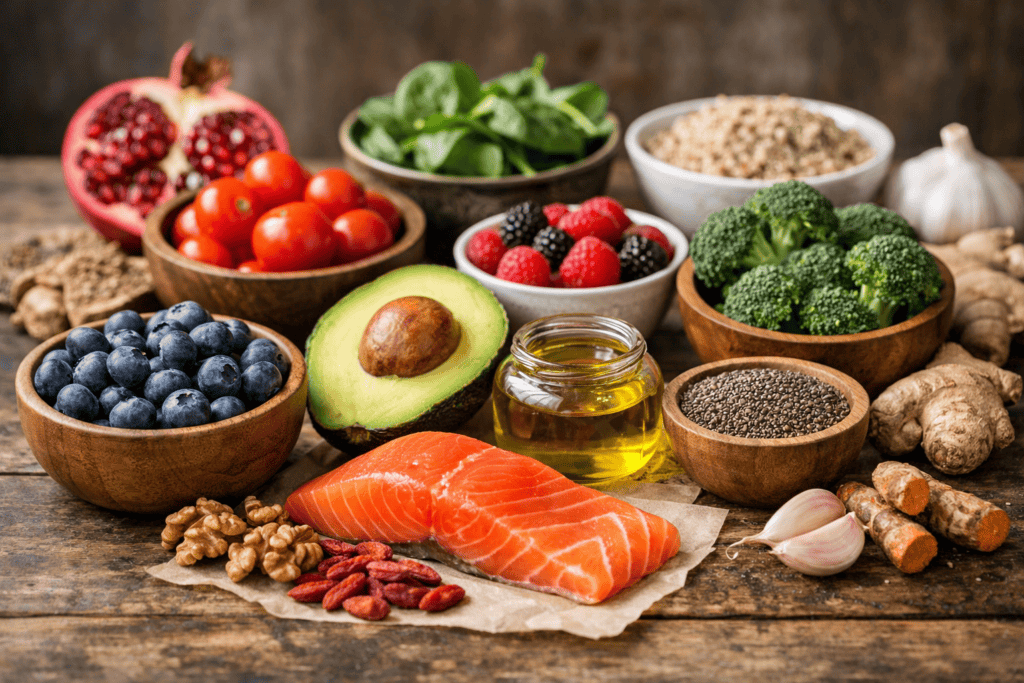
Polyphenols in berries, green tea, and extra-virgin olive oil show credible anti-inflammatory effects in controlled trials. Still, most studies use concentrated extracts rather than whole foods at realistic serving sizes. That gap between laboratory doses and typical dietary intake remains a recurring limitation in polyphenol research.
Vitamin C supports collagen synthesis as a cofactor for prolyl hydroxylase, the enzyme that stabilises collagen’s triple-helix structure. Deficiency accelerates skin ageing measurably. It remains unclear whether supplementing above adequate intake benefits well-nourished adults. Citrus, kiwi, and red peppers reliably meet the threshold where evidence is strongest.
Foods consistently linked to slower ageing markers in human studies
Most food and ageing research relies on observational data, so it shows associations rather than causes. Even so, several foods appear consistently across both study types and show measurable effects on recognised ageing biomarkers.
Extra virgin olive oil has some of the strongest repeat findings. The PREDIMED trial found that Mediterranean diets supplemented with olive oil reduced cardiovascular events and systemic inflammation markers compared with a low-fat control diet. Oleocanthal, a polyphenol in olive oil, inhibits the same inflammatory enzymes targeted by ibuprofen, though at lower concentrations.
Blueberries raise BDNF (brain-derived neurotrophic factor), a protein that helps maintain neurons and declines with age. Multiple small human trials recorded improvements in memory and reductions in oxidative stress markers after regular consumption over 12 weeks or more.
Japanese cohort studies linked green tea catechins, particularly EGCG, to lower all-cause mortality and slower telomere shortening. The association held after adjusting for smoking, BMI, and physical activity, though causality remains difficult to isolate in free-living populations.
Where the science is overstated: supplements, superfoods, and cherry-picked data
Most supplement marketing leans on studies of isolated compounds at doses impossible to get from food. Many of those studies were conducted in cells or rodents rather than humans. Others tracked surrogate markers with no confirmed link to lifespan. Yet the leap from “this molecule reduced oxidative stress in a petri dish” to “this powder slows ageing” routinely goes unchallenged on product packaging.
Resveratrol shows the pattern clearly. Early cell-culture findings generated widespread media coverage, but human trials showed poor bioavailability and no consistent effect on ageing biomarkers. The Cochrane Collaboration reached similar conclusions about popular antioxidant supplements, noting that high-dose isolated antioxidants can interfere with the body’s own adaptive response.
- There are credible biological pathways involving oxidative stress, inflammation, telomeres, and cellular repair.
- Some nutrients and food compounds show anti-inflammatory or antioxidant effects in controlled settings.
- Deficiency correction, such as adequate vitamin C intake, clearly matters for normal tissue maintenance.
- Supplement marketing often cites isolated compounds at doses impossible to get from food.
- Many polyphenol studies use concentrated extracts rather than realistic serving sizes.
- Observational studies can show association without proving causation.
- Cherry-picked data can exaggerate the certainty of anti-ageing effects.
A single small or industry-funded trial can keep a health claim alive for years, even after larger studies fail to replicate it. When reviewing any anti-ageing food claim, check whether the effect appeared in a randomised controlled trial, whether it has been independently replicated, and whether the outcome is a validated ageing proxy. Consistent associations across multiple large cohort studies carry more weight than one striking headline.
Dietary patterns versus single foods: what the evidence actually supports
No single food has been shown to slow ageing in isolation. Research consistently points to eating patterns instead. The Mediterranean, DASH, and traditional Okinawan diets all reduce inflammation and metabolic dysfunction through the same core structure: high vegetable and legume intake, limited ultra-processed food, moderate protein from fish or plant sources, and low added sugar.
The PREDIMED trial and subsequent cohort data track outcomes over years, so they carry more weight than short studies that measure a single biomarker. These dietary patterns act across multiple biological pathways at the same time. No supplement replicates that breadth.
| Approach | What the article says |
|---|---|
| Single nutrients or compounds | Mechanistically plausible, but evidence is often based on isolated compounds, extracts, or doses that are hard to achieve through normal eating. |
| Whole foods | Foods such as oily fish, berries, cruciferous vegetables, green tea, citrus, kiwi, red peppers, and extra-virgin olive oil have more realistic dietary relevance. |
| Dietary patterns | The article points to stronger support for overall eating patterns rich in polyphenols, carotenoids, and omega-3s than for any single anti-ageing food. |
| Supplements and superfoods | This is where the science is most often overstated, especially when marketing relies on cherry-picked studies of isolated compounds. |
Replacing ultra-processed meals with whole foods, vegetables, legumes, and oily fish leads to measurable improvements in inflammatory markers. The evidence supports improving the full dietary pattern and sustaining it long enough for cumulative effects to register, rather than optimising around any one ingredient.
Practical dietary changes with a realistic basis in longevity research
Shift most of your plate towards vegetables, legumes, oily fish, and whole grains before changing anything else. This structural change matches the dietary patterns that have shown the most consistent longevity signals in human research, without relying on any specific superfood or supplement.
Use olive oil as your main cooking and dressing fat. Aim for two to four portions of oily fish per week to keep EPA and DHA within ranges associated with reduced inflammatory markers. Limit ultra-processed foods. Their consistent link to accelerated biological ageing is one of the more robust findings in recent nutritional epidemiology.
Track what you already eat for two to three weeks before making changes. Reviewing your full dietary pattern tells you more than adding one food to an otherwise poor diet. No supplement currently replicates the effect of a whole dietary pattern. Where genuine gaps exist, such as low oily fish intake, an algae-derived omega-3 supplement offers a credible alternative. Otherwise, the evidence favours spending on food quality over concentrated extracts.
Frequently Asked Questions
Which foods have the strongest scientific evidence for supporting healthy ageing?
Berries, leafy greens, oily fish, nuts, and olive oil have the strongest research backing. Most of the evidence comes from large observational studies, especially on Mediterranean-style dietary patterns. Controlled trials on individual foods remain limited, but consistent associations across multiple study types strengthen the case for these plant-rich, omega-3-containing choices.
Can any food or diet actually slow ageing, or do they mainly affect age-related disease risk?
No food directly slows the biological processes of ageing. Diets rich in polyphenols, omega-3s, and fibre can reduce chronic inflammation and oxidative stress. This lowers the risk of age-related diseases such as cardiovascular disease, type 2 diabetes, and cognitive decline. The result is a longer healthspan, not reversed ageing.
What does current research say about antioxidants and anti-ageing claims?
Get antioxidants from whole foods instead of supplements. Large clinical trials, including the SELECT and ATBC studies, found that isolated antioxidant supplements did not replicate the benefits seen in dietary studies and sometimes increased risk. Vegetables, berries, and legumes provide antioxidants along with fibre, polyphenols, and other compounds that appear to work together.
Are supplements marketed for anti-ageing as effective as whole foods?
Whole foods consistently outperform isolated supplements in clinical research. Their nutrients work alongside fibre, phytonutrients, and enzymes in ways supplements cannot replicate. Most anti-ageing supplements also lack robust human trial data to support their marketed claims.
Which popular anti-ageing food claims are not well supported by scientific evidence?
Several widely marketed claims lack rigorous human trial evidence. Brands often promote collagen supplements, activated charcoal, and “superfoods” such as goji berries for anti-ageing effects, yet most supporting studies are small, short-term, or conducted on animals. Resveratrol supplements fit the same pattern, as high-dose extracts have not replicated the results seen in laboratory conditions.