
Key takeaways
- Stock tinned beans and lentils for 15–18g protein per cooked cup.
- Keep wholegrains like oats and brown rice for fibre-rich, low-cost meals.
- Choose tinned fish such as sardines or salmon for omega-3s and calcium.
- Use canned tomatoes and tomato purée as a base for soups, stews, and sauces.
- Store nuts, seeds, and nut butter for healthy fats and quick snacks.
- Rely on herbs, spices, garlic, and onions to add flavour without extra salt.
Whole grains for steady energy and fibre
Adults should consume at least 30 g of fibre per day, yet average intake sits closer to 18 g in the UK, leaving a gap of about 12 g (as of 2023) (UK Government: SACN Carbohydrates and Health). Whole grains help close that gap because they retain the bran and germ, which carry most of the fibre, B vitamins, and minerals. A practical benchmark is to choose grains providing at least 6 g of fibre per 100 g, which typically includes oats, wholemeal pasta, brown rice, and quinoa. Whole grains also support steadier energy because the intact grain structure slows digestion. For example, rolled oats usually provide about 10 g of fibre per 100 g and around 13 g of protein, which helps maintain fullness between meals. Aim for 48 g of whole grains daily (about 3 servings) to align with common dietary guidance and to make fibre targets easier to reach without relying on supplements.
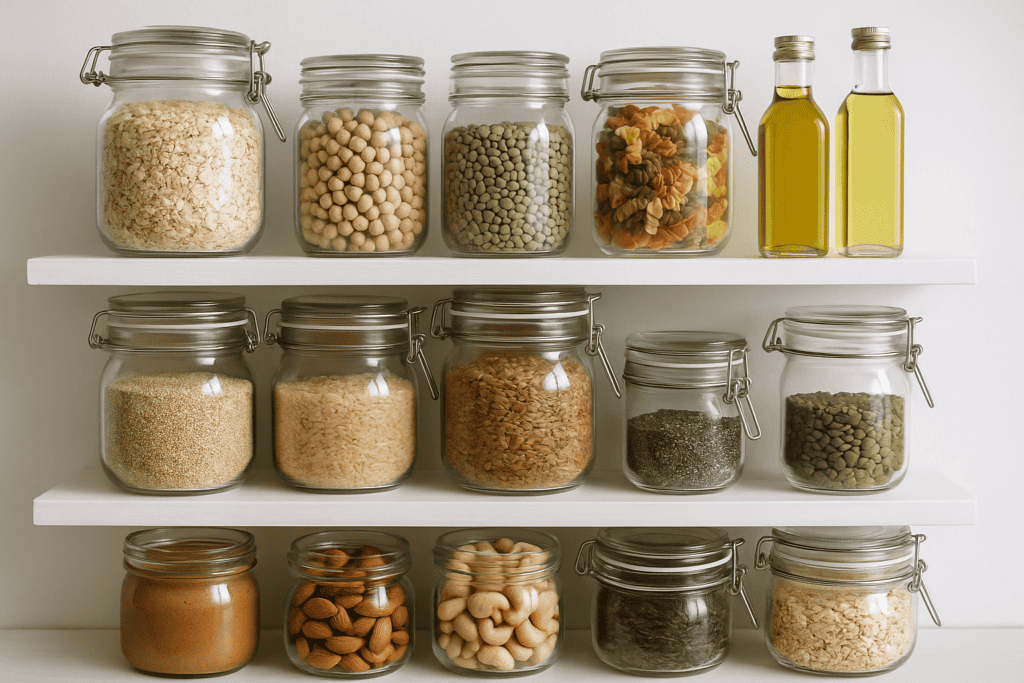
Healthy pantry staples
Protein staples: pulses, tinned fish, and nuts
At 18:30, dinner plans can change fast: the fridge looks bare, but a tin of sardines, a jar of lentils, and a handful of almonds can still produce a meal in 10 minutes. A 120 g tin of sardines typically provides about 25 g of protein, while also supplying omega-3 fats and calcium when eaten with the bones. A 240 g drained tin of chickpeas adds roughly 17–19 g of protein plus fibre, which supports fullness and steadier blood glucose. That combination works because pulses and tinned fish deliver high protein per pound and keep for months, reducing waste compared with short-life meats. Nuts and seeds then raise energy density and micronutrients; a 30 g portion of almonds provides about 6 g of protein and mostly unsaturated fat. For practical use, aim to include one pulse-based meal and one tinned-fish meal each week, and keep nuts for snacks or to finish salads and porridge.
Healthy fats and flavour boosters: oils, vinegars, and spices
Extra virgin olive oil and a jar of mixed dried herbs both add flavour, but they change meals in different ways. Oils raise energy density and help carry fat-soluble vitamins, while vinegars and spices deliver acidity and aroma with negligible calories. Choosing between them depends on whether a dish needs richness, brightness, or a stronger savoury profile. Option A focuses on unsaturated oils such as extra virgin olive oil or rapeseed oil. One tablespoon (15 ml) provides about 120 kcal and 13–14 g of fat, which can improve satiety and mouthfeel. The British Heart Foundation advises swapping saturated fats for unsaturated fats to support heart health, which makes these oils a practical default for roasting vegetables or finishing soups. Option B uses vinegars and spices to lift flavour without adding fat. A tablespoon of vinegar typically contributes 0–3 kcal, yet the acidity can balance salty foods and brighten pulses, grains, and tinned fish. Spices and dried herbs add intensity in small amounts; a 1 g serving often contains under 5 kcal, but it can shift a meal from bland to aromatic through compounds such as capsaicin (chilli) or curcumin (turmeric).
| Staple | Typical serving | Energy impact | Best use |
|---|---|---|---|
| Extra virgin olive oil | 15 ml (1 tbsp) | ~120 kcal; ~14 g fat | Dressings, finishing, gentle sautéing |
| Rapeseed oil | 15 ml (1 tbsp) | ~120 kcal; ~14 g fat | Higher-heat cooking and baking swaps |
| Cider or wine vinegar | 15 ml (1 tbsp) | ~0–3 kcal | Quick pickles, salads, balancing rich dishes |
| Ground spices (for example cumin) | 1–2 g (½–1 tsp) | <5 kcal | Building depth in stews, lentils, and rice |
In practice, keep one everyday oil, one finishing oil, one vinegar, and two core spices. This combination covers most weeknight cooking: oil for texture, vinegar for contrast, and spices for variety, without relying on sugary sauces or excess salt.
Low-sugar basics for quick, balanced meals
In the UK, adults should keep free sugars below 5% of daily energy, which equals about 30 g per day for most adults (SACN: Carbohydrates and Health). A single 500 ml bottle of cola can contain about 53 g of sugar, which can push intake over the daily limit in one drink. High-sugar sauces and snacks also raise calories quickly without improving protein or fibre, which makes meals less filling. A low-sugar pantry solves this by relying on staples that add flavour and structure without sweeteners. Keep tinned tomatoes (choose “no added sugar”), passata, tomato purée, and unsweetened coconut milk for fast bases. Stock low-sugar condiments such as mustard, capers, and olives, plus spices like smoked paprika and cumin to build depth without relying on sweet chilli or sugary ketchup. Start by checking labels: aim for sauces and condiments with no added sugar and, where possible, under 5 g sugars per 100 g. Next, keep two “meal starters” ready: a tomato base (tinned tomatoes plus herbs) and a curry base (coconut milk plus curry spices). Then assemble in 10–15 minutes by simmering the base, stirring through a protein staple already covered, and finishing with lemon juice or vinegar for brightness. These swaps typically cut tens of grams of sugar per meal while keeping flavour high, and they reduce reliance on takeaways when time runs short.
Storage, rotation, and food safety for pantry longevity
In 2024, the Food Standards Agency reported 2.4 million cases of foodborne illness each year in the UK, which makes safe storage a practical part of healthy eating. Pantry longevity depends on controlling moisture, heat, and time, because each factor accelerates rancidity, mould growth, or nutrient loss. Store dry goods in airtight containers and keep cupboards below 20°C where possible, since warmer conditions shorten shelf life for oils, nuts, and whole grains. Rotation prevents waste and reduces risk. Use a “first in, first out” system and label opened packs with the date; many staples lose quality within 4–12 weeks after opening, even when the best-before date sits further away. After opening, aim to use nut butters within 3 months and wholemeal flour within 6 months to limit oxidation and off flavours. Discard any item with visible mould, a swollen tin, or a sharp, paint-like smell, which often signals fat spoilage.
Frequently Asked Questions
Which healthy pantry staples provide the best balance of protein, fibre, and micronutrients?
For balanced protein, fibre, and micronutrients, keep:
- Lentils (18 g protein, 15 g fibre per cooked cup; high in folate and iron)
- Chickpeas (15 g protein, 12 g fibre; rich in manganese and folate)
- Tinned sardines (23 g protein per 100 g; high in vitamin D, B12, and calcium)
- Oats (10 g protein, 8 g fibre per 100 g; magnesium and thiamine)
How long do common healthy pantry staples typically last when stored correctly?
Stored in airtight containers in a cool, dark cupboard (about 10–21°C), most staples last: dried beans and lentils 1–2 years; brown rice 6–12 months (white rice 4–5 years); rolled oats 12–18 months; nuts and seeds 3–6 months (or 9–12 months refrigerated); canned fish and tomatoes 2–5 years; spices 1–3 years.
What are the healthiest tinned and jarred foods to keep for quick meals?
Choose tinned pulses (lentils, chickpeas, beans) and tinned fish (sardines, salmon, mackerel) in water or olive oil. Keep tinned tomatoes and vegetables with no added salt or sugar. For jars, select passata, olives, capers, and sauerkraut or kimchi with minimal additives. Aim for ≤400 mg sodium per 100 g.
Which whole grains and legumes should you stock for versatile, budget-friendly cooking?
Stock whole grains such as rolled oats, brown rice, quinoa, bulgur and wholewheat pasta for meals in 10–30 minutes. Keep legumes including dried lentils, chickpeas, black beans and canned beans for soups, salads and stews. A 500 g bag of lentils yields about 10–12 servings, while 400 g canned beans provide 2–3 servings.
How can you build a healthy pantry on a budget without buying ultra-processed foods?
Prioritise low-cost, minimally processed staples: dried beans and lentils, oats, brown rice, tinned tomatoes, frozen vegetables, and canned fish in water. Buy store brands, choose larger packs, and cook in batches to cut waste. Aim for 20–30g fibre daily and keep added sugars under 30g per day by checking labels.