
Sitting for long periods reduces muscle activity and lowers energy use, which can affect circulation and joint mobility. Research links high daily sitting time with higher cardiometabolic risk, even among people who exercise regularly. This guide explains practical ways to stay active during a desk-based day, using brief movement breaks, simple strength work, and walking habits that fit around meetings. Small, frequent changes can raise daily step counts and reduce stiffness without disrupting productivity.
Key takeaways
- Break up sitting every 30–60 minutes with 2–5 minutes of movement.
- Use “exercise snacks”: 10 squats, stair climbs, or brisk corridor walks.
- Set calendar or phone reminders to stand, stretch hips, and reset posture.
- Build activity into work tasks: walk during calls and take stairs, not lifts.
- Try a sit–stand routine: stand 10–15 minutes each hour, then sit.
- Target 7,000–10,000 daily steps by adding short walks before and after work.
Quantify your sitting time and set movement targets
Adults spend about 9.5 hours per day sitting, based on accelerometer data from the US National Health and Nutrition Examination Survey (NHANES). That volume matters because long, unbroken sitting reduces muscle activity in the legs and trunk, which lowers short-term energy expenditure and can worsen post-meal blood glucose control. Measuring your baseline makes the problem concrete and turns “be more active” into a trackable plan.
Start by quantifying sitting time for 7 consecutive days using a wearable or phone tracker. Devices such as Fitbit and Apple Watch estimate sedentary minutes and prompt standing, which helps you identify the longest uninterrupted blocks. Aim to break sitting at least every 30 minutes with 2–3 minutes of light movement, such as walking to fill a bottle or climbing one flight of stairs.
Set a daily target that fits your schedule: the World Health Organization recommends 150–300 minutes of moderate activity per week, which equals 22–43 minutes per day. If that feels high, begin by reducing sedentary time by 60 minutes per day and reassess after two weeks using the same tracker.
How to stay active if you sit all day
Build hourly micro-movement breaks into your workday
At 10:55, a project manager finishes a 50-minute video call, realises the next meeting starts at 11:00, and stays seated to “save time”. By 16:00, four hours have passed with only a brief walk to refill a bottle. The calendar looks productive, yet the body has spent most of the day in the same hip and knee angles, with minimal calf and glute activation.
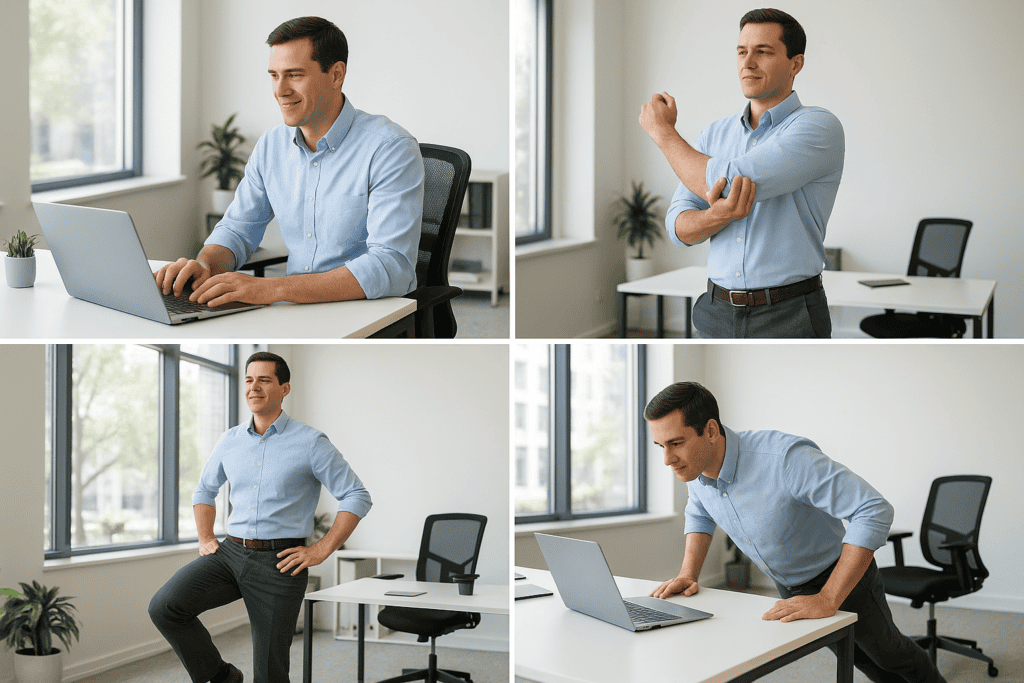
Hourly micro-movement breaks solve this problem because they interrupt long sitting bouts without derailing focused work. A practical target is 1–3 minutes of movement every 60 minutes, which totals 8–24 minutes across an 8-hour day. That amount sounds small, yet it creates 8 separate “resets” for posture, circulation, and joint range of motion. If reminders help, set a repeating timer on a phone or use a computer prompt; the key is consistency rather than intensity.
Use one simple routine that fits beside a desk, so friction stays low:
- 30 seconds of brisk marching in place or a corridor walk (aim for 60–90 steps).
- 8–12 sit-to-stands from the chair, controlled and steady.
- 20–30 seconds of calf raises (about 15–25 reps), holding the desk for balance.
For broader application, attach the break to an existing trigger: the end of each call, sending an email, or refilling water. If work runs in 90-minute blocks, keep the same rule but shorten the interval to 45 minutes during peak sitting periods. For health context, the World Health Organization links sedentary behaviour with higher cardiometabolic risk, while the CDC recommends regular movement as part of weekly activity goals. Micro-breaks do not replace exercise sessions, yet they make long desk days measurably less static.
Optimise your workstation to reduce prolonged static posture
Option A keeps a fixed desk height and relies on willpower to change position; Option B adjusts the workstation so posture changes happen with less effort. A static set-up often locks hips at roughly 90° and keeps the screen too low, which increases neck flexion and reduces glute and calf activity during long tasks.
| Workstation element | Option A: fixed set-up | Option B: optimised set-up |
|---|---|---|
| Monitor height | Top of screen below eye level | Top of screen at, or slightly below, eye level |
| Chair and desk height | Shoulders elevated or wrists bent | Elbows near 90° with neutral wrists |
| Posture variation | One position for 60–120 minutes | Alternates sitting and standing every 20–30 minutes |
For practical use, set the screen about 50–70 cm from the eyes and keep feet fully supported. If using a sit–stand desk, aim for 2–4 hours of standing spread across the day, aligning with guidance from NIOSH. A simple monitor riser and external keyboard often achieve most benefits without replacing the desk.
Use before-work, lunch, and after-work routines to meet weekly activity guidelines
Desk-based workers often miss the 150 minutes of moderate-intensity activity per week recommended for adults, especially when meetings compress the day into long seated blocks. A typical schedule can leave only 30–45 minutes of discretionary time on weekdays, which makes “exercise later” an unreliable plan.
A routine anchored to three predictable windows solves this problem because it converts spare minutes into a weekly total. Aim for 5 sessions of 30 minutes across the week, or 10–15 minute blocks that accumulate to the same target. The NHS physical activity guidelines also recommend muscle-strengthening activity on 2 days per week, which fits well into short, scheduled sessions.
Before work, complete a brisk walk or cycle for 12–20 minutes at a pace that raises breathing but still allows conversation. At lunch, add 10–15 minutes of continuous walking immediately after eating to support post-meal glucose control and protect the afternoon energy dip. After work, finish with 10–20 minutes of resistance work, such as squats, hip hinges, rows, and calf raises, using bodyweight or a single dumbbell.
After 4 weeks, this structure typically delivers 150–210 minutes of moderate activity plus 2 strength sessions, without relying on long gym visits. A fixed routine also reduces decision fatigue, which improves adherence when workloads peak.
Frequently Asked Questions
How many minutes of movement should you aim for each hour if you sit at a desk all day?
If you sit at a desk all day, aim for 2–5 minutes of movement every hour. This aligns with evidence that 2 minutes of light walking or 15 bodyweight squats every 30 minutes can reduce post-meal blood glucose by about 24–25% compared with uninterrupted sitting.
Which seated stretches and mobility exercises reduce hip and lower-back stiffness during long sitting periods?
Use these seated moves every 30–60 minutes, holding each for 20–30 seconds and repeating 2–3 times per side:
- Seated figure-four stretch (ankle on opposite knee) to open the hip.
- Seated hip flexor glide (scoot forward, extend one leg, tuck pelvis) to ease front-hip tightness.
- Seated spinal twist to reduce lower-back stiffness.
- Pelvic tilts for 10–15 slow reps to restore lumbar motion.
What is the most effective way to structure a daily walking routine around a full-time desk job?
Schedule three walking blocks: 10 minutes before work, 5 minutes every 60–90 minutes during the day, and 15–20 minutes after work. Aim for 30–45 minutes total and 6,000–8,000 steps. Use calendar reminders and take calls while walking to protect consistency.
How can you set up an ergonomic workstation that encourages more movement without reducing productivity?
Set the monitor at eye level and keep elbows at 90–100° with wrists straight. Use a chair with lumbar support and set hips slightly above knees. Place frequently used items 30–60 cm away to prompt reach breaks. Alternate sitting and standing every 30–45 minutes, and take 1–2 minute walking breaks each hour.
Which strength exercises counteract the postural effects of prolonged sitting, and how often should you do them?
Prioritise glute bridges, hip hinges (deadlift pattern), rows, face pulls, planks, and thoracic extensions to offset tight hip flexors and rounded shoulders from sitting. Complete 2–3 sessions weekly, 20–30 minutes each, using 2–4 sets of 8–12 reps (30–60 seconds for planks). Add 5–10 minutes daily for mobility.