Organic soups offer a simple way to enjoy nourishing ingredients with minimal processing. Producers make these soups from organically grown vegetables, pulses, herbs, and spices, without synthetic pesticides or artificial additives. As a result, many people choose organic options to support a balanced diet and reduce exposure to unwanted residues. Warm, filling, and easy to portion, organic soups can suit busy routines while helping increase daily intake of fibre, vitamins, and minerals.
Key takeaways
- Organic soups use certified ingredients, reducing exposure to synthetic pesticides and additives.
- Vegetable-based organic soups can increase fibre intake, supporting digestion and steady energy.
- Broth-rich recipes help hydration and provide minerals, especially during colder months.
- Choosing organic soups often means fewer artificial flavourings, relying on herbs and spices.
- Seasonal organic produce can improve flavour while supporting more sustainable farming practices.
- Homemade organic soups allow control of salt levels, aiding heart and blood pressure health.
What Makes a Soup Organic: Standards, Certification, and Labelling
A soup qualifies as organic when producers make it from ingredients grown and handled to recognised organic standards. Those standards restrict synthetic pesticides and fertilisers, prohibit genetically modified organisms (GMOs), and set rules for animal welfare where stock or dairy features. Producers must also prevent mixing with non-organic ingredients during storage, transport, and preparation, which helps protect integrity from farm to pack. Clear cleaning and segregation procedures support this control.
Certification provides the main proof. In the United Kingdom, approved control bodies inspect farms and food businesses, review records, and test traceability. When a product meets the rules, the label may display the UK organic logo and, where relevant, the EU organic leaf for goods produced or certified to EU requirements. Guidance from the UK Government explains how certification works and what businesses must demonstrate.
Labelling also matters. A product described as “organic” should identify the certifier and the origin of key agricultural ingredients. Terms such as “made with organic ingredients” can indicate a lower organic content, so checking the wording helps clarify what the claim covers. This detail helps shoppers compare products with confidence.
Organic Soups and Their Benefits
Nutritional Advantages of Organic Soups: Ingredients, Fibre, and Micronutrients
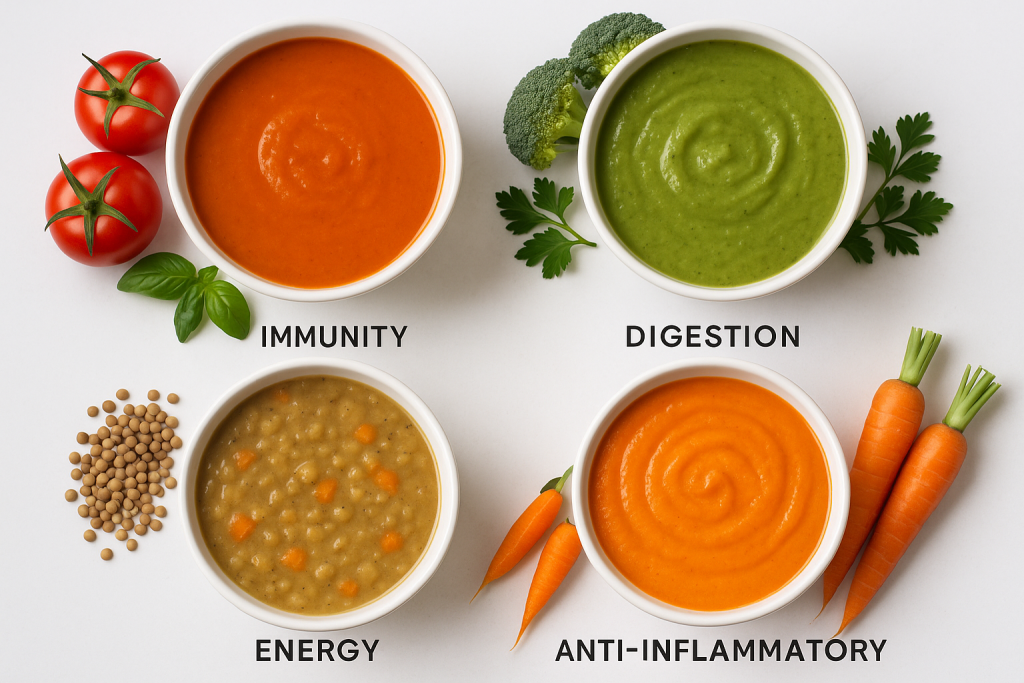
Organic soups can support a nutrient-rich diet because producers often prioritise whole, minimally processed ingredients. A vegetable-based organic soup, for example, commonly includes pulses, root vegetables, leafy greens, herbs, and cold-pressed oils. This combination supplies complex carbohydrates, plant protein, and a broad range of vitamins and minerals, while keeping added sugars and artificial additives to a minimum. Many recipes also use gentle cooking methods, which help preserve flavour without relying on excess salt or sweeteners.
Fibre stands out as a key advantage. Beans, lentils, peas, barley, and vegetables increase soluble and insoluble fibre, which supports digestive regularity and helps maintain steady energy levels. Fibre also contributes to satiety, which can assist with appetite control between meals. When a soup includes the skins of vegetables and whole grains, fibre content usually rises. A thicker, stew-like texture often signals a higher fibre and pulse content.
Micronutrients also play a central role. Orange vegetables such as carrots and squash provide beta-carotene, which the body converts to vitamin A. Leafy greens contribute folate and vitamin K, while tomatoes supply potassium and lycopene. Mineral intake can improve when recipes include legumes, seeds, or whole grains, which often provide magnesium, iron, and zinc. Cooking in liquid can help retain water-soluble nutrients within the broth, so consuming the full serving matters. Pairing soup with a source of vitamin C, such as peppers, can also support iron absorption from plant foods.
Ingredient quality also affects nutritional outcomes. Organic standards restrict certain synthetic pesticides, which can reduce dietary exposure to residues. For an evidence-based overview of pesticide residues in food, consult the European Food Safety Authority (EFSA). Even so, rinsing fresh produce and storing soups safely remain sensible steps.
- Choose varied colours to broaden vitamin and phytonutrient intake.
- Prefer pulse-based recipes for fibre and plant protein.
- Check salt levels, since sodium can rise in ready-made soups.
- Watch portion size if the soup includes cream, cheese, or coconut milk.
Reduced Exposure to Pesticide Residues and Additives: What Organic Soups Avoid
Organic soups tend to reduce exposure to pesticide residues because organic standards restrict the use of most synthetic pesticides during crop growing. While no food can guarantee zero residues, organic production aims to limit routine chemical inputs, which can lower the likelihood of residues in ingredients such as carrots, tomatoes, and leafy greens. This approach also supports healthier soil management and crop rotation.
Organic soups also avoid several additives that appear in some conventional ready meals. Organic rules limit artificial colours, flavour enhancers, and certain preservatives, so the flavour usually comes from vegetables, herbs, spices, and slow cooking rather than chemical aids. When a recipe includes stock, dairy, or meat, organic standards also restrict antibiotic use in farming, which supports responsible production. For a clear overview of permitted and prohibited substances, consult the Soil Association standards.
Digestive and Immune Support: How Organic Soups Fit into a Balanced Diet
Organic soups can support digestion and immune function when people use them as part of a balanced diet. A warm, vegetable-led soup supplies fluid, which helps maintain normal bowel function, while fibre from pulses, vegetables, and wholegrains feeds beneficial gut bacteria. Those bacteria help produce short-chain fatty acids, which support the gut lining and may influence immune responses.
Regular soup meals also make it easier to increase vegetable intake without relying on heavy sauces or fried foods. Choosing recipes that include beans or lentils can improve satiety and steady energy, which supports consistent eating patterns. For immune support, soups that combine vitamin C-rich vegetables, leafy greens, and zinc-containing legumes can contribute useful micronutrients. People can keep salt in check by comparing labels and aiming for lower-salt options, as advised by the NHS.
Practical Guidance: Choosing, Storing, and Preparing Organic Soups for Best Quality
Choose organic soups with clear certification marks and a short ingredient list. Prefer options that name vegetables, pulses, herbs, and oils, while limiting added salt and sugar. For packaged soups, check the use-by date and select cartons or jars with intact seals and no swelling.
Store unopened products in a cool, dry cupboard away from direct sunlight. Once opened, transfer leftovers to a clean, lidded container, refrigerate promptly, and eat within two days. Freeze portions on the day of opening to preserve flavour and texture.
Prepare soups gently to protect taste and nutrients. Heat to a steady simmer rather than a hard boil, stirring to prevent sticking. When reheating, ensure the soup is piping hot throughout. If making soup from scratch, follow food hygiene guidance from the Food Standards Agency, and add delicate herbs or lemon juice at the end for a fresher finish.
Frequently Asked Questions
What makes a soup organic under UK food standards?
Under UK food standards, a soup counts as organic when at least 95% of its agricultural ingredients are organic and certified by an approved control body. Producers must avoid most synthetic pesticides, fertilisers, and genetically modified organisms (GMOs). The product must also follow strict rules on additives, processing methods, and traceability.
How do organic soups support a balanced diet?
Organic soups support a balanced diet by combining vegetables, pulses and wholegrains in one portion, which helps increase fibre, vitamins and minerals. Broth-based options can aid hydration and support appetite control with fewer calories. Choosing soups with lean protein and limited salt helps maintain steady energy and supports heart health.
Do organic soups contain fewer additives and preservatives than non-organic soups?
Organic soups often contain fewer artificial additives and preservatives than non-organic soups because organic standards restrict many synthetic ingredients. However, organic products can still include permitted additives, such as natural thickeners or acidity regulators. Check the ingredients list for:
- Preservatives (for example, sorbates or benzoates)
- Flavour enhancers
- Artificial colours and sweeteners
Are organic soups suitable for people with common food allergies or intolerances?
Organic soups can suit people with common allergies or intolerances, but suitability depends on the ingredients and any cross-contamination risks. Check labels for allergens such as milk, eggs, wheat (gluten), soya, nuts, celery, and mustard. Choose clearly labelled free-from options and avoid soups made in shared facilities if sensitivity is severe.
How should organic soups be stored and reheated to maintain safety and quality?
Store organic soup in a clean, sealed container and refrigerate within two hours. Keep for up to three days, or freeze for up to three months. Reheat until piping hot throughout (at least 75°C), stirring to heat evenly. Reheat only once and discard any soup left at room temperature for over two hours.