
- Build filling meals around beans, lentils, tofu, tempeh, and chickpeas.
- Combine protein, fibre, and healthy fats to slow digestion and curb hunger.
- Choose whole grains such as oats, brown rice, and quinoa for lasting energy.
- Add volume with roasted vegetables, soups, and stews instead of plain salads.
- Use nuts, seeds, and avocado in measured portions to boost satiety.
- Plan balanced snacks, such as hummus with veg sticks, to prevent cravings.
Why Plant-Based Meals Sometimes Leave You Hungry: Fibre, Protein, and Energy Density
Plant-based meals can feel less filling when the balance of fibre, protein, and energy density does not match appetite needs. Fibre helps with fullness because it absorbs water, slows digestion, and supports steady blood sugar. Many people associate fibre with salads, yet cooked beans, lentils, oats, and vegetables provide substantial fibre with a warmer, more satisfying texture. Even so, fibre alone does not guarantee satiety when a meal lacks enough protein or total energy. Protein influences fullness through several pathways, including appetite hormones and slower gastric emptying. Some plant meals fall short because they rely on refined grains or vegetables without a clear protein source. Legumes, tofu, tempeh, edamame, and soya yoghurt can raise protein without relying on animal foods. Whole grains such as quinoa and buckwheat also contribute, although legumes usually provide a stronger protein anchor per serving. Energy density describes how many calories a food provides per gram. Watery foods such as soups, fruit, and many vegetables have low energy density, which can help with volume but may leave a person hungry soon after if the meal does not include enough calories. On the other hand, foods with higher energy density, such as nuts, seeds, avocado, tahini, and olive oil, can improve staying power in modest portions. A satisfying plant-based plate often combines low energy density foods for volume with a measured amount of higher energy density foods for lasting energy. For a practical benchmark, aim for a clear protein centre, a high-fibre carbohydrate, and a source of healthy fat in the same meal. Guidance from the British Dietetic Association (BDA) supports balanced meals that include protein-rich plant foods, wholegrains, and unsaturated fats to promote fullness and nutritional adequacy.
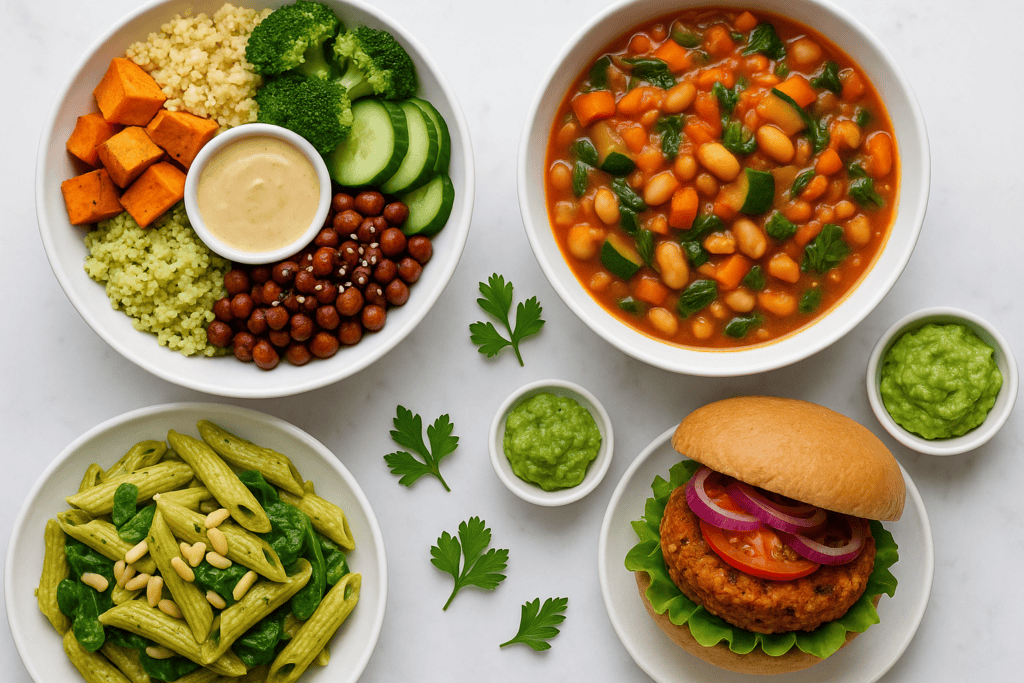
Plant-Based Meals
Build a Filling Plate: Protein Anchors, High-Fibre Carbohydrates, and Healthy Fats
A filling plant-based plate works best when each component has a clear role. Start with a protein anchor, then add a high-fibre carbohydrate for steady energy, and finish with a measured portion of healthy fat to increase satisfaction. This structure supports appetite control without relying on large volumes of raw leaves. Choose protein anchors that bring both protein and texture. Cooked lentils, chickpeas, black beans, tofu, tempeh, and edamame suit most savoury meals. Firm tofu and tempeh also crisp well, which helps meals feel substantial. Aim to include a generous serving at lunch and dinner, since protein tends to have a strong effect on fullness compared with many refined carbohydrates. Next, select a high-fibre carbohydrate that holds up on the plate. Options such as oats, barley, quinoa, brown rice, wholewheat pasta, sweet potato, or buckwheat provide chew and warmth. Beans and lentils can count here as well, yet pairing them with a whole grain often improves variety and keeps energy levels steadier through the afternoon. Finish with healthy fats, but keep portions sensible because fats are energy dense. A small handful of nuts, a spoon of tahini, a quarter to half an avocado, or a drizzle of extra virgin olive oil can make a bowl or traybake feel complete. For practical targets and examples of unsaturated fats, consult the NHS guidance on fats. To bring the plate together, add cooked vegetables and a flavourful sauce. Roasted peppers, mushrooms, onions, and brassicas add volume and savoury depth, while a lemon-tahini dressing or tomato-based sauce improves satisfaction without needing excessive oil.
Hearty Breakfasts Without Eggs or Dairy: Oats, Tofu, and Legume-Based Options
Breakfast often sets appetite for the day, so a plant-based option needs more than fruit and toast. Aim for a warm base, a clear protein source, and enough texture to slow eating. Oats, tofu, and legumes meet those needs while staying practical for busy mornings. Porridge made with rolled oats offers steady energy because oats contain beta-glucan, a soluble fibre that thickens in the gut and supports fullness. Keep the bowl satisfying by cooking oats with soya milk, then stirring in chia seeds or ground flaxseed for extra fibre and healthy fats. Finish with a spoon of nut butter and a handful of berries. That combination adds creaminess and chew, which helps breakfast feel substantial rather than light. For a savoury option, tofu scramble can replace eggs without relying on vegan cheese. Crumble firm tofu, then cook it with onions, mushrooms, and peppers until the moisture reduces and the texture turns hearty. Season with turmeric, black salt, and smoked paprika for an “eggy” profile. Serve the scramble with wholegrain toast or leftover roasted potatoes to add a high-fibre carbohydrate that keeps energy steady through the morning. Legume-based breakfasts suit people who prefer a more robust start. Try a chickpea flour pancake, sometimes called a socca, filled with spinach and tomatoes, or warm leftover lentils with sautéed greens and a spoon of tahini. Beans and lentils bring both protein and fibre, which supports satiety without needing large portions. For evidence-based guidance on fibre targets and daily balance, refer to the British Dietetic Association. Adjust portions to hunger levels, yet keep the structure consistent: a hearty base, a protein anchor, and a measured fat.
Satisfying Lunches and Dinners Beyond Salad: Stews, Curries, Chilli, and Grain Bowls
Lunch and dinner often feel most satisfying when heat, aroma, and texture work together. Stews, curries, chilli, and grain bowls suit plant-based eating because each format holds moisture, carries flavour, and allows a clear balance of protein-rich foods, slow-release carbohydrates, and fats. A thick, spoonable meal also tends to slow eating pace, which supports satiety. For stews and curries, start with a base of onions, garlic, and spices, then add lentils, beans, or chickpeas plus starchy vegetables such as sweet potato or squash. Simmering helps legumes soften while keeping body in the sauce. Coconut milk can add richness, although a smaller amount often suffices when paired with nut butter or ground seeds. Serve with brown rice, barley, or wholewheat flatbread to extend fullness without relying on large portions. Chilli works well as a high-satisfaction option because it combines beans with tomatoes and warming spices. Choose kidney beans, black beans, or a mixed tin, then add bulgur wheat or diced mushrooms for extra chew. A topping can also improve staying power: sliced avocado, toasted pumpkin seeds, or a spoon of unsweetened yoghurt-style alternative can add fat and creaminess. For guidance on safe cooling and reheating of batch-cooked meals, refer to Food Standards Agency advice. Grain bowls can feel as hearty as a stew when each layer has purpose. Use a warm grain base, add roasted vegetables, then include a protein centre such as baked tofu, tempeh, or edamame. Finish with a thick sauce, such as tahini-lemon dressing, peanut sauce, or a bean-based dip thinned with water. Crisp elements, such as toasted nuts or pickled vegetables, add contrast and make the meal feel substantial without turning it into a salad.
Smart Snacks and Meal Prep Strategies to Stay Full Between Meals
Smart snacking prevents the sharp hunger that can lead to oversized portions at the next meal. The most reliable approach pairs protein with fibre, then adds a small amount of fat for staying power. For example, unsweetened soya yoghurt with berries and a spoon of chia seeds offers protein, soluble fibre, and a thicker texture that slows eating. A small bowl of edamame with a pinch of salt and lemon also works well, since the beans provide both protein and fibre without a sugar spike. When time allows, choose snacks that feel like “mini meals” rather than sweet treats. Wholegrain toast with hummus and sliced tomato, or oatcakes with peanut butter and a few apple slices, can bridge long gaps between meals. If a packaged option is needed, check the label for protein and fibre per serving, and keep added sugars low. The NHS guide to food labels explains how to compare products quickly and consistently. Meal prep supports fullness because it reduces reliance on low-protein convenience foods. A practical strategy involves preparing two “anchors” each week: a cooked legume (such as lentils or chickpeas) and a wholegrain (such as brown rice or barley). Store both in the fridge, then assemble fast combinations with frozen vegetables, a sauce, and a measured fat source such as tahini or olive oil. Keeping a tray of roasted vegetables ready also helps, since warm, soft textures often satisfy more than raw options. Timing matters as well. A planned afternoon snack, taken before hunger becomes intense, often improves portion control at dinner. Hydration can support appetite regulation, yet drinks do not replace food; pair water or tea with a snack that requires chewing. If hunger persists soon after eating, increase protein at the prior meal or add a little more fat, then reassess over several days.
Frequently Asked Questions
Which plant-based ingredients increase satiety without relying on salad greens?
Choose ingredients rich in protein, fibre, and healthy fats. Use lentils, chickpeas, beans, tofu, tempeh, and edamame for protein. Add oats, quinoa, brown rice, and sweet potatoes for slow-release carbohydrates. Include chia seeds, ground flaxseed, nuts, avocado, and tahini for fats. Boost volume with mushrooms, cauliflower, and broccoli.
How can you balance protein, fibre, and healthy fats in plant-based meals to stay full for longer?
Combine a protein source (beans, lentils, tofu, tempeh), high-fibre foods (wholegrains, vegetables, fruit), and healthy fats (nuts, seeds, avocado, olive oil) in each meal. Aim for half a plate of vegetables, a quarter wholegrains, and a quarter protein, then add a small portion of fat. Choose minimally processed options.
What are the best high-protein plant-based meal ideas for lunch that travel well?
Choose lunches with firm proteins and sturdy grains. Good options include:
- Lentil and quinoa salad with roasted vegetables
- Chickpea “tuna” sandwich in wholemeal bread
- Tofu and brown rice sushi rolls
- Black bean burrito bowl with salsa and avocado
- Edamame and soba noodle jar with peanut dressing
Which cooking methods and seasonings make filling plant-based meals taste satisfying rather than bland?
Use high-heat methods such as roasting, grilling, pan-searing, and stir-frying to build browning and deeper flavour. Simmer beans and lentils in well-seasoned broths for richness. Season with salt, acid (lemon or vinegar), aromatics (garlic, onions, ginger), spices (smoked paprika, cumin), umami (miso, soy sauce), and fresh herbs. Finish with toasted nuts or seeds.
How can you meal prep plant-based dinners that keep you full without using highly processed meat alternatives?
Batch-cook filling bases such as lentils, chickpeas, beans, tofu, tempeh, and whole grains. Roast trays of vegetables, then portion meals with a clear structure: protein + fibre-rich carbohydrate + healthy fat. Add sauces from tahini, nut butters, or olive oil, and include seeds or nuts. Use soups, stews, and curries for reliable satiety.