
People who react to meat often struggle to identify the cause. Poultry allergy vs alpha gal can look similar at first, yet the triggers and timing differ. Some people also report histamine intolerance chicken reactions, where symptoms depend on freshness, storage, and individual tolerance. This comparison explains common meat allergy symptoms, how they may present after eating different meats, and why accurate identification matters for safer food choices and clearer discussions with a clinician.
Key takeaways
- Poultry allergy targets chicken or turkey proteins, not the alpha-gal sugar.
- Alpha-gal reactions follow mammal meat exposure and often start 3–6 hours later.
- Histamine intolerance can flare after aged, cured, or leftover meats with higher histamine.
- Timing helps differentiate causes: immediate suggests allergy, delayed suggests alpha-gal.
- Symptoms overlap, but triggers differ: poultry only, mammal meat, or histamine-rich foods.
- Diagnosis often needs targeted testing and a structured elimination-and-rechallenge plan.
How Poultry Allergy, Alpha-Gal Syndrome, and Histamine Intolerance Differ (Triggers and Immune Pathways)
In the United States, the CDC reports that about 110,000 suspected cases of alpha-gal syndrome (AGS) were identified in 2010–2022, and it estimates the true number may be much higher. That scale matters because AGS can look like a general “meat allergy”, yet the trigger and immune pathway differ from a poultry allergy or histamine intolerance.
Poultry allergy is a classic food allergy. The immune system makes IgE antibodies to proteins in chicken or turkey, and symptoms can start within minutes to about 2 hours after eating. This pattern fits many “meat allergy symptoms” reports that happen soon after a meal, including reactions to chicken.
AGS is also IgE-mediated, but the target is alpha-gal, a sugar found in most mammalian meat (beef, pork, lamb) and some products made from mammals. Symptoms often start 3–6 hours after eating, which makes timing a key clue when comparing poultry allergy vs alpha gal.
Histamine intolerance is different. It is not IgE allergy; it reflects an imbalance between histamine intake and breakdown, often linked to reduced activity of the enzyme diamine oxidase (DAO). Reactions tend to depend on dose and food handling, so “histamine intolerance chicken” concerns often relate to leftovers or processed meats rather than fresh, well-stored poultry.
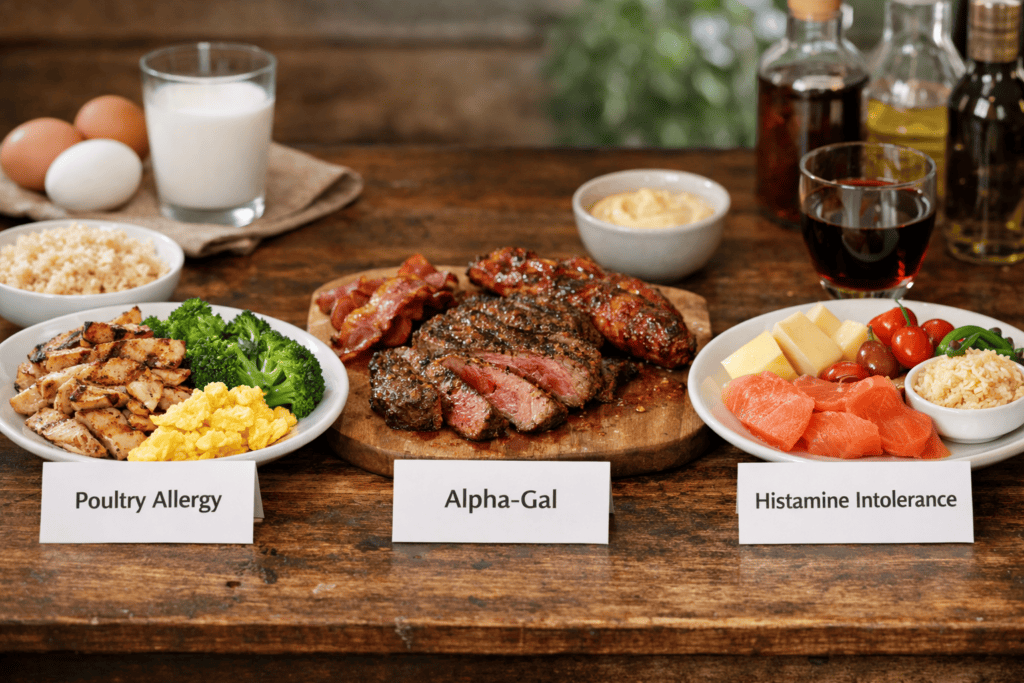
Symptom Patterns and Timing After Eating Meat (Immediate Reactions vs Delayed Reactions)
A person eats a chicken curry at 19:00 and feels fine at the table. By 19:20, itching starts around the lips, the throat feels tight, and hives spread across the chest. That fast pattern points towards an immediate reaction, which fits best with a poultry allergy. Classic food-allergy symptoms often begin within minutes to about 2 hours after eating, and they can include hives, swelling, wheeze, vomiting, or dizziness. If breathing changes or faintness occurs, treat it as an emergency and follow the guidance from the NHS on anaphylaxis.
Now compare that with someone who eats a beef burger at 19:00 and sleeps normally, then wakes at 02:00 with widespread hives, stomach cramps, or breathing symptoms. That delayed timing is a key clue for alpha-gal syndrome, where reactions often start about 3–6 hours after mammal meat. The delay can make the trigger easy to miss, because the meal and symptoms feel disconnected.
Histamine intolerance can sit between these patterns. Symptoms may start during the meal or within a few hours, and can include flushing, headache, runny nose, diarrhoea, or hives. Chicken can still cause issues if the dish is high-histamine (leftovers, slow-cooked stock, or cured ingredients) or if histamine breakdown is reduced.
Which Meats and Products Commonly Cause Problems (Chicken, Turkey, Red Meat, Gelatin, Broths, and Processed Foods)
Chicken and turkey often cause problems in a true poultry allergy, while alpha-gal syndrome (AGS) more often links to mammal meats and mammal-derived ingredients. Histamine intolerance can overlap with both, because reactions often relate to histamine load and storage, not the animal species.
| Food or ingredient | Poultry allergy | Alpha-gal syndrome | Histamine intolerance |
|---|---|---|---|
| Chicken, turkey | Common trigger | Usually tolerated | Can trigger if leftovers or processed |
| Beef, pork, lamb, venison | Usually tolerated | Common trigger | Can trigger, varies by cut and storage |
| Gelatin (capsules, sweets) | Usually tolerated | Can trigger (mammal-derived) | Usually tolerated |
| Broths, stocks, gravies | Risk if made from poultry | Risk if made from mammal bones | Higher risk when long-simmered or stored |
| Processed meats and ready meals | Risk from hidden poultry proteins | Risk from mammal ingredients | Higher risk due to additives and storage |
These differences affect label reading. AGS can hide in beef stock, pork fat, gelatin, and some “natural flavours”. Poultry allergy can hide in chicken powder, turkey stock, and mixed-meat products. Histamine intolerance often worsens with aged, fermented, slow-cooked, or reheated meats.
- If reactions follow red meat or gelatin, discuss AGS testing with an allergist and review guidance from the CDC.
- If reactions follow chicken or turkey, treat it as a potential food allergy and seek specialist advice, especially with breathing symptoms.
- If reactions vary by freshness, freeze portions promptly and avoid long-held broths and processed foods.
Testing, Diagnosis, and Next Steps (Allergy Referral, Alpha-Gal IgE, Histamine Assessment, and Elimination Trials)
People who react to meat often self-test by cutting “all meat”, then reintroducing foods at random. This can miss delayed alpha-gal reactions, confuse meat allergy symptoms with reflux, and delay an adrenaline auto-injector when risk is high.
A structured work-up works better: allergy referral for IgE-mediated reactions, targeted blood testing for alpha-gal, and separate assessment for histamine intolerance. Each pathway has different tests and next steps.
- Book an allergy referral for hives, swelling, wheeze, throat tightness, fainting, or repeated vomiting. Ask about an anaphylaxis plan and an adrenaline auto-injector.
- Request alpha-gal testing if reactions follow beef, pork, lamb, gelatin, or dairy, especially with symptoms hours later. Clinicians typically order serum alpha-gal specific IgE and review tick exposure. See CDC guidance on alpha-gal syndrome.
- Assess histamine intolerance when reactions cluster around leftovers, slow-cooked meats, cured foods, alcohol, or aged products. No single test confirms it; diagnosis often relies on a low-histamine trial and review of medicines that can raise histamine.
- Run a controlled elimination trial for 2–4 weeks with a food-and-symptom diary, then reintroduce one item at a time. Keep portions consistent and avoid testing alone after severe reactions.
Clear testing and a planned trial can show whether the issue is poultry allergy vs alpha gal or a non-allergic trigger such as histamine intolerance chicken, so you avoid only what is necessary and manage risk.
Frequently Asked Questions
What symptoms suggest a poultry allergy compared with alpha-gal syndrome?
Poultry allergy often causes fast meat allergy symptoms within minutes to 2 hours after chicken or turkey, such as hives, lip swelling, wheeze, vomiting, or anaphylaxis. Alpha-gal syndrome usually starts 3 to 6 hours after eating mammal meat (beef, pork, lamb), with hives, stomach cramps, diarrhoea, or breathing trouble. Histamine intolerance chicken may cause flushing and headache.
How does the timing of reactions differ between alpha-gal syndrome and histamine intolerance after eating meat?
Alpha-gal syndrome often causes delayed meat allergy symptoms, starting about 3–6 hours after eating mammal meat. Histamine intolerance chicken reactions usually start faster, often within minutes to 2 hours, and can worsen with leftovers or slow-cooked meats. This timing difference helps when comparing poultry allergy vs alpha gal.
Can histamine intolerance cause reactions to chicken even when red meat is tolerated?
Yes. Histamine intolerance can trigger symptoms after chicken even if red meat is tolerated. Chicken can contain higher histamine if it is not very fresh, stored too long, or reheated. Typical meat allergy symptoms include flushing, hives, itching, headache, stomach cramps, diarrhoea, and a fast heartbeat. This differs from poultry allergy vs alpha gal.
Which meats and animal products most often trigger alpha-gal syndrome reactions?
Alpha-gal syndrome most often triggers reactions after mammal meat and products, including beef, pork, lamb, venison, goat, and organ meats. Some people also react to mammal-derived fats (lard, tallow), gelatine, and high-fat dairy. Poultry and fish usually do not trigger alpha-gal, which helps separate poultry allergy vs alpha gal from histamine intolerance chicken and other meat allergy symptoms.
What tests can help confirm poultry allergy, alpha-gal syndrome, or histamine intolerance?
Clinicians may use:
- Poultry allergy: skin prick testing and serum specific IgE to chicken or turkey; supervised oral food challenge if results conflict with symptoms.
- Alpha-gal syndrome: blood test for alpha-gal specific IgE; history of delayed reactions after mammal meat.
- Histamine intolerance chicken: no single confirmatory test; diagnosis uses symptom diary, low-histamine trial, and review of diamine oxidase (DAO) activity and triggers.
How can people tell whether meat allergy symptoms are caused by histamine build-up in leftovers or by an immune reaction?
Histamine build-up often causes fast symptoms (minutes to 2 hours) after eating leftovers, slow-cooked meat, or poorly stored chicken, and may include flushing, headache, hives, or diarrhoea. An immune reaction in poultry allergy vs alpha gal can trigger hives, swelling, wheeze, or faintness; alpha-gal often starts 3–6 hours after red meat. Allergy testing helps confirm.
What steps can reduce the risk of reactions when eating meat while awaiting a medical diagnosis?
Stop eating meats that trigger meat allergy symptoms, and keep a food-and-symptom diary with times, portions, and exercise or alcohol. Choose fresh, well-cooked meat and avoid leftovers, cured meats, and slow-cooked dishes, which can worsen histamine intolerance chicken. Read labels for hidden meat ingredients. Carry prescribed antihistamines or adrenaline if advised, and seek urgent care for breathing, swelling, or fainting.