
The rising price of food is making healthy diets for children harder to achieve. When budgets tighten, families often switch to cheaper options that fill children up but offer less nutrition. This can reduce fruit, vegetable, and lean protein intake, while increasing reliance on foods high in salt, sugar, and saturated fat. Understanding how cost shapes food choices helps explain why diet quality can fall, even when parents know what children need.
Key takeaways
- Food prices make healthy diets harder for many families with children.
- Parents often switch to cheaper, less nutritious options when budgets tighten.
- Rising costs can reduce fruit, vegetable, and fresh protein purchases.
- Households on lower incomes face the biggest barriers to healthy eating.
- Children’s diets can suffer when families prioritise filling foods over quality.
- Support for affordable healthy food can help improve children’s nutrition.
How food prices shape children’s diet quality
FAO estimated that 3.1 billion people could not afford a healthy diet. Cost is not only a household issue; it shapes healthy diets for children because families often adjust what they buy when prices rise. When budgets tighten, cheaper calories tend to replace more expensive, nutrient-rich foods such as fruit, vegetables, fish, and dairy, and families may cut back on fresh items that spoil quickly.
Price gaps matter because children need high nutrient density per meal. UNICEF reported in 2023 that 181 million children under 5 faced child food poverty, meaning children ate two or fewer food groups a day. That pattern links closely to affordability: households may keep children full with staples, but lose variety that supports growth, immunity, and learning, and miss key nutrients such as iron, iodine, and vitamin A.
Food inflation adds pressure. In 2022, the FAO Food Price Index averaged 143.7 points, up from 125.7 in 2021. In the UK, the Office for National Statistics recorded annual food and non-alcoholic beverage inflation peaking at 19.2% in March 2023. These increases can push families towards lower-cost, energy-dense foods, reducing diet quality even when children eat enough, and making balanced packed lunches harder to maintain.
Which healthy foods cost more and why
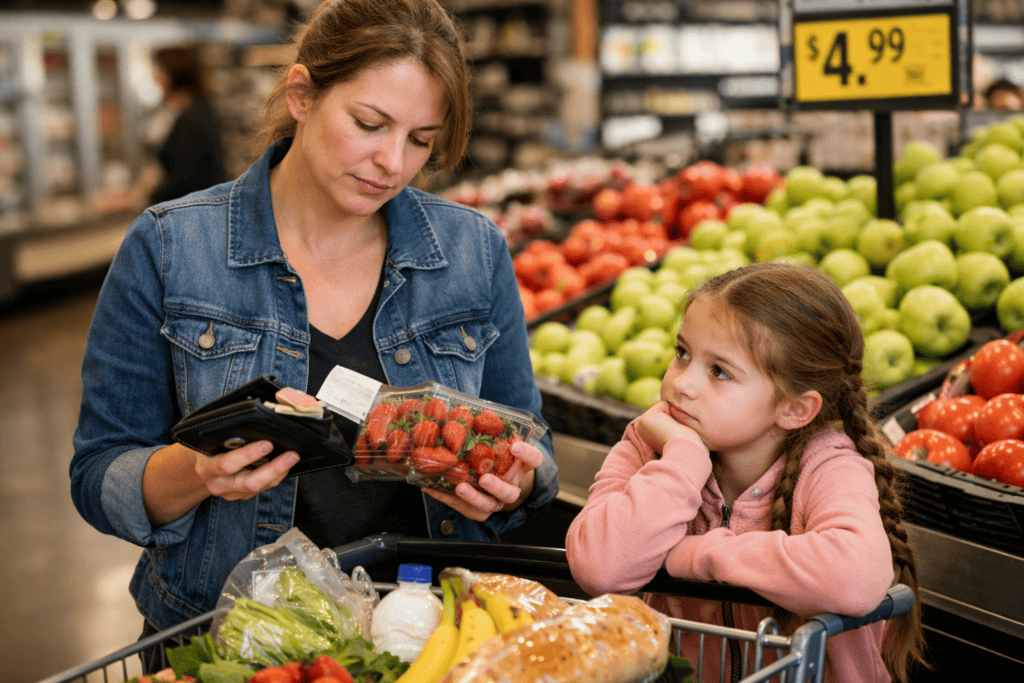
Several “healthy” staples often cost more per portion because they spoil faster, need more handling, or rely on cold storage. Fresh berries bruise easily and have a short shelf life, so shops price in waste. Leafy salads and herbs face the same problem. Lean meats and fresh fish also carry higher costs because producers must meet strict hygiene rules and keep products chilled from farm to store.
Processing can also change the price in either direction. A bag of dried lentils can be good value, but ready-to-eat versions (microwave pouches, pre-seasoned mixes) usually cost more because you pay for labour, packaging, and transport. Pre-cut fruit and salad kits follow the same pattern: convenience raises the unit price, even when the ingredients stay the same.
Energy and transport costs matter too. Chilled and frozen supply chains use more electricity than shelf-stable foods. Imported produce can cost more when fuel prices rise or when supply is disrupted. These pressures often show up as higher prices for fruit, vegetables, dairy, and protein foods compared with refined grains and sugary snacks.
- Higher waste risk: soft fruit, salad leaves, fresh herbs.
- Cold chain costs: milk, yoghurt, fresh meat, fish.
- Convenience premium: pre-cut produce, ready meals, snack packs.
For families, the practical response is to focus on lower-waste options that still support healthy diets for children: frozen vegetables, tinned beans, oats, eggs, and seasonal fruit. Pairing these with quick recipes can reduce reliance on pricey convenience foods, such as the simple healthy meals you can make with basic cupboard ingredients.
Household budget pressure and the trade-offs families make
When money is tight, families often choose between Option A: higher-cost, nutrient-dense foods that support healthy diets for children, and Option B: lower-cost, long-life foods that stretch the weekly shop. Option A tends to include fresh fruit and vegetables, lean proteins, and dairy. Option B often centres on refined grains, processed snacks, and ready meals with a longer shelf life.
| Decision point | Option A: nutrient-dense choices | Option B: budget-stretching choices |
|---|---|---|
| Cost per edible portion | Often higher, especially for fresh items | Often lower due to bulk and processing |
| Shelf life and waste risk | Shorter; spoilage can raise the real cost | Longer; less waste and fewer extra trips |
| Time and energy to prepare | More prep and cooking time | Less prep; quicker to serve |
These differences create practical trade-offs. Parents may prioritise foods that keep children full and reduce waste, even when nutrition suffers. Budget pressure can also shift spending away from breakfast and packed-lunch staples towards cheaper, repeatable meals that children will reliably eat.
To protect diet quality, families often benefit from planning around lower-waste formats, such as frozen or tinned produce, and using simple, repeatable meals. Guidance from the NHS Eat well pages can help households balance cost, time, and nutrition without relying on expensive fresh items.
How food marketing and retail promotions influence choices
Price promotions and prominent shelf placement can shift what children eat, even when parents plan healthier meals. Supermarkets often use multibuy deals, end-of-aisle displays, and checkout promotions to push high-salt, high-sugar snacks. These tactics reduce the “thinking time” in-store and make impulse buys more likely, especially during the after-school shop.
A practical response is to reduce children’s exposure to promotional cues and make healthier choices easier to spot and buy. Parents can set a fixed snack list before shopping, choose a single “treat” item for the week, and shop from a written meal plan. Families can also use online shopping with saved baskets to avoid in-store prompts.
Start by checking unit prices (per 100g/ml) and comparing own-brand options for yoghurt, tinned fish, and frozen vegetables. Next, avoid checkout lanes with confectionery and skip multibuys unless the items match the meal plan. Over time, these steps can cut impulse spending and increase the share of fruit, vegetables, and protein foods in the weekly shop.
The role of schools and childcare in closing the nutrition gap
The Department for Education figures show 2.14 million pupils took a free school meal on census day in January 2024, up from 1.74 million in 2020. That scale matters because schools and childcare can deliver at least one balanced meal a day, even when household budgets push families towards cheaper, less nutritious options.
School food standards set minimum requirements for fruit and vegetables, starchy foods, and limits on foods high in fat, salt, and sugar. When settings follow these rules, they reduce the “price penalty” families face when trying to maintain healthy diets for children.
Coverage still has gaps. In England, universal infant free school meals apply only to Reception to Year 2, which is ages 4–7. Eligibility for older pupils depends on household circumstances, so children can lose support as they move through school. Extending access and improving uptake can narrow nutrition inequalities without relying on families to absorb higher food costs.
Health impacts of poor diet quality in childhood
A nine-year-old arrives at football training with a fizzy drink and a packet of crisps. The snack fills the gap until dinner, but the child struggles to keep up, then complains of a headache on the way home. The next day, the teacher notes poor focus in the afternoon lesson. These small moments add up when meals and snacks rely on cheap, energy-dense foods.
Poor diet quality in childhood often means too much free sugar, salt, and saturated fat, and too little fibre, iron, calcium, and vitamins. Over time, that pattern can affect energy levels, concentration, and mood. It also raises the risk of tooth decay, since frequent sugary snacks and drinks expose teeth to acid attacks throughout the day. When children miss out on fruit, vegetables, and protein-rich foods, growth and immune function can suffer, making everyday illnesses harder to shake.
The longer-term impacts matter as well. Children build eating habits early, and repeated reliance on ultra-processed foods can normalise large portions and constant snacking. That can increase the chance of excess weight gain and related health problems later on. Families can reduce harm by prioritising filling, lower-sugar staples, choosing water or milk over sweet drinks, and using reading food labels: what to spot high sugar and salt in “everyday” items such as cereals, yoghurts, and sauces.
Policy options to make healthy diets more affordable
Policy can either lower the price of healthier foods at the till (Option A) or raise the relative price of less healthy foods (Option B). Option A includes targeted fruit and vegetable subsidies, expanded eligibility for food benefits, and stronger school meal funding so children receive balanced meals regardless of household income. Option B includes taxes or levies on sugar-sweetened drinks and tighter rules on price promotions for high fat, salt and sugar products.
| Policy lever | How it changes prices | Main trade-off |
|---|---|---|
| Subsidies and vouchers | Reduces out-of-pocket cost for healthier items | Needs sustained public funding |
| School meal investment | Shifts part of food cost from families to the state | Requires delivery capacity and compliance |
| Levies and promotion limits | Increases relative cost and reduces discounting of less healthy choices | Can be politically contested and needs enforcement |
In practice, the strongest approach combines both options: make healthier defaults cheaper while reducing the price advantage of energy-dense snacks, improving healthy diets for children without relying on willpower alone.
Practical steps families can take to improve diets on a budget
Food budgets often run out before the week ends, so families fall back on cheap, filling foods. This can crowd out fruit, vegetables, and protein, making healthy diets for children harder to keep.
Lower the cost per portion of healthier meals by planning around value staples and cutting waste. When meals share ingredients and snacks come from the same list, families can get more nutrition for the same spend.
Build a weekly plan around 3–4 low-cost bases such as oats, eggs, tinned beans, frozen vegetables, and plain yoghurt. Choose one or two proteins that stretch across meals, then add one fruit and one vegetable that store well, such as apples, carrots, or frozen berries.
Use unit prices to compare cost per 100g, and swap to own-brand when ingredients match. Batch-cook one main meal, portion it, and freeze extras. Keep a default snack at home, such as fruit with yoghurt or toast with peanut butter, to cut impulse buys.
After two weeks, review what was thrown away and adjust portions. This feedback loop can reduce waste and keep healthier options available.
Frequently Asked Questions
How does the price of food affect children’s ability to follow healthy diets?
Higher food prices can push families towards cheaper, energy-dense foods that are high in salt, sugar, or saturated fat. When fruit, vegetables, lean proteins, and wholegrains cost more, parents may buy smaller amounts or choose less varied meals. This reduces children’s access to healthy diets for children and can widen nutrition gaps.
Which healthy foods tend to cost more, and why does that matter for children’s diets?
Fresh fruit and vegetables, lean meats and fish, and unsweetened dairy often cost more than refined grains, sugary snacks, and processed meals. These foods spoil faster, need refrigeration, and take more labour to grow, store, and transport. Higher prices can push families towards cheaper, energy-dense foods, making healthy diets for children harder to maintain.
How do food prices influence what parents pack for school lunches and snacks?
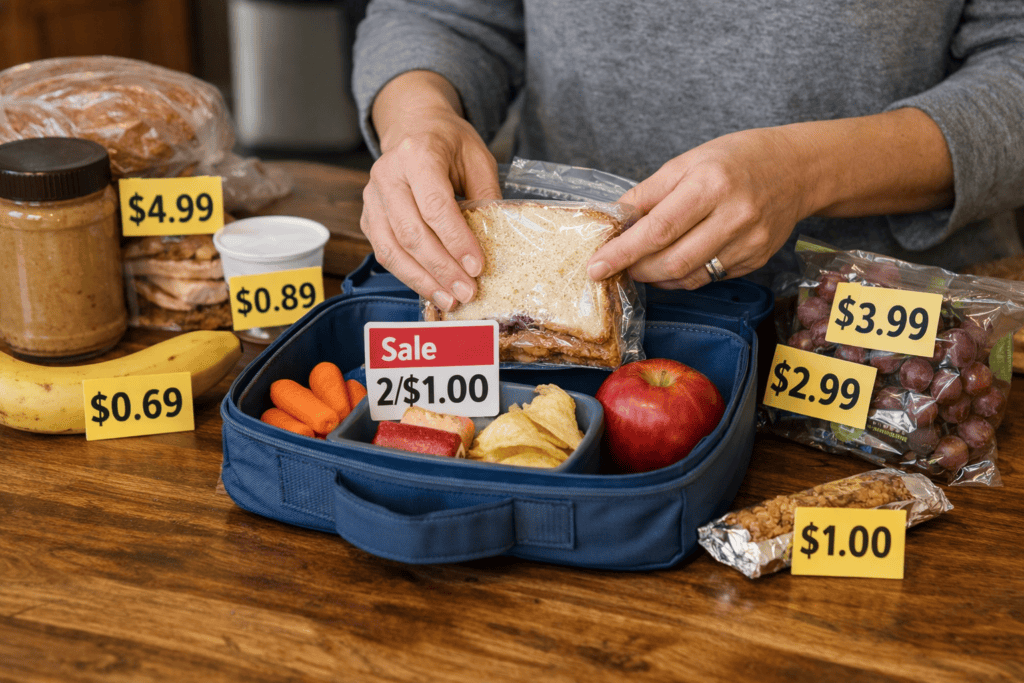
Food prices shape school lunches because parents work within a fixed budget. When fresh fruit, vegetables, yoghurt, and lean proteins cost more, families often choose cheaper, filling options such as white bread, crisps, biscuits, and sugary drinks. Price promotions and multipacks also steer choices towards processed snacks, making healthy diets for children harder to maintain.
What strategies can families use to reduce the cost of healthy diets for children?
Families can cut the cost of healthy diets for children by planning meals, writing a shopping list, and cooking in batches. Choose frozen or tinned fruit and vegetables (in water or juice), buy own-brand staples, and use beans, lentils, eggs, and tinned fish for protein. Reduce waste by freezing leftovers and using whole ingredients.
How do food deserts and limited local shops increase the cost of healthy diets for children?
Food deserts and limited local shops reduce competition and choice, so fresh fruit, vegetables and lean proteins often cost more than processed foods. Families may need to travel further to reach supermarkets, adding fuel, public transport fares and time off work. Smaller shops also buy in lower volumes, which can raise prices for healthy diets for children.
What role do government schemes and school meal programmes play in improving access to healthy diets for children?
Government schemes and school meal programmes reduce cost barriers and improve access to healthy diets for children. Free or subsidised meals provide regular, balanced food during the school week. Standards for school food can limit salt, sugar and saturated fat. Vouchers and holiday support help families buy healthier staples when school is closed.
How can schools support healthy diets for children when families face high food prices?
Schools can support healthy diets for children by offering free or subsidised breakfasts and lunches, prioritising fruit, vegetables, wholegrains, and water. Schools can run cooking and food skills lessons, send simple low-cost meal ideas home, and reduce sugary snacks in canteens and vending. Staff can discreetly refer families to local food support services.