
Key takeaways
- The gut–brain axis links digestion and mood through nerves, hormones, and immune signals.
- Gut bacteria produce neurotransmitter-related compounds that can influence stress and anxiety symptoms.
- Chronic gut inflammation can raise cytokines, which correlates with low mood and fatigue.
- Dietary fibre supports beneficial microbes, improving bowel regularity and emotional resilience.
- Fermented foods and probiotics may reduce gastrointestinal symptoms and support calmer mood.
- Poor sleep and high stress can disrupt the microbiome, worsening both digestion and mood.
What the gut–brain axis is and how it works
About 90% of the body’s serotonin is produced in the gut, largely by enterochromaffin cells in the intestinal lining (NIH/NLM). This figure explains why researchers describe the gut–brain axis as a two-way communication system rather than a one-directional pathway.
Signals move between the gastrointestinal tract and the central nervous system through neural, immune, and endocrine routes, shaping stress responses, mood regulation, and cognitive function. The vagus nerve provides a fast signalling channel, carrying sensory information from the gut to the brainstem in milliseconds to seconds. In parallel, the gut microbiome contributes chemical messengers: bacteria ferment dietary fibre into short-chain fatty acids, and the colon can produce roughly 50–100 mmol of these metabolites per day, depending on diet and microbial composition. These compounds influence intestinal barrier integrity and can modulate inflammation, which affects brain signalling.
Immune activity forms a third route. The gut-associated lymphoid tissue contains about 70% of the body’s immune cells, making the intestine a major regulator of systemic inflammatory tone (NIDDK). When the barrier weakens, bacterial components such as lipopolysaccharide can enter circulation and raise cytokine levels, which correlates with depressive symptoms in clinical studies. This biology links diet, microbiome balance, and stress physiology through measurable pathways.
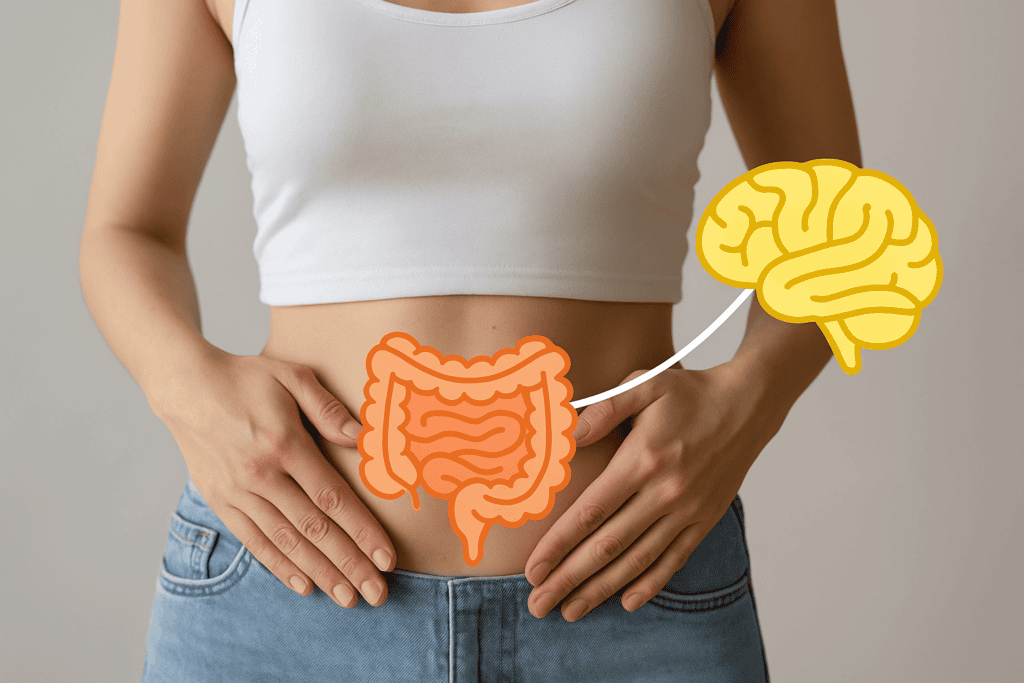
The connection between gut health and mental health
How the gut microbiome influences mood, stress, and cognition
After a week of poor sleep and takeaway meals, a project manager notices a familiar pattern: morning bloating, an anxious “wired” feeling, and slower recall during meetings. The symptoms feel psychological, yet the trigger often starts in the gut. When diet, stress, or antibiotics disrupt the gut microbiome, the balance of microbial metabolites shifts within days, and the brain receives different chemical and immune signals.
One mechanism involves short-chain fatty acids (SCFAs), produced when gut bacteria ferment dietary fibre. In a controlled feeding study, adults who ate a higher-fibre diet for 2 weeks increased SCFA production and showed measurable changes in brain activity linked to emotion regulation (University of Oxford researchers, published in Nature). SCFAs also support the intestinal barrier; when that barrier weakens, inflammatory molecules can enter circulation and amplify stress signalling. Stress can then reinforce the cycle. Acute psychological stress increases intestinal permeability and alters microbial composition, which correlates with higher inflammatory markers such as C-reactive protein (CRP).
In a large 2023 analysis, higher CRP associated with increased risk of depressive symptoms, even after adjusting for lifestyle factors (NIH-indexed evidence). This immune route helps explain why gut disruption can feel like irritability, low mood, or “brain fog” rather than a purely digestive issue. The microbiome also shapes cognition through neurotransmitter precursors. Certain gut bacteria influence tryptophan metabolism, steering it towards serotonin pathways or towards kynurenine compounds linked to stress and cognitive fatigue.
A 2024 review in Nature Reviews Gastroenterology & Hepatology reports that microbiome-driven shifts in tryptophan metabolites can change anxiety-like behaviour and memory performance in both human and animal studies. Applied broadly, the takeaway is practical: mood, stress tolerance, and concentration often respond to gut inputs. When clinicians evaluate persistent anxiety or low mood, they increasingly consider bowel habits, recent antibiotics, and fibre intake as modifiable factors that can change brain-relevant signalling within 2–4 weeks.
Key neurotransmitters and metabolites produced in the gut
Gut-derived signalling can be framed as host-made neurotransmitters versus microbe-made metabolites. Host signalling centres on enteroendocrine and enteric nerve activity, while microbial signalling reflects fermentation and amino-acid metabolism that can shift within 24–48 hours of dietary change. Option A includes serotonin, dopamine, and GABA made or regulated in the gut. Around 90% of serotonin is produced in the gastrointestinal tract, largely by enterochromaffin cells (NIH/NLM). Option B includes short-chain fatty acids (SCFAs) such as butyrate, acetate, and propionate, generated when microbes ferment fibre; SCFAs typically occur in the colon at millimolar concentrations, far exceeding most neurotransmitters.
| Compound group | Main gut source | Primary mental-health relevance |
|---|---|---|
| Serotonin | Enterochromaffin cells | Modulates gut motility and vagal signalling linked to mood regulation |
| GABA and dopamine | Enteric neurons and microbial interactions | Influences stress reactivity and reward-related signalling |
| SCFAs (for example, butyrate) | Microbial fibre fermentation | Supports barrier integrity and immune tone that can affect brain inflammation |
Diets that deliver 25–30 g of fibre per day tend to increase SCFA production, while irregular eating, alcohol excess, and repeated antibiotics can reduce it. When symptoms track meals, clinicians often review fibre intake and bowel patterns before attributing changes solely to psychological causes.
Inflammation, intestinal permeability, and their links to anxiety and depression
Chronic, low-grade inflammation and increased intestinal permeability (“leaky gut”) can amplify anxiety and depressive symptoms by raising immune signals that affect brain function. In a 2024 umbrella review, higher inflammatory markers such as C-reactive protein (CRP) and interleukin-6 (IL-6) showed consistent associations with depression severity (see Nature). Separately, a 2023 meta-analysis reported that people with major depressive disorder often show higher blood markers linked to permeability, including lipopolysaccharide (LPS)-related immune activity (see JAMA Network). The practical solution focuses on reducing inflammatory load while strengthening the gut barrier.
Aim for 25–30 g of fibre per day to increase short-chain fatty acids, which support tight junction integrity. Limit ultra-processed foods and alcohol for 14 consecutive days to reduce gut irritants and stabilise bowel habits. If symptoms flare with certain foods, use a 2-week symptom and stool log to identify patterns rather than removing multiple food groups at once. Implementation works best with measurable checks.
Request a GP review for CRP, ferritin, vitamin D, and coeliac screening when persistent low mood coexists with gastrointestinal symptoms; the NHS recommends medical assessment for ongoing mental health concerns. Over 4–8 weeks, many people report fewer bloating episodes, steadier energy, and reduced “wired” anxiety as sleep and diet consistency improve.

mental health
Dietary patterns that support both gut health and mental wellbeing
In a 2024 meta-analysis of randomised trials, probiotic supplementation reduced depressive symptoms with a small-to-moderate effect (standardised mean difference about -0.34) (PubMed). That signal aligns with dietary patterns that feed beneficial microbes, because fibre fermentation increases short-chain fatty acids that support the gut barrier and immune balance, while also influencing neurotransmitter pathways linked to stress response.
In practice, Mediterranean-style eating offers a useful template: a 2023 umbrella review linked higher adherence with lower depression risk (relative risk about 0.67) (BMJ). Aim for 25–30 g of fibre per day from legumes, oats, vegetables, and berries, and include fermented foods such as yoghurt or kefir several times weekly to maintain consistent microbial input. Keep free sugars below 10% of daily energy, as advised by the World Health Organization, since high-sugar patterns correlate with poorer microbial diversity and mood stability.
Evidence for probiotics, prebiotics, and fermented foods in mental health outcomes
A university student starts eating 150 g of live yoghurt at breakfast and adds a small serving of kimchi with dinner for four weeks. By the end of the month, sleep feels less fragmented and pre-exam rumination eases, even though coursework pressure stays high. The change does not prove cause and effect, yet it mirrors the type of outcome researchers test when they examine whether targeted probiotics, prebiotics, and fermented foods can shift mental health measures. Randomised trials provide the clearest signal for probiotics. A 2024 meta-analysis of controlled studies reported a small-to-moderate reduction in depressive symptoms with probiotic supplementation (standardised mean difference about -0.34) (PubMed).
Effects vary by strain and dose, but many trials use multi-strain Lactobacillus and Bifidobacterium blends at roughly 1–10 billion CFU per day for 4–12 weeks, with outcomes tracked using validated scales such as the PHQ-9 or BDI. Prebiotics work through a different lever: they feed beneficial microbes rather than adding new ones. Several trials use 5–10 g per day of inulin or fructo-oligosaccharides for 2–8 weeks, then measure changes in stress reactivity and mood. Results look more mixed than probiotic findings, which fits the biology: baseline diet, habitual fibre intake, and microbiome composition can change who responds and how quickly.
Fermented foods sit between the two approaches because they deliver microbial products and, in some cases, live cultures. In a 2021 randomised trial, a fermented-food diet increased microbiome diversity and reduced multiple inflammatory markers compared with a high-fibre diet over 10 weeks (Cell). Since inflammation and mood symptoms often move together, that pathway offers a plausible bridge from food choice to mental wellbeing, even when psychological outcomes are not the primary endpoint. For practical application, the evidence supports a measured approach: choose a probiotic with a stated strain and CFU count, trial it for 8–12 weeks, and pair it with consistent prebiotic fibre from foods such as oats, legumes, and onions. When using fermented foods, prioritise regular portions and tolerability, because benefits depend on sustained intake rather than occasional servings.
Lifestyle factors that affect the gut–brain connection (sleep, exercise, stress, medicines)
Option A treats gut–brain health as a nutrition-only issue, while Option B recognises lifestyle inputs that can shift microbial activity and stress signalling within days. Sleep, movement, stress load, and medicines each change gut motility, immune tone, and metabolite production, which can alter mood and cognitive performance even when diet stays stable.
| Factor | Option A: Disruptive pattern | Option B: Supportive pattern |
|---|---|---|
| Sleep | Short sleep (≤6 hours) for 5–7 nights | 7–9 hours nightly for most adults (CDC) |
| Exercise | Sedentary week (0–30 minutes moderate activity) | 150 minutes/week moderate activity (WHO) |
| Stress | Persistent high stress with minimal recovery | Planned recovery blocks (10–20 minutes/day) and consistent routines |
| Medicines | Repeated antibiotic courses without review | Targeted use with clinician review; avoid unnecessary courses (NHS) |
Key differences centre on predictability and cumulative load. Irregular sleep and chronic stress raise cortisol and can speed or slow gut transit, which changes fermentation time and symptom patterns. Low activity reduces mechanical stimulation of the bowel, while meeting the 150-minute guideline often improves constipation and stress reactivity. Medicines matter because antibiotics can reduce microbial diversity within 7–14 days, and recovery may take weeks. Practical implications include treating flare-ups as multi-factor events. If bloating and anxiety rise together, tracking sleep hours, weekly activity minutes, and recent prescriptions often identifies the dominant driver faster than changing foods repeatedly.
When to seek clinical support and which tests or treatments clinicians may consider
Persistent gut symptoms alongside mood change warrant clinical review because overlap can mask treatable disease. Seek support if abdominal pain, diarrhoea, or constipation persists for more than 4 weeks, or if anxiety or low mood impairs work or sleep for at least 2 weeks. Arrange urgent assessment for blood in stool, unexplained weight loss of 5% or more in 6–12 months, fever, or nocturnal symptoms. A clinician will usually start by excluding common medical drivers before attributing symptoms to stress alone. Typical investigations include a full blood count and ferritin for anaemia, coeliac serology (tTG-IgA with total IgA), and inflammatory markers such as CRP.
For bowel inflammation, clinicians often request faecal calprotectin, which helps distinguish inflammatory bowel disease from irritable bowel syndrome. Where infection or antibiotic exposure exists, stool testing may be appropriate. Guidance aligns with NICE pathways for bowel symptoms and mental health assessment. Treatment usually combines symptom control with mental health care. Implementation often includes a structured diet trial (for example, a time-limited low FODMAP plan under a dietitian), targeted medicines for bowel habit, and psychological therapies such as CBT or gut-directed hypnotherapy. Clinicians may also consider antidepressants for moderate-to-severe symptoms, monitoring gastrointestinal effects. With coordinated care, many people report fewer flare-ups, improved sleep, and better day-to-day functioning within 8–12 weeks.
Frequently Asked Questions
How does the gut–brain axis transmit signals between the digestive system and the brain?
The gut–brain axis transmits signals through three main routes. The vagus nerve carries rapid electrical messages between the intestines and brain. The endocrine system sends hormones, including cortisol, via the bloodstream. The immune system uses cytokines to signal inflammation. Gut microbes also produce neurotransmitter precursors and short-chain fatty acids.
Which gut microbiome changes are most strongly associated with anxiety and depression symptoms?
Studies most often link anxiety and depression symptoms with lower gut microbial diversity, reduced butyrate-producing bacteria (for example, Faecalibacterium and Roseburia), and higher levels of pro-inflammatory taxa (often Enterobacteriaceae). Research also reports altered Bifidobacterium and Lactobacillus abundance and reduced short-chain fatty acid production.
Can probiotics, prebiotics, or fermented foods measurably improve mood or stress levels?
Yes, but effects are modest and vary by strain and person. Meta-analyses up to 2023 report small reductions in depressive symptoms with probiotics (standardised mean difference about -0.2 to -0.3), with clearer benefits in people with existing symptoms. Trials also show lower perceived stress and small cortisol reductions after 4–12 weeks. Prebiotics and fermented foods show mixed, less consistent results.
How do chronic inflammation and intestinal permeability affect neurotransmitters such as serotonin and GABA?
Chronic inflammation raises cytokines that can reduce tryptophan availability for serotonin and increase glutamate signalling. In a 2024 meta-analysis, people with depression showed higher CRP by about 1.5 mg/L than controls. Intestinal permeability can allow lipopolysaccharide into blood, activating immune pathways that lower GABAergic tone and disrupt serotonin synthesis.
Which clinical tests or assessments can help evaluate gut health when investigating mental health symptoms?
Clinicians may use a full blood count, CRP, and coeliac serology to screen inflammation and malabsorption. Stool tests can measure faecal calprotectin (often <50 µg/g), pathogens, and pancreatic elastase (typically >200 µg/g). Breath tests assess lactose intolerance and SIBO. Validated tools include the Bristol Stool Chart and IBS symptom questionnaires.