Chickpeas offer a simple way to improve everyday nutrition. These legumes provide plant protein, fibre, and key minerals such as iron and folate, which support energy levels and normal blood formation. Their low glycaemic impact can help steady blood sugar, while the fibre promotes digestive health and fullness. With a mild flavour and firm texture, chickpeas suit many meals, making daily use practical and varied.
Key takeaways
- Chickpeas provide plant protein and fibre that support fullness and steady energy.
- Soluble fibre in chickpeas can help manage cholesterol and support heart health.
- Low glycaemic impact makes chickpeas suitable for balanced blood sugar control.
- Chickpeas supply folate, iron, magnesium and potassium for everyday nutrition.
- Regular chickpea intake supports gut health by feeding beneficial gut bacteria.
- Eat chickpeas daily in hummus, salads, soups, curries, or roasted snacks.
Nutritional Profile of Chickpeas: Key Macronutrients, Fibre, Vitamins and Minerals
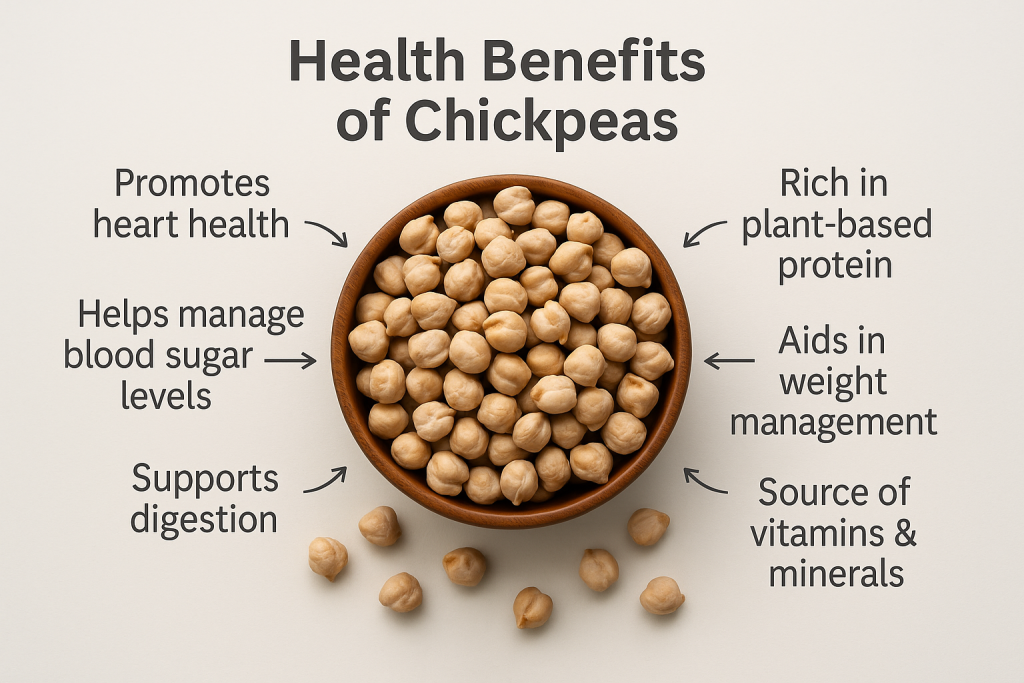
Chickpeas provide a balanced mix of macronutrients, with complex carbohydrates supplying steady energy and plant protein supporting muscle maintenance. A typical cooked portion also contains a notable amount of dietary fibre, which helps bowel regularity and supports healthy blood cholesterol levels. Fibre also slows digestion, which can help manage post-meal blood glucose. This combination can support appetite control, as fibre and protein tend to increase feelings of fullness after meals.
Micronutrients add to chickpeas’ value. Folate (vitamin B9) supports normal blood formation and helps reduce tiredness, while iron contributes to oxygen transport in the body. Magnesium and potassium support normal muscle function and help maintain healthy blood pressure. Chickpeas also supply zinc, which supports normal immune function, and phosphorus, which helps maintain normal bones and teeth.
Chickpeas contain small amounts of unsaturated fats and naturally occurring bioactive compounds, including polyphenols, which act as antioxidants. For detailed nutrient figures, consult the USDA FoodData Central entry for cooked chickpeas, which lists values by serving size and preparation method. Values can vary between canned and home-cooked chickpeas, so check the entry that matches the product used.
The Health Benefits of Chickpeas
Digestive and Metabolic Health: Fibre, Blood Glucose Control and Cholesterol Support
Chickpeas support digestive comfort because the fibre in cooked pulses adds bulk to stools and helps food move through the gut at a steady pace. That effect can reduce constipation risk and may support a healthier gut microbiome, which describes the community of microbes that live in the bowel. A varied microbiome tends to associate with better digestion and more stable appetite signals.
Metabolic health also benefits from chickpeas because fibre and resistant starch slow the breakdown and absorption of carbohydrate. As a result, blood glucose often rises more gradually after a chickpea-based meal than after a low-fibre, refined carbohydrate meal. This steadier pattern can help people who aim to manage energy levels and reduce post-meal cravings. For practical use, pairing chickpeas with non-starchy vegetables and a source of unsaturated fat, such as olive oil, can further moderate the meal’s glycaemic impact.
Chickpeas can also support cholesterol management. Soluble fibre binds to bile acids in the gut, which encourages the body to use circulating cholesterol to make more bile. Over time, this mechanism may help lower LDL cholesterol, which clinicians often call “bad” cholesterol. Public health guidance from the NHS highlights beans and pulses as useful sources of fibre within a balanced diet.
To eat chickpeas daily without monotony, rotate formats: blend into hummus, stir through soups, or add to salads and grain bowls. Regular portions work best when spread across meals and combined with adequate fluids, since fibre needs water to function well.
Heart and Weight Management Benefits: Satiety, Plant Protein and Energy Balance
Chickpeas can support heart health and weight management through a combination of satiety, plant protein and steady energy release. Their mix of protein and fibre helps people feel fuller for longer, which can reduce snacking and support portion control without strict restriction. Protein also helps preserve lean mass during weight loss, which matters because muscle tissue uses energy even at rest.
For cardiovascular support, chickpeas suit eating patterns that prioritise plant foods and unsaturated fats. Regularly choosing pulses in place of some red or processed meat can help lower saturated fat intake, a change that British Heart Foundation guidance links with healthier cholesterol levels. Complex carbohydrates in chickpeas provide sustained energy, which can help maintain an energy balance that supports a healthy body weight when paired with an active lifestyle.
Practical Ways to Eat Chickpeas Daily: Breakfast, Lunch, Dinner and Snacks
Start the day with chickpeas blended into a savoury breakfast hummus, spread on wholegrain toast, or folded into a vegetable omelette. At lunch, add drained chickpeas to salads for texture and staying power, or stir them through soups and stews to make a simple meal more filling. For dinner, use chickpeas as the base for a quick curry, toss them into a tomato pasta sauce, or roast them with seasonal vegetables and herbs for an easy traybake.
Snacks can stay practical: roast chickpeas with spices until crisp, or mash them with lemon and olive oil for a dip with raw vegetables. Choose low-salt tinned chickpeas, rinse well, and keep a portion in the fridge for fast meals. For food safety guidance on storing cooked pulses, follow advice from the Food Standards Agency.
Preparation and Safety: Cooking Methods, Portion Guidance and Reducing Digestive Discomfort
Cook dried chickpeas thoroughly to improve texture and reduce digestive upset. Soak them for at least 8 hours, discard the soaking water, then simmer until tender. A pressure cooker shortens cooking time, yet the same rule applies: cook until soft all the way through. Canned chickpeas offer convenience; rinse and drain them to remove excess sodium and some fermentable carbohydrates that can trigger gas.
For most adults, a sensible starting portion equals about 80 g cooked chickpeas (roughly three heaped tablespoons). Increase intake gradually across a week or two so the gut adapts to higher fibre. Drinking enough fluid also helps fibre move through the bowel comfortably.
To reduce bloating, choose well-cooked chickpeas, chew slowly, and spread portions across meals rather than eating a large serving at once. People with irritable bowel syndrome may react to pulses because they contain FODMAPs (fermentable carbohydrates). A dietitian can advise on suitable portions and preparation. Anyone with a chickpea or legume allergy should avoid them and seek medical guidance. Food safety matters as well: refrigerate cooked chickpeas promptly and reheat until piping hot.
Frequently Asked Questions
What nutrients in chickpeas support heart health and healthy cholesterol levels?
Chickpeas support heart health through soluble fibre, which helps lower LDL (bad) cholesterol. Plant protein can improve blood lipid balance. Potassium and magnesium help regulate blood pressure. Folate supports healthy homocysteine levels, linked to cardiovascular risk. Unsaturated fats, present in small amounts, also support healthier cholesterol profiles.
How can chickpeas help with blood sugar control and insulin sensitivity?
Chickpeas can support blood sugar control because the fibre and protein slow digestion and reduce glucose spikes after meals. Their low glycaemic index means they raise blood sugar more gradually than many refined carbohydrates. Regular intake may also improve insulin sensitivity by supporting a healthier gut microbiome and aiding weight management.
What is a practical daily serving size of chickpeas for most adults?
For most adults, a practical daily serving is 80–120 g cooked chickpeas (about 3–6 tablespoons), or 30–40 g dried before cooking. This portion supports fibre and plant protein intake without adding excessive calories. Increase gradually if you are not used to high-fibre foods, and drink enough water.
How can you eat chickpeas every day without causing digestive discomfort?
Increase chickpeas gradually and drink enough water to support fibre digestion. Choose well-cooked chickpeas, rinse tinned chickpeas thoroughly, and soak dried chickpeas before cooking. Keep portions moderate (about 60–100 g cooked) and spread intake across meals. If sensitive, try hummus or blended soups, and add cumin or ginger.
What are the simplest ways to add chickpeas to breakfasts, lunches, and dinners?
Stir chickpeas into scrambled eggs, omelettes, or breakfast bowls, or blend into a savoury spread. For lunch, add to salads, soups, or wraps. At dinner, use in curries, stews, pasta sauces, or roasted trays with vegetables. Mash chickpeas for quick sandwiches, or toast for a crunchy topping.