
Spanish cooks value balsamic vinegar for its balance of sweetness and acidity, which lifts everyday dishes without masking local ingredients. Many households use it to sharpen salads, enrich roasted vegetables, and finish grilled meats or seafood with a clean, glossy note. Its gentle tang also pairs well with Spanish staples such as tomatoes, olives, and aged cheeses. As a result, balsamic vinegar has become a trusted pantry item across many regions.
Key takeaways
- Spanish home cooks use balsamic vinegar to balance rich stews and braises.
- Locals favour it for quick salad dressings with olive oil and sea salt.
- Many pair balsamic with tomatoes, anchovies, and cured meats for contrast.
- Chefs use small amounts to deepen sauces without adding noticeable sweetness.
- It features in tapas, especially with roasted vegetables and grilled seafood.
- Spanish shoppers often choose aged balsamic for intensity and lower sharpness.
How Balsamic Vinegar Entered Spanish Kitchens
Balsamic vinegar reached Spanish kitchens through trade, travel, and changing tastes. Spanish ports such as Barcelona and Valencia have long received Italian goods, including vinegars from Emilia-Romagna. As Mediterranean cooking gained popularity in restaurants during the late twentieth century, chefs began to use balsamic vinegar to balance rich meats, grilled vegetables, and seafood. Diners then looked for the same flavour at home, which helped supermarkets expand their ranges. Food importers and specialist delis also introduced new brands, making the ingredient easier to find beyond major cities.
Cookery books and television also played a part. Spanish home cooks adopted balsamic vinegar as a simple way to add sweetness and acidity without complex sauces. That profile suits familiar ingredients, from tomatoes and strawberries to Manchego and roasted peppers. Retail availability improved as protected products became easier to identify, including Aceto Balsamico Tradizionale and Aceto Balsamico di Modena. Clear labelling helped shoppers choose between traditional, aged vinegars and everyday versions made for dressing and cooking. Price points widened as well, so households could select a bottle for daily salads or a smaller one for finishing dishes.
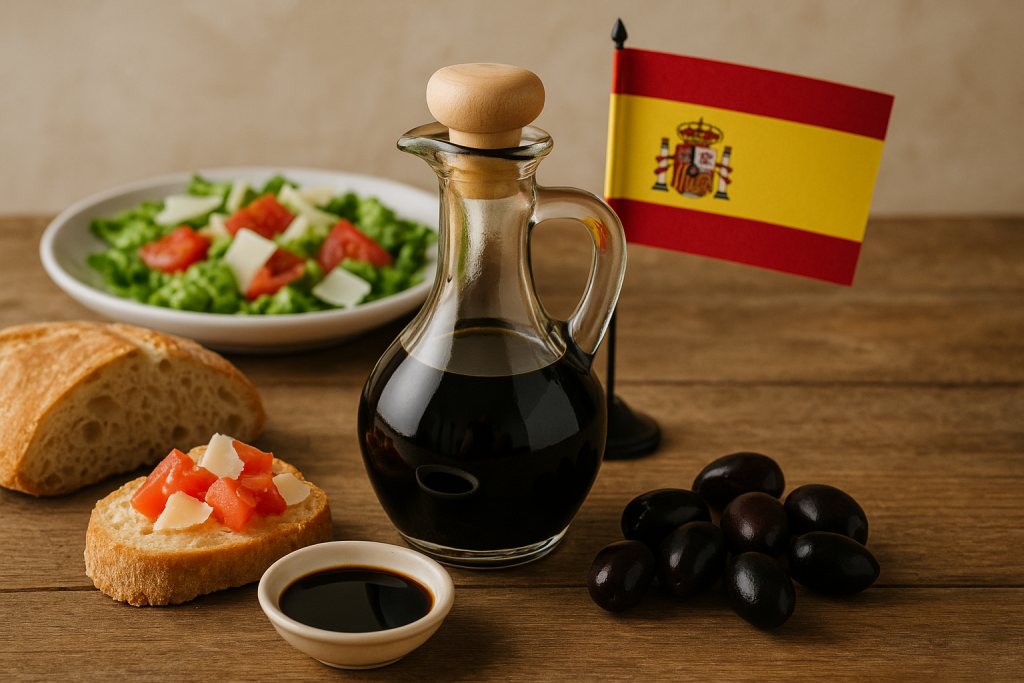
Why Spanish Locals Love Balsamic Vinegar
Regional Spanish Dishes That Use Balsamic Vinegar Well
Spanish cooks tend to use balsamic vinegar where a dish benefits from gentle sweetness and a clean, acidic finish. In Catalonia, chefs often spoon a light balsamic reduction over escalivada, the classic platter of roasted aubergine, peppers, and onion. The vinegar sharpens the smoky vegetables without masking the olive oil. A similar approach suits grilled calçots, where a restrained drizzle can lift the char and complement the nutty notes of romesco.
In the Basque Country, pintxos bars frequently pair balsamic vinegar with mushrooms, peppers, and seared beef. A few drops over setas (wild mushrooms) bring brightness to earthy flavours, while a glaze can add contrast to solomillo (tenderloin) served in small portions. Along the Valencian coast, cooks sometimes finish grilled prawns or cuttlefish with balsamic vinegar and citrus, which keeps the seafood tasting fresh and clean.
Andalusia also offers natural matches. Balsamic vinegar can deepen the sweetness of slow-cooked onions used with pork, or balance roasted tomatoes served with cured tuna. Many home cooks choose a modest pour rather than a heavy sauce, since Spanish dishes often rely on clarity of flavour. For authenticity and quality cues, the Consorzio Tutela Aceto Balsamico Tradizionale di Modena explains the standards behind traditional balsamic vinegar, which helps when selecting a bottle suited to Spanish-style cooking.
Flavour Pairing: Why Balsamic Works With Spanish Ingredients
Balsamic vinegar suits Spanish cooking because Spanish ingredients already balance sweetness, bitterness, salt, and acidity. A small amount brings two effects at once: gentle sweetness from cooked grape must and bright acidity from wine vinegar. That combination can sharpen flavours without adding heat or extra fat, which fits the clean style of many Spanish plates.
Tomatoes provide a clear example. Spanish tomatoes often taste sweet and sun-ripened, yet they still need acidity to taste fresh. Balsamic vinegar reinforces that natural sweetness while tightening the finish, so tomato salads, pan con tomate, and simple garnishes taste more defined. Peppers and onions respond in a similar way, as balsamic vinegar rounds their sweetness and reduces any harsh edge after grilling or roasting.
Spanish olive oil also pairs well with balsamic vinegar. Extra virgin olive oil brings fruitiness and a slight bitterness, while balsamic vinegar adds lift and a faint caramel note. Together, they create a balanced dressing for leafy salads, legumes, and warm vegetables. For guidance on flavour structure and acidity in dressings, see the advice from BBC Good Food.
Protein dishes benefit when balsamic vinegar cuts richness. Pork, lamb, and oily fish can taste heavy when served with sweet peppers, potatoes, or creamy sauces. A restrained drizzle or a quick pan deglaze with balsamic vinegar brightens the plate and keeps the flavours clear.
- Use sparingly: a few drops can season; too much can dominate.
- Match intensity: choose younger balsamic for dressings and older, thicker styles for finishing.
- Apply at the right time: add late for freshness, or reduce briefly for a glossy glaze.
“Acidity makes food taste brighter and more balanced.”
Serious Eats
How Spanish Shoppers Choose Balsamic Vinegar (Labels, Ageing, and Quality)
Spanish shoppers often start with the label. Many look for Aceto Balsamico di Modena IGP, which signals protected geographical status and defined production rules under the EU scheme. A smaller number seek Aceto Balsamico Tradizionale, a slower-aged style that costs more and suits finishing rather than cooking. The ingredient list also guides quality: grape must should appear before wine vinegar, while caramel (E150d) suggests a more standard, mass-market profile.
Ageing claims matter, yet they vary by producer. Buyers tend to treat long ageing statements as a cue, then confirm texture and aroma. A good bottle pours with gentle viscosity, smells of cooked fruit and wood, and tastes balanced rather than sharply sour. For reliable reference, many compare labels against the official rules published by the Consorzio Tutela Aceto Balsamico di Modena.
Practical Ways to Use Balsamic Vinegar at Home, Spanish-Style
Spanish home cooks often treat balsamic vinegar as a finishing touch rather than a base seasoning. A few drops over sliced tomatoes, flaky sea salt, and extra virgin olive oil can sharpen flavour while keeping the plate light. Many families also whisk balsamic with olive oil and a little Dijon mustard for a quick dressing that suits mixed leaves, roasted peppers, or chickpea salads.
For weeknight cooking, a small splash in the pan after searing pork loin or chicken thighs helps lift browned juices into a simple glaze. Keep the heat moderate so the vinegar reduces gently instead of turning bitter. Balsamic also works well with fruit: drizzle it over strawberries, figs, or orange segments, then add toasted almonds or a spoon of plain yoghurt. When buying, check guidance on protected names such as EU geographical indications to match the style to the task.
Frequently Asked Questions
What qualities of balsamic vinegar appeal most to Spanish locals?
Spanish locals value balsamic vinegar for its balanced sweet-sour flavour, which suits tapas, salads, and grilled meats. Its syrupy texture adds gloss and body to sauces and reductions. Many also appreciate its aroma, which brings depth without heavy seasoning, and its versatility, from marinades to finishing drizzles.
How do Spanish home cooks use balsamic vinegar in traditional dishes?
Spanish home cooks use balsamic vinegar to add gentle sweetness and acidity to familiar recipes. Many splash it into tomato salads, roasted peppers, and grilled vegetables. Others stir it into pan sauces for pork, chicken, or mushrooms, or reduce it to glaze tuna and lamb. A few drops can also sharpen lentil stews and gazpacho.
Which Spanish ingredients pair best with balsamic vinegar for everyday meals?
Balsamic vinegar pairs well with Spanish staples such as extra virgin olive oil, ripe tomatoes, Manchego, jamón serrano, roasted peppers, grilled aubergine, courgette, chickpeas, lentils, tuna, sardines, and fresh herbs. Use it to dress salads, finish grilled vegetables, brighten legumes, or glaze meats and fish. A small amount also lifts strawberries and figs.
Does the sweetness of balsamic vinegar suit Spanish regional cuisines differently?
Yes. The sweetness suits regions differently. In Andalusia, it balances fried fish and gazpacho. In Catalonia, it complements roasted vegetables and grilled meats. In the Basque Country, it can soften sharp flavours in pintxos and seafood. In Galicia, a light drizzle works best with shellfish, as heavy sweetness can mask delicate flavours.
How can you choose an authentic balsamic vinegar for use in Spanish-style cooking?
Choose balsamic vinegar with a clear origin label, ideally from Modena or Reggio Emilia, and a short ingredient list of cooked grape must (and wine vinegar for IGP). Avoid caramel, colourings, and added sugar. For Spanish-style cooking, select a balanced, medium acidity vinegar; reserve aged, syrupy styles for finishing.