
Food can influence hormone balance by affecting insulin, cortisol, thyroid hormones, and sex hormones, but diet alone does not correct every hormonal problem. The strength of evidence varies by condition, nutrient, and eating pattern, and claims about single foods often go beyond the research. This article reviews what studies show about fibre, protein, fats, blood sugar control, body weight, and key nutrient gaps, and where medical assessment is still necessary.
Key takeaways
- Food can support hormone health, but it does not “rebalance” hormones in a simple, universal way.
- Prioritise enough protein, fibre, and healthy fats to support blood sugar control and hormone production.
- Use minimally processed carbohydrates and pair them with protein to reduce sharp glucose and insulin spikes.
- Include oily fish, nuts, seeds, and olive oil to improve dietary fat quality.
- Cruciferous vegetables and high-fibre foods may help oestrogen metabolism through gut and liver pathways.
- Persistent symptoms need medical assessment, since diet alone will not treat thyroid, PCOS, or menopause issues.
How diet influences hormone production, signalling and metabolism
Build meals around protein, high-fibre carbohydrates and unsaturated fats. Hormones need amino acids, fatty acids, vitamins and minerals. Severe restriction can disrupt that supply and alter signals linked to appetite, reproduction, stress and thyroid function.
Diet affects hormones at three levels. Nutrients provide raw materials for steroid hormones, including oestrogen and testosterone. Food intake also changes signalling through insulin, glucagon and gut hormones such as GLP-1, which regulate blood sugar, hunger and fullness. Over time, eating patterns influence body fat, liver function and insulin sensitivity.
Carbohydrate quality matters more than avoiding carbohydrates outright. Minimally processed grains, pulses, vegetables and fruit usually cause a slower glucose rise than refined foods, helping limit repeated insulin spikes. Unsaturated fats from olive oil, nuts, seeds and oily fish support cell membranes, where hormone signalling begins.
Evidence reviews from bodies such as the National Institute for Health and Care Excellence and the British Dietetic Association do not support single “hormone-balancing” foods. Consistent eating patterns, enough energy and a nutrient-dense diet have stronger support than detoxes, supplements and extreme elimination plans.
What the evidence shows on blood sugar control, insulin and meal composition
Meals that slow the rise in blood glucose after eating usually reduce how much insulin the body needs to release. The most reliable pattern is consistent: pair minimally processed carbohydrates with protein, fibre and unsaturated fat instead of eating refined starches or sugary foods alone.
Mixed meals work by slowing gastric emptying and glucose absorption. Fibre from pulses, vegetables, oats and whole grains helps blunt post-meal glucose spikes. Protein also improves fullness and can moderate the blood sugar response when eaten with carbohydrate. For people with insulin resistance or type 2 diabetes, this pattern often supports steadier energy and better glycaemic control over time.
UK adults average just 18g of fibre per day — only 4% meet the recommended 30g target. Adequate fibre from whole grains, pulses and vegetables helps moderate post-meal blood glucose and supports hormonal health. Sources: British Dietetic Association (BDA, 2024); BMJ Fibre & Healthcare Review (2022)
Source: British Dietetic Association – Fibre Fact Sheet (2024) & BMJ – Fibre Intake for Optimal Health (2022)
Guidance from Diabetes UK and the National Institute for Health and Care Excellence supports focusing on meal quality and composition, not single “hormone-balancing” foods. Lower-carbohydrate diets can help some people, especially when refined carbohydrates are replaced with protein, fibre-rich foods and unsaturated fats. They are not necessary for everyone, and very restrictive plans can be hard to maintain. Mediterranean-style eating fits well because it improves meal quality without strict rules.
Body fat, energy intake and their effect on oestrogen, testosterone and cortisol
Food cannot override low energy availability or excess body fat. Both change hormone output through signals from fat tissue, the brain and the adrenal system, even when diet quality is good.
Adipose tissue is hormonally active. It contains aromatase, which converts androgens into oestrogens, so higher body fat can raise oestrogen exposure. Fat tissue also releases leptin and inflammatory signals that disrupt hypothalamic and pituitary signalling, affecting ovarian and testicular hormone production. At the other extreme, chronic under-eating lowers leptin and gonadotropin-releasing hormone activity, which can suppress oestrogen and testosterone.
Cortisol rises with energy stress. Large calorie deficits, hard training without enough fuel, poor sleep and prolonged stress can keep it elevated. That can increase protein breakdown, disturb menstrual function and reduce testosterone production.
The most evidence-based food strategy is steady energy intake, enough protein, and body fat levels that support normal reproductive function. Guidance from the NHS and the National Institute for Health and Care Excellence supports gradual weight change rather than aggressive restriction, because hormone systems respond poorly to repeated energy shortfalls.
Foods, nutrients and dietary patterns studied for PCOS, menopause and thyroid health
No single food fixes PCOS, menopause symptoms or thyroid problems; the strongest evidence supports an eating pattern matched to the condition and the person’s needs.
For PCOS, build meals around pulses, vegetables, fruit, whole grains, nuts, seeds and regular protein. This can support insulin sensitivity, a key issue in many PCOS cases. Extra virgin olive oil, oily fish and higher-fibre carbohydrates fit well, while highly refined snacks and sugary drinks add little value.
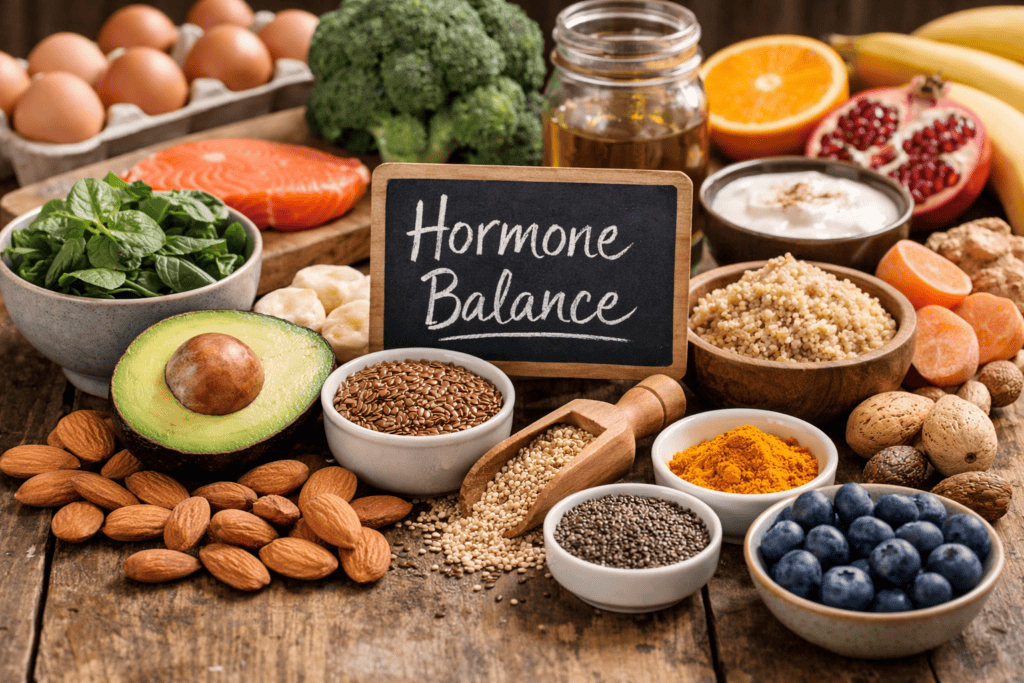
For menopause, focus on protein, calcium-rich foods and phytoestrogen-containing foods such as soya. Tofu, tempeh and unsweetened soya yoghurt may help some women with hot flushes. For thyroid health, meet iodine and selenium needs through food where possible, but avoid high-dose supplements unless a clinician advises them. The NHS and the British Dietetic Association stress that thyroid conditions need proper diagnosis, not self-treatment.
Common mistakes include cutting out food groups without a medical reason, relying on “hormone-balancing” powders, and assuming supplements are harmless. Large amounts of seaweed can push iodine intake too high, and many “menopause support” blends have weak evidence. Use blood tests, symptoms and medical history to guide changes, especially for thyroid concerns.
Claims about hormone-balancing foods, supplements and detox diets that do not hold up
Cycles, appetite, energy and symptom tracking often get blamed on “hormone imbalance” when weak evidence sits behind food, supplement or detox claims. Most products sold for “balancing” hormones have not shown consistent benefits in well-designed human trials, and some rely on lab data, animal studies or broad marketing language instead of clinical outcomes.
Detox diets fail basic physiology. The liver, kidneys, gut and lungs already remove metabolic waste, and no juice cleanse or tea has been shown to “flush” hormones out in a meaningful way. Severe cleanses can cut protein, energy and micronutrients needed for normal hormone production and metabolism.
| Market Segment | 2023–2024 Value | Projected Value | Evidence Quality (per regulators) |
|---|---|---|---|
| Women's Hormonal Supplements | USD $4.50 billion (2023) | USD $8.50 billion by 2032 | Lack of robust clinical trial evidence flagged by regulators |
| Hormone-Balancing Supplements (broad) | ~USD $900 million (2023) | ~USD $1.6 billion by 2033 | Many products lack long-term safety or efficacy data |
| Menopause Supplements | USD $1.8 billion (2024) | USD $3.5 billion by 2033 | 70%+ of menopausal women seek alternatives to HRT, but evidence varies widely |
| Hormone Replacement Therapy (clinical) | USD $23.58 billion (2024) | USD $39.42 billion by 2033 | Regulated, evidence-based prescriptions with monitored clinical outcomes |
Source: SNS Insider – Women's Hormonal Supplements Market (2024); Data Horizzon – Hormone Balance Supplements Market (2024); Grand View Research – HRT Market (2024)
Supplement claims need caution. “Natural” does not mean effective or safe, especially for products marketed for cortisol, thyroid support, oestrogen balance or testosterone boosting. The US National Center for Complementary and Integrative Health and the NHS both advise checking ingredients, interactions and evidence before use.
Use a simple standard: look for randomised human trials, clear dosing, safety data and results that match the claim. If a product promises to reset several hormones at once, treat it as a sales signal, not a scientific one.
Frequently Asked Questions
Can food meaningfully affect hormone balance in healthy adults?
Yes, to a degree. Diet can influence insulin, blood sugar, appetite hormones and, over time, sex hormone metabolism through energy intake, fibre, fat quality and body weight. In healthy adults, food supports normal hormone function, but it rarely causes dramatic hormone shifts on its own.
Which dietary patterns have the strongest evidence for supporting hormone health?
No single “hormone diet” has strong proof. The best evidence supports balanced patterns that improve insulin sensitivity and reduce inflammation, especially the Mediterranean diet and other whole-food diets rich in vegetables, fruit, legumes, whole grains, fish, nuts and olive oil.
Patterns high in ultra-processed foods, refined carbs and excess alcohol tend to work against hormone health.
Are there specific foods that help regulate oestrogen, insulin, or cortisol levels?
Build meals around high-fibre plants, protein, and minimally processed carbs. This pattern can improve insulin control and supports healthy oestrogen metabolism by aiding blood sugar stability and regular excretion of excess hormones.
For cortisol, regular meals, enough energy intake, and limiting excess alcohol matter more than any single food. Oily fish, pulses, wholegrains, vegetables, and fermented foods may help by supporting stress response and metabolic health.
How does body weight and energy intake influence hormone balance through diet?
Chronic under-eating or excess body fat can disrupt hormone balance more than any single food. Low energy intake may reduce thyroid hormones, oestrogen, progesterone and testosterone, while raising cortisol. Sustained weight gain, especially around the abdomen, can worsen insulin resistance and alter oestrogen and androgen levels.
What claims about hormone-balancing foods or supplements are not supported by good evidence?
Most “hormone-balancing” food and supplement claims rely on small studies, animal research, or marketing rather than strong human evidence. That includes detox teas, seed cycling, progesterone creams sold over the counter, and supplements said to “reset” cortisol or oestrogen. Food can support hormone health, but no single product reliably balances hormones on its own.