
Waking up at 3am often reflects a disruption in the normal sleep cycle, commonly linked to stress, blood sugar changes, hormones, alcohol, medication, or sleep disorders. An occasional early waking episode is common, but repeated waking at the same time can point to a pattern worth examining. This article explains the most likely causes, when the timing may signal an underlying issue, and which symptoms suggest a need for medical advice.
Key takeaways
- Keep a two-week sleep diary to track triggers, patterns and repeated 3am waking.
- Sleep is lighter around 3am, so heat, reflux, pain or a full bladder can wake you.
- Stress often extends time awake after 3am by keeping the nervous system too alert.
- Cortisol should stay low at night, but stress can shift that pattern and disrupt sleep.
- Repeated 3am waking can signal fragmented sleep, even when total sleep time seems normal.
- Track sleep continuity, morning alertness and daytime function for two weeks to judge sleep quality.
- Seek medical help if waking lasts weeks or comes with snoring, choking, reflux, pain or low mood.
Common Sleep Cycle Changes That Trigger 3am Wake-Ups
Keep a two-week sleep diary with bedtime, wake time, alcohol, caffeine, stress, room temperature and any 3am waking. It helps separate a one-off disturbance from a repeat pattern.
Around 3am, many people spend more time in lighter sleep than earlier in the night. Sleep pressure has dropped, so smaller triggers can wake you fully. A warm bedroom, a full bladder, reflux, pain, anxiety or low blood sugar can all break sleep then.
Hormones shift across the night. Cortisol starts rising in the early morning to prepare the body for waking, and stress can make that rise feel stronger. Oestrogen and progesterone changes can also lighten sleep, especially during perimenopause and menopause.
Digestion can play a part. Late meals, alcohol and spicy food raise the chance of reflux when you are lying flat. Ongoing digestive symptoms may also point to a broader issue worth reviewing, including the gut microbiome.
If 3am waking happens most nights for more than a few weeks, look for the trigger before changing everything. Move your evening meal earlier, cut alcohol for a week, keep the bedroom cool and avoid checking the time. If you also snore loudly, gasp in sleep, sweat heavily or feel exhausted in the day, ask a GP to assess sleep apnoea, reflux or hormone-related sleep disruption.
Stress, Cortisol and Night-Time Alertness Around 3am
Higher stress levels often mean longer periods awake after a 3am waking, not just more frequent waking. The most useful first step is to look at stress and arousal patterns across the whole day, because night-time alertness often reflects a nervous system that has stayed switched on into the evening.
Cortisol, a hormone that helps regulate alertness, normally falls at night and rises again towards morning. When stress remains high, that pattern can shift enough to make a brief wake-up feel sharp and fully alert. Racing thoughts, a faster heart rate and a sense of being “wide awake” at 3am often fit this pattern more closely than simple sleep disruption.
This explanation fits best when 3am waking appears alongside daytime anxiety, ongoing pressure, poor wind-down habits or irregular sleep hours. Guidance from the NHS and sleep advice from the Sleep Foundation both point to stress reduction, steady sleep timing and a calmer pre-bed routine as practical ways to reduce night-time arousal.
Other causes still fit in some cases. Alcohol, pain, reflux, medication effects and menopause can also trigger waking around this time, and they may overlap with stress rather than replace it. If 3am waking comes with snoring, choking, low mood, panic symptoms or persists for weeks despite routine changes, a GP review is the sensible next step.
Medical and Lifestyle Factors Linked to Waking at 3am
Not every 3am waking points to stress. Medical and lifestyle factors can interrupt sleep at the same time night after night. The key question is whether the waking follows a body signal such as pain, airway blockage, reflux, hormonal change or a substance effect.
Sleep is easier to break in the second half of the night, so underlying problems often show up then. Obstructive sleep apnoea can trigger brief awakenings when the airway narrows. Acid reflux may worsen during sleep. Chronic pain, menopause-related hot flushes, thyroid overactivity and some medicines, including steroids and certain antidepressants, can also raise night waking.
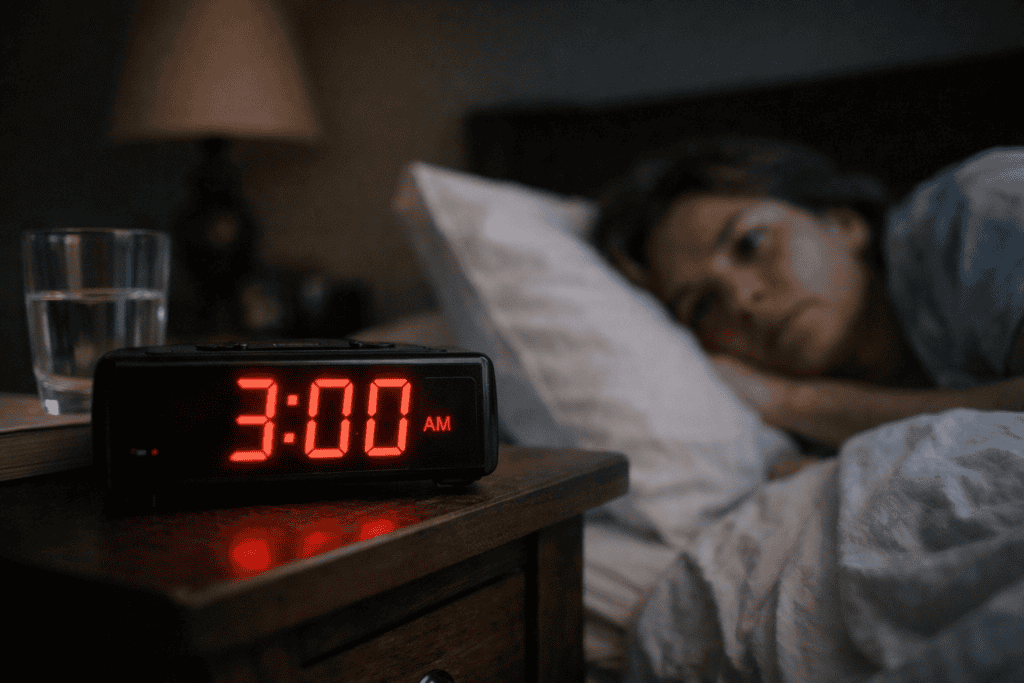
Lifestyle factors can create the same pattern through a different route. Alcohol may help with sleep onset, but it fragments sleep later as blood alcohol levels fall. Caffeine taken in the afternoon or evening can still block adenosine several hours later. Nicotine stimulates the body, and heavy evening meals can worsen reflux and discomfort.
Repeated 3am waking can feel mysterious but often has a clear cause. If it comes with loud snoring, choking, chest burning, drenching sweats, regular pain, or a recent medication change, review it with a GP or sleep specialist. The NHS and the Sleep Foundation both list these as recognised causes of broken sleep.
What Repeated 3am Wake-Ups Can Reveal About Sleep Quality
- A repeat pattern rather than a one-off disturbance
- That sleep is becoming easier to break in the second half of the night
- Possible links with stress, reflux, pain, hormones, alcohol or medication effects
- Whether daytime exhaustion or other symptoms point to a broader sleep-quality problem
- That stress is always the cause
- That one bad night means a chronic sleep issue
- That changing everything at once is the best response
- That symptoms such as snoring, gasping or choking should be self-diagnosed without GP review
Repeated 3am wake-ups often point to fragmented sleep, even when total sleep time looks normal. The key question is not just how often you wake, but how restored you feel the next day. Heavy fatigue, poor focus, irritability or a strong need for caffeine can signal falling sleep quality before sleep hours drop.
Check three markers for two weeks: sleep continuity, morning alertness and daytime function. Note how long it takes to fall back asleep, whether you wake more than once, and how you feel in the first hour after getting up. A simple 1 to 5 rating for energy, mood and concentration can reveal patterns.
Then look for signs that sleep becomes shallow later in the night. Dry mouth can suggest mouth breathing or snoring. Morning headaches can point to poor overnight breathing. A racing mind on waking may fit chronic stress, while unrefreshing sleep despite enough time in bed can justify a clinical review.
The most common mistake is judging sleep quality by clock time alone. Eight hours in bed does not guarantee deep or uninterrupted sleep. Avoid changing several habits at once, keep bedtime and wake time steady, and seek medical advice if repeated 3am waking comes with loud snoring, gasping, chest discomfort, low mood or daytime sleepiness that affects driving or work.
When to Seek Help for Frequent 3am Waking
Sleep often improves once the cause of repeated 3am waking is found and treated, but ongoing disruption needs medical review when it affects daytime function, mood or safety. Seek help if it lasts more than a few weeks, returns often, or comes with loud snoring, choking, chest discomfort, reflux, pain, low mood or severe anxiety.
A GP will usually assess timing, frequency and related symptoms, not the wake-up time alone. This helps separate insomnia from sleep apnoea, reflux, depression, perimenopausal symptoms, medication effects or restless legs. If poor sleep habits or chronic stress drive the problem, structured changes often help, including a steadier sleep schedule, less evening alcohol and a better wind-down routine. The wider health impact is covered in why sleep is underrated.
Urgent assessment is sensible if night waking appears with breathing pauses, sudden weight loss, fainting, severe night sweats, suicidal thoughts or dangerous daytime sleepiness. Sleep clinics may arrange tests such as home sleep apnoea monitoring or actigraphy, which tracks sleep and movement over several days. If worry about sleep has become part of the problem, cognitive behavioural therapy for insomnia, often called CBT-I, has stronger evidence than sleeping tablets for long-term improvement.
Bring a two-week record of bedtimes, wake times, symptoms, caffeine, alcohol and medicines to the appointment. Clear notes can speed up the right treatment.
Frequently Asked Questions
Why do I keep waking up at 3am every night?
Repeated 3am waking often points to disrupted sleep cycles, stress, anxiety, alcohol, caffeine, or a bedroom that is too warm, bright, or noisy. It can also happen during lighter sleep in the early morning hours. If it lasts for weeks or comes with snoring, breathlessness, pain, or low mood, speak to a GP.
Is waking up at 3am a sign of stress or anxiety?
Not always. Waking at 3am can reflect stress or anxiety, especially if your mind feels alert, worried, or restless, but it can also stem from alcohol, caffeine, sleep apnoea, pain, hormones, or normal sleep-cycle changes. If it happens often or affects daytime function, it is worth discussing with a GP.
Can blood sugar, hormones, or sleep cycles cause waking at 3am?
Track the timing for one to two weeks and discuss repeated 3am waking with a clinician if it persists. Blood sugar dips, shifts in cortisol or other hormones, and normal sleep-cycle transitions can all trigger brief awakenings. Stress, alcohol, and late meals can make these wake-ups more noticeable.
When does waking up at 3am suggest an underlying sleep disorder or health issue?
Seek medical advice if waking at 3am happens at least three times a week for several weeks, or leaves you tired in the day. It can point to insomnia, sleep apnoea, anxiety, depression, reflux, pain, or hormone changes. Loud snoring, gasping, early waking with low mood, or night sweats need prompt review.
What can help stop waking up at 3am and make sleep more consistent?
Adults need at least 7 hours of sleep each night. If you keep waking at 3am, a fixed sleep and wake time often helps reset your body clock. Cut caffeine after midday, limit alcohol at night, keep the bedroom cool and dark, and use relaxation methods if stress is a trigger.