
Vitamin D deficiency affects an estimated one in five people in the UK. That makes it one of the most common nutritional shortfalls in the country. The UK’s northern latitude limits sunlight exposure for much of the year, which reduces the skin’s ability to synthesise the vitamin naturally. This article examines why deficiency is so widespread, which groups face the greatest risk, and what the evidence says about diet, supplementation, and public health guidance.
Key takeaways
- UVB rays are too weak for vitamin D synthesis in the UK from October to April.
- People with darker skin tones face higher deficiency risk due to reduced UVB absorption.
- Adults over 65 produce less vitamin D because skin synthesis capacity declines with age.
- Persistent fatigue, bone pain, and muscle weakness are the most consistent deficiency symptoms.
- The NHS recommends 10 micrograms (400 IU) daily for adults through autumn and winter.
- Those who rarely go outdoors or cover their skin should supplement year-round.
- Oily fish provides the highest dietary vitamin D, but diet alone rarely meets daily needs.
Why the UK Climate Makes Vitamin D Deficiency Almost Inevitable
Check your latitude before you rely on sunlight for vitamin D synthesis. The UK sits between 50° and 60° North. At that latitude, UVB rays do not reach the Earth’s surface at sufficient intensity for roughly seven months of the year, from October through to April. During those months, no amount of time outdoors will trigger meaningful vitamin D production in the skin, regardless of how sunny the day feels.
Summer does not remove the problem. Cloud cover, air pollution, and the UK’s famously overcast skies can reduce UVB exposure well below what skin needs. The UK Health Security Agency estimates that a significant proportion of the population has low vitamin D levels by the end of winter. Researchers see a similar pattern with other micronutrients: like magnesium, vitamin D deficiency is not a niche concern but a widespread population-level gap driven by geography and modern indoor lifestyles.
Who Is Most at Risk of Low Vitamin D in the UK
| Group | Why risk is higher |
|---|---|
| People with darker skin tones | Higher melanin reduces UVB absorption, so more sun exposure is needed to produce equivalent vitamin D. |
| Adults over 65 | Ageing skin synthesises less vitamin D, and reduced mobility or indoor time can further limit exposure. |
| Pregnant and breastfeeding women | Requirements are elevated, increasing the chance of low status without supplementation. |
| Infants | Breast milk provides very little vitamin D, which is why supplements are recommended in early life. |
| People who cover most of their skin | Limited skin exposure reduces opportunities for vitamin D synthesis. |
| Indoor workers | Daylight hours are often spent inside, restricting UVB exposure regardless of season. |
Darker skin tones need significantly more sun exposure to produce equivalent vitamin D levels because higher melanin concentrations reduce UVB absorption. In the UK’s already limited sunlight conditions, this raises the risk of deficiency for people of South Asian, African, and Caribbean heritage.
Adults over 65 face a separate physiological limit. The skin’s capacity to synthesise vitamin D declines with age, so older adults produce less even under identical sun exposure. Reduced mobility and more time spent indoors add to the problem, and this group consistently shows lower serum levels in national surveys.
Pregnant and breastfeeding women have elevated requirements. Infants fed exclusively on breast milk receive very little vitamin D through feed alone. The NHS recommends supplements for all babies from birth to age one for this reason. People who cover most of their skin for cultural or religious reasons, and those who work indoors during daylight hours, also have limited opportunity for synthesis regardless of season.
How to Recognise the Signs of Vitamin D Deficiency
Vitamin D deficiency rarely shows itself clearly. Its symptoms overlap with many common conditions, so low levels often go unnoticed for months or even years until a blood test confirms the cause.
The most consistent physical signs are persistent fatigue, bone or muscle pain, and general weakness. Vitamin D regulates calcium absorption, so without adequate levels, bones lose density and muscles contract less efficiently. In adults, lower back pain and aching joints are particularly common.
Mood changes, including low mood and increased irritability, are linked to vitamin D’s role in serotonin regulation. Some research also links prolonged deficiency to impaired immune function. Frequent infections or slow recovery from illness can act as indirect indicators.
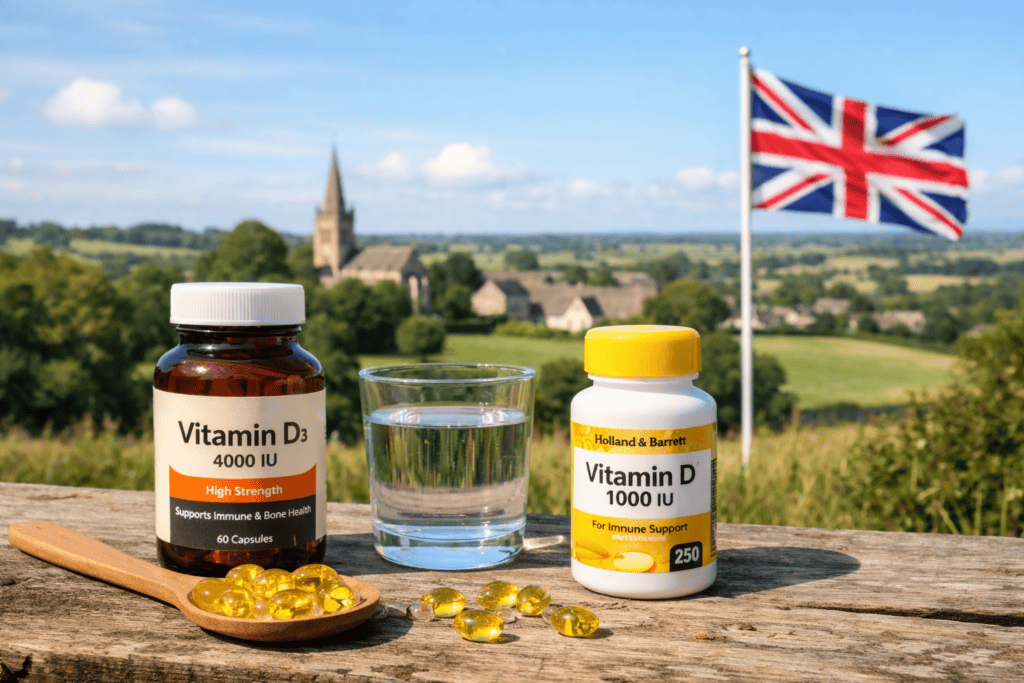
The only reliable way to confirm deficiency is a 25-hydroxyvitamin D blood test, available through a GP or privately. The NHS considers levels below 25 nmol/L deficient and levels between 25 and 50 nmol/L insufficient for most adults. Symptoms alone are not diagnostic, so testing is the only route to an accurate picture of your status.
What the NHS Recommends for Vitamin D Supplementation
The NHS advises adults and children over four to take 10 micrograms (400 IU) of vitamin D daily through autumn and winter. People who rarely go outdoors, cover most of their skin, or have darker skin tones should take the same dose year-round.
Infants from birth to one year need 8.5 to 10 micrograms daily, unless they drink more than 500ml of formula, which is already fortified. Children aged one to four need 10 micrograms daily. If a blood test confirms deficiency, a GP may prescribe higher amounts.
Vitamin D3 (cholecalciferol) raises blood levels more effectively than D2 (ergocalciferol), so it is the standard clinical choice. Take it with a fat-containing meal because vitamin D is fat-soluble.
A common mistake is stopping supplementation once symptoms ease or summer arrives. Blood levels can drop again within weeks, particularly in high-risk groups. Sustained intake above 100 micrograms per day risks hypercalcaemia, a condition caused by excess calcium in the blood. Stick to 10 micrograms daily unless a clinician advises otherwise.
Food Sources and Lifestyle Changes That Support Vitamin D Levels
Diet cannot match sunlight, but it can build a useful baseline. Oily fish such as salmon, mackerel, and sardines provide the highest dietary concentrations of vitamin D3. Eggs and liver contribute smaller amounts. Reaching 10 micrograms through diet alone requires deliberate choices across most meals.
Fortified cereals, plant-based milks, and some dairy products can help close part of the gap, though levels vary by brand. Vegans depend mainly on fortified foods and supplements, since D2 from UV-exposed mushrooms absorbs less efficiently than D3.
Between April and September, time outdoors from 11am to 3pm with forearms and lower legs exposed supports skin synthesis. Brief, regular sessions work better than occasional longer ones. Maintaining a healthy body weight also matters, as vitamin D is fat-soluble and becomes less available when stored in excess adipose tissue.
These strategies support health year-round, but they do not replace supplementation in autumn and winter, when UVB synthesis stops entirely across the UK. The Health and Wellbeing Blog covers evidence-based approaches to combining diet, sun exposure, and supplementation across different life stages.
Frequently Asked Questions
Why is vitamin D deficiency so common in the UK?
The UK’s latitude means sunlight is too weak to trigger vitamin D synthesis in skin for roughly six months of the year. Few foods contain meaningful amounts naturally. Combined with time spent indoors, this makes deficiency the default for a large share of the population without supplementation.
Who is most at risk of low vitamin D levels in the UK?
Risk is highest among people who get little direct sun exposure. This includes older adults, those with darker skin tones, people who cover most of their skin outdoors, and anyone housebound or living in care. Pregnant women, infants, and people with conditions affecting fat absorption also face elevated risk.
How much vitamin D do adults and children in the UK need?
Adults and children over one year old need 10 micrograms (400 IU) of vitamin D daily, according to NHS guidance. Children under one year need 8.5–10 micrograms. The UK government recommends supplements for most people, particularly during autumn and winter when sunlight is too weak to trigger adequate skin synthesis.
What are the signs and health effects of vitamin D deficiency?
Many cases produce no obvious symptoms until deficiency becomes severe. Fatigue, bone pain, muscle weakness, and low mood are the most reported effects. Prolonged deficiency raises the risk of osteomalacia in adults, rickets in children, and may impair immune function.
When should people in the UK take vitamin D supplements?
From October through to March, UK sunlight lacks the UVB intensity needed for the skin to produce vitamin D. The NHS recommends 10 micrograms daily throughout this period for most adults. People with darker skin tones, limited sun exposure, or those who are housebound should supplement year-round.